Every year from June through November, Florida homeowners watch the tropics with one eye and their own backyard with the other. And for good reason: the live oaks, laurel oaks, sand pines, and palms that give a Florida property its shade and character can turn into a serious liability the moment a named storm crosses the Gulf. A single compromised tree can take out a roof, a fence, a power line, or worse.
The good news is that trees rarely fail without warning. Most hazardous trees show clear signs of weakness weeks or even months before they come down. If you know what to look for, you can catch problems early, make a plan, and avoid the panic and inflated emergency pricing that come with scrambling after a hurricane watch is issued.
Here are the seven warning signs worth walking your Florida yard to check for before the season peaks.
Why Florida Trees Are Especially Vulnerable
Healthy, well-structured trees handle wind remarkably well. Problems start when a tree already has a hidden weakness, such as decay, poor root anchorage, or a structural defect, and then gets hit with the specific one-two punch of a Florida storm.
Florida’s sandy, fast-draining soils give many trees a shallower, less secure root hold than the deep clay soils found further north. Add in the torrential rain that arrives ahead of a hurricane, and that sandy ground turns soft and loose right as sustained tropical-storm-force winds start putting enormous leverage on the canopy. A tree that stood fine through twenty summers can uproot in a single afternoon once saturated soil and high wind combine. Species matter, too: shallow-rooted laurel oaks and water oaks, along with older sand pines, tend to fail more readily than the deep-anchoring live oak or sabal palm.
That is why the pre-storm window matters so much in Florida. Inspecting and addressing weak trees during the dry, calm months is far cheaper and safer than dealing with them after they have already come down on your house.
7 Signs of a Hazardous Tree Every Florida Homeowner Should Know1. A Sudden or Worsening Lean
Many Florida trees grow at a slight angle, often away from the coast or toward the light, and a lean the tree developed slowly over years is usually stable. The dangerous lean is a new one. If a tree has recently started tilting, or if the lean seems to be getting worse, that points to root or soil failure underneath. A telltale sign is fresh soil heaving or cracking on the side opposite the lean, which means the root plate is beginning to lift out of that loose Florida sand.
2. Dead, Broken, or Hanging Limbs
Dead limbs are among the most common causes of storm damage and injury in Florida. They are brittle, poorly attached, and the first thing to break loose in tropical winds. Look for branches with no leaves during the growing season, bark that is peeling or missing, and limbs that are visibly cracked or already hanging. Arborists call these “widow-makers” for a reason. In our long, humid growing season, a neglected canopy can accumulate a surprising amount of deadwood that is essentially loose debris waiting for a gust.
3. Cracks or Cavities in the Trunk
Vertical cracks, deep seams, or open cavities in the main trunk signal serious structural weakness. So do spots where the wood looks soft, sunken, or has begun to hollow out. Florida’s warmth and humidity accelerate internal decay, so a cavity can spread faster here than in cooler climates. A trunk defect does not always mean the tree must come down, but it does mean the tree can no longer be assumed to be sound, and these problems are easy to underestimate from the ground.
4. Fungal Growth at the Base or on the Trunk
Mushrooms, conks, or shelf-like fungus growing on the trunk or around the root flare are a red flag anywhere, but Florida’s heat and moisture make fungal decay especially common. Fungi feed on decaying wood, so their presence usually means rot is already underway inside the tree, often in the structural core or root system you are relying on for stability. A tree can look green and full on top while quietly rotting at the base.
5. Root Problems and Soil Disturbance
The roots do the anchoring, and in sandy Florida soil that anchorage is already working with less margin. Watch for raised or cracked soil around the base, exposed or severed roots (common after nearby construction, driveway work, or trenching), soggy ground that never seems to drain, or roots that appear soft and dark. Trees with damaged or restricted root systems are dramatically more likely to uproot in the saturated, windy conditions a hurricane brings.
6. Thinning Canopy or Progressive Dieback
A canopy that is noticeably thinner than neighboring trees of the same species, or one losing leaves and small branches from the outer edges inward, is telling you the tree is under stress. In Florida, progressive dieback often reflects disease or pest pressure. Lethal Bronzing disease has been devastating palms across the state, and stressed oaks are more prone to failure. Any of these weaken a tree’s ability to withstand a storm.
7. Trees Growing Too Close to Structures or Power Lines
Even a healthy tree can be a hazard if it is in the wrong place. Limbs hanging over your roof, branches tangled in power lines, or a large oak planted close to your foundation all raise the stakes if the tree fails. In Florida’s dense residential neighborhoods, proximity does not just increase the chance of property damage. It can also complicate a removal and make it far more expensive if the tree comes down on its own terms.
What Florida Homeowners Should Do If They Spot These Signs
If you notice one or more of these warning signs, resist the urge to grab a chainsaw yourself. Storm-weakened trees are unpredictable, and DIY tree work is one of the leading causes of serious homeowner injuries in Florida. The smarter move is to have the tree evaluated by a professional while the weather is still calm.
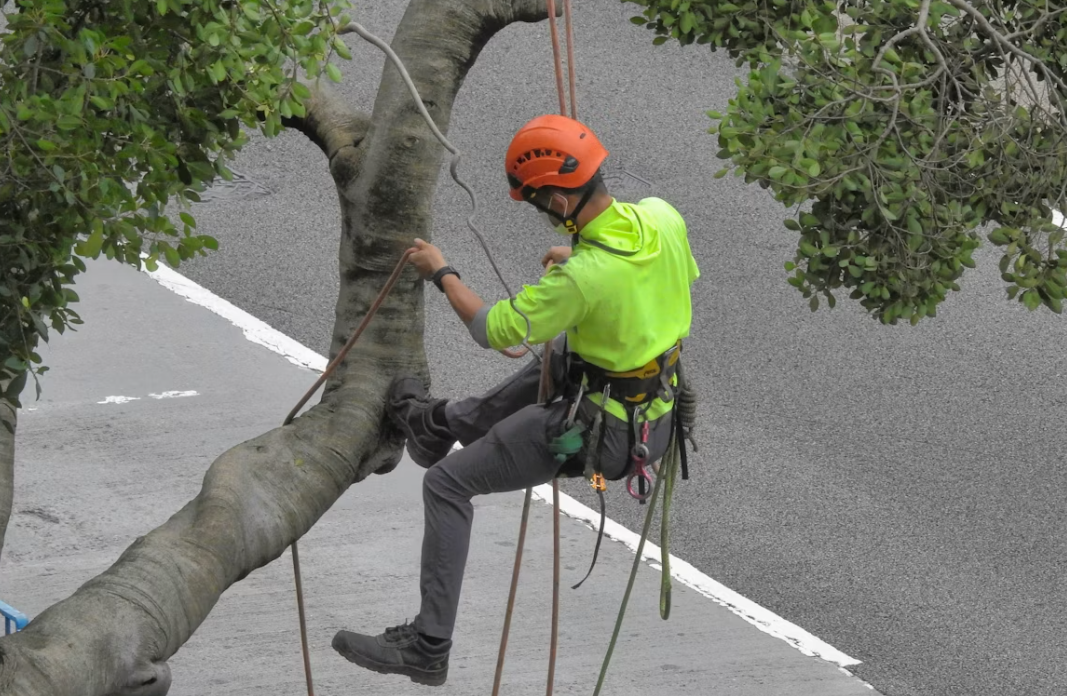
A qualified, ISA-certified arborist can tell the difference between a cosmetic flaw and a genuine structural risk, and can recommend the least invasive fix, which is not always removal. In the Tampa Bay area, homeowners often turn to a licensed local team like Panorama Tree Care for a documented risk assessment before hurricane season, since a certified evaluation also produces paperwork that can help with HOA requirements and insurance claims down the road. Getting an expert opinion early means you make decisions on your schedule and budget, not the storm’s.
Trimming vs. Removal: Not Every Florida Hazard Tree Has to Go
One of the biggest misconceptions Florida homeowners have is that a problem tree automatically needs to be removed. In many cases, it does not. The right response depends entirely on the type and severity of the defect.
Structural pruning to ANSI A300 standards can reduce a tree’s wind load, remove deadwood, and rebalance a heavy or lopsided canopy, often enough to make a borderline tree hurricane-ready again. Cabling and bracing systems can support weak branch unions or split trunks so the tree can stay standing. Root-zone care and pest treatment can turn around a stressed but salvageable oak or palm.
Removal is reserved for trees that are truly beyond saving: severe internal decay, major root failure, a dangerous lean over a structure, or a species-and-location combination that simply cannot be made safe. A good arborist will always explain why they are recommending what they recommend, and give you options rather than a one-size-fits-all answer.
How to Get Your Florida Trees Storm-Ready
Beyond addressing specific hazards, a few habits go a long way toward keeping your property safe through hurricane season:
- Schedule an inspection before peak season, ideally in late spring. Certified assessments are cheaper and easier to book when there is no storm on the map.
- Keep up with routine pruning so deadwood and overextended limbs never get a chance to accumulate in Florida’s fast-growing canopy.
- Address drainage issues near large trees, since chronically soggy sand undermines already-shallow root anchorage.
- Watch palms for signs of Lethal Bronzing and other regional pests, and treat problems early.
- Photograph your trees periodically so you can spot gradual changes like a worsening lean or thinning canopy.
- Know your local tree ordinance. Many Florida cities and counties regulate the removal of larger or protected trees and require permits, so factor permitting time in rather than waiting until the last minute.
The Bottom Line for Florida Homeowners
Trees are one of the best features of a Florida property, and one of the biggest risks when a hurricane hits if you ignore the warning signs. A leaning trunk, dead limbs, trunk cracks, fungal growth, root trouble, canopy dieback, or a tree crowding your home are all reasons to take a closer look. Catching those signs early, and getting a certified arborist’s opinion before the weather turns, is the single most effective thing you can do to protect your home, your family, and your wallet this hurricane season.
Walk your yard this week. Florida’s trees will tell you a lot if you know what to look for, and the best time to act is always before the wind picks up.