The kitchen has become more than a place to prepare meals. Today, it serves as a gathering space, entertainment hub, and central design feature within the home. As homeowners continue investing in functionality and aesthetics, the demand for custom kitchen surfacing solutions has grown rapidly. Materials, finishes, and installation methods now play a major role in shaping how kitchens look, perform, and age over time.
Hyundai L&C continues to be part of this evolving conversation by offering surfacing materials designed for durability, visual consistency, and long-term performance. From waterfall islands to seamless backsplashes, modern surfacing solutions help homeowners and designers create spaces that reflect both personal style and practical needs.
In today’s design landscape, choosing the right kitchen surface is about far more than appearance. It involves balancing maintenance requirements, sustainability considerations, resilience, and overall home value.
Why Custom Kitchen Surfacing Solutions Matter
Every kitchen operates differently. Some spaces experience heavy cooking activity every day, while others function as social gathering areas for entertaining guests. Because of this, one-size-fits-all countertop materials rarely meet every homeowner’s expectations.
Custom surfacing solutions allow for:
- Personalized aesthetics
- Improved space functionality
- Better durability for specific lifestyles
- Seamless integration with cabinetry and appliances
- Enhanced property value
Modern homeowners increasingly want kitchens that feel unique rather than mass-produced. Tailored surfacing options provide flexibility in texture, edge profiles, finish styles, and color palettes.
Design professionals also appreciate the versatility custom materials offer. Coordinating surfaces with flooring, lighting, cabinetry, and architectural details creates a cohesive interior environment that feels intentional and refined.
The Shift Toward Performance-Driven Surfaces
For years, kitchen design centered heavily on appearance alone. Today, homeowners prioritize performance just as much as visual appeal.
A high-quality kitchen surface should resist:
- Staining
- Heat exposure
- Scratches
- Moisture penetration
- Daily wear from cooking and cleaning
This shift has increased interest in engineered materials that combine style with practical advantages. Quartz-based surfaces, in particular, have become popular because they offer consistency and durability without the maintenance demands associated with some natural stone materials.
Performance-driven surfaces also contribute to long-term cost efficiency. Durable materials reduce repair needs, maintain their appearance longer, and support better resale appeal.
How Modern Design Trends Influence Surface Selection
Kitchen trends continue evolving toward cleaner lines, open layouts, and multifunctional spaces. Surface materials now serve as focal points rather than background elements.
Several design trends currently shaping surfacing decisions include:
Minimalist Aesthetics
Modern kitchens often emphasize simplicity through neutral color palettes, sleek edges, and uncluttered layouts. Surfaces with subtle veining or soft textures complement this approach without overwhelming the room.
Large Kitchen Islands
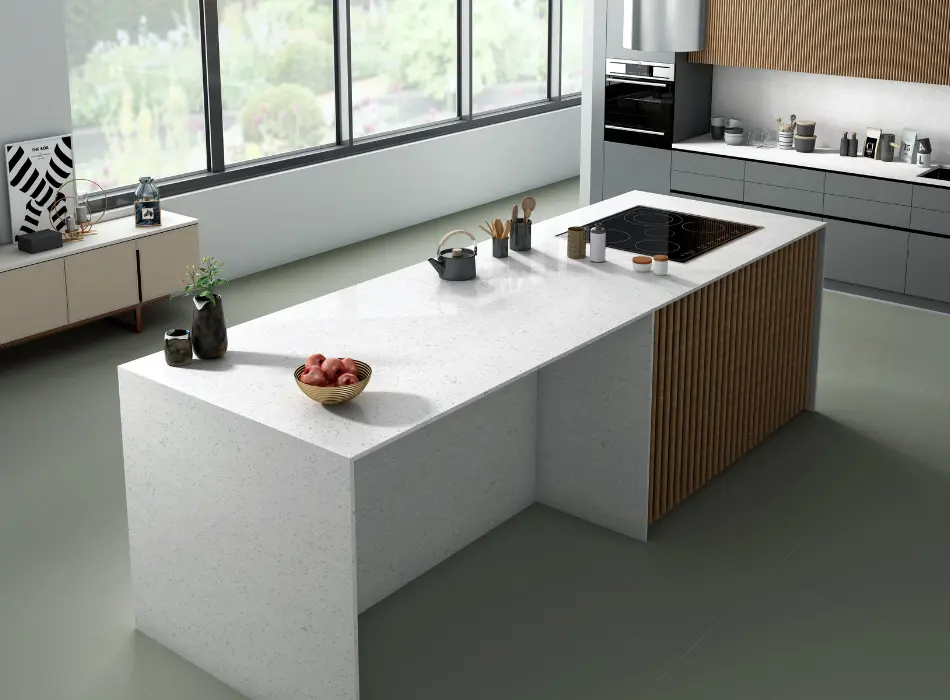
Oversized islands require durable, visually consistent surfaces capable of handling food preparation, dining, and social interaction simultaneously. Seamless slab designs help create a polished appearance across larger spaces.
Integrated Backsplashes
Extending countertop materials vertically into backsplashes creates continuity and simplifies cleaning. This approach also contributes to a more sophisticated visual presentation.
Mixed Material Design
Many designers combine wood, metal, and stone-inspired surfaces within the same kitchen. Custom surfacing solutions help bridge these materials together cohesively.
Natural-Inspired Finishes
Homeowners increasingly gravitate toward materials that replicate the appearance of marble, granite, or concrete while offering enhanced durability and easier maintenance.
The Role of Quartz in Contemporary Kitchens
Quartz surfacing materials continue gaining popularity across residential and commercial projects because they address both design and performance expectations.
Unlike some porous natural materials, quartz surfaces generally offer:
- Non-porous construction
- Reduced maintenance requirements
- Strong stain resistance
- Consistent coloration
- High durability for busy households
This combination makes quartz especially appealing for modern kitchens where daily activity is constant.
Quartz surfaces also provide flexibility in appearance. Homeowners can select from clean contemporary styles, dramatic veining patterns, or subtle textures depending on the overall design vision.
Choosing the Right Surface for Your Lifestyle
Not every household uses a kitchen the same way. Selecting appropriate materials requires evaluating how the space functions daily.
For Busy Families
Families with children often prioritize easy maintenance and durability. Scratch-resistant and stain-resistant materials help simplify cleanup while maintaining appearance over time.
For Frequent Entertainers
Homeowners who regularly host gatherings may prefer statement surfaces with bold veining, waterfall edges, or dramatic finishes that create visual impact.
For Home Chefs
People who cook frequently benefit from heat-resistant, low-maintenance surfaces that can withstand extensive food preparation and regular cleaning.
For Compact Kitchens
Smaller kitchens often benefit from lighter-colored surfaces that reflect natural light and create a more open feeling.
Understanding lifestyle priorities helps narrow material options while ensuring long-term satisfaction with the final design.
Sustainability and Responsible Material Selection
Sustainability has become an increasingly important factor in residential design decisions. Many homeowners now evaluate products based on environmental impact alongside performance and appearance.
Modern surfacing manufacturers continue exploring:
- Responsible sourcing practices
- Material efficiency
- Long-lasting product durability
- Lower maintenance requirements
- Reduced replacement frequency
Long-lasting surfaces contribute to sustainability by minimizing waste associated with premature replacement or repairs.
Additionally, investing in durable kitchen materials supports long-term resource efficiency since homeowners are less likely to remodel frequently due to wear or outdated finishes.
Installation Quality Matters as Much as Material Quality
Even premium materials may underperform if installation standards are poor. Precision fabrication and professional installation remain essential components of successful kitchen surfacing projects.
Several factors influence installation quality:
- Accurate measurements
- Proper seam alignment
- Edge finishing precision
- Support structure preparation
- Professional leveling techniques
Poor installation can lead to visible seams, uneven surfaces, cracking risks, or reduced lifespan.
Working with experienced professionals helps ensure the material performs as intended while preserving the overall visual integrity of the kitchen.
Common Mistakes to Avoid When Selecting Kitchen Surfaces
Homeowners sometimes focus too heavily on immediate appearance without considering long-term functionality. Avoiding several common mistakes can improve project outcomes significantly.
Choosing Based Only on Trends
Design trends evolve quickly. Selecting timeless surfaces with lasting appeal often provides better long-term satisfaction than chasing short-lived styles.
Ignoring Maintenance Requirements
Some materials require sealing, polishing, or specialized cleaning products. Understanding maintenance expectations before installation helps avoid frustration later.
Overlooking Lighting Conditions
Kitchen lighting dramatically affects how surfaces appear. Viewing samples under both natural and artificial light helps ensure accurate color selection.
Prioritizing Price Over Performance
Lower-cost materials may initially seem attractive but can result in higher replacement or repair costs over time.
Forgetting Edge Details
Edge profiles contribute significantly to the final appearance. Rounded, beveled, or waterfall edges can influence the kitchen’s overall design character.
The Growing Importance of Personalization
Modern homeowners increasingly expect their interiors to reflect individual preferences rather than generic showroom designs.
Custom kitchen surfacing solutions support personalization through:
- Unique slab selections
- Tailored edge profiles
- Coordinated backsplash integration
- Custom island configurations
- Finish variations
- Color customization
This level of personalization helps homeowners create kitchens that feel authentic to their lifestyle and design preferences.
Personalized spaces also tend to maintain stronger emotional value because they reflect intentional design choices rather than standard layouts.
Technology’s Influence on Surface Innovation
Advancements in manufacturing technology continue shaping the future of kitchen surfacing materials.
Modern fabrication methods now allow for:
- More realistic stone-inspired veining
- Enhanced durability characteristics
- Improved consistency
- Larger slab formats
- Precision edge detailing
Digital design visualization tools also help homeowners preview surface combinations before installation begins, reducing uncertainty during the selection process.
As technology evolves further, surfacing solutions will likely continue balancing aesthetics, durability, and customization even more effectively.
Designing Kitchens That Age Gracefully
A well-designed kitchen should maintain both functionality and visual appeal for years. Selecting surfaces with enduring design qualities helps create spaces that remain relevant despite changing trends.
Neutral foundations combined with quality craftsmanship often provide the greatest longevity.
Timeless surfacing strategies include:
- Soft neutral color palettes
- Balanced veining patterns
- Clean edge profiles
- Durable finishes
- Integrated design consistency
Rather than following highly specific trends, many homeowners now focus on adaptable kitchens capable of evolving through accessory updates and décor changes.
The Future of Custom Kitchen Surfacing Solutions
The future of kitchen design will continue emphasizing flexibility, resilience, and personalization. Homeowners increasingly want spaces that support modern living while maintaining visual sophistication.
As lifestyles evolve, surfacing materials must adapt to changing expectations surrounding maintenance, sustainability, durability, and aesthetics.
Custom solutions remain especially valuable because they allow homeowners to balance:
- Practical daily use
- Long-term investment value
- Personal design expression
- Functional performance
Manufacturers focused on innovation and quality craftsmanship will continue shaping how modern kitchens are designed and experienced.
Final Thoughts
Today’s kitchens demand more from surfacing materials than ever before. Homeowners expect surfaces that combine beauty, durability, easy maintenance, and personalization within one cohesive design approach.
By investing in high-quality custom kitchen surfacing solutions, homeowners can create kitchens that support both everyday living and long-term property value. Whether designing a minimalist contemporary space or a warm transitional kitchen, selecting the right surface plays a critical role in achieving lasting satisfaction.
Hyundai L&C USA offers surfacing options that align with the modern demand for performance, design versatility, and refined aesthetics. As kitchen design continues evolving, thoughtfully selected surfaces will remain central to creating functional and visually compelling living spaces.