Home Blog Page 35

Best Cereal of all Time

0
Best Cereal of all Time

Cheerios

Nutritional superiority helps make Cheerios the best cereal ever. Cheerios’ simplicity and healthfulness set it apart from other sweet cereals. Based on whole grain oats, Cheerios is low in sugar and high in fiber, making it a healthy breakfast option. Cheerios’ dedication to healthy eating is reinforced by the absence of artificial colors and flavors.

In an age of health-conscious choices, Cheerios strikes the perfect blend between nutrition and flavor. The cereal’s adaptability makes it appealing to health-conscious adults and parents looking for a healthful option for their kids. Cheerios’ full grains and necessary nutrients make it a tasty and healthy breakfast favorite.

Cheerios’ iconic, comforting taste spans generations, beyond its nutritional benefits. The cereal’s ring shape and lightly toasted flavor provide a pleasing crunch that many include in their breakfast routine. Cheerios has become the best cereal of all time by adapting to cold milk, yogurt, and snacking.

Cheerios’ capacity to adapt without losing its identity boosts its popularity. As nutritional preferences and trends vary, Cheerios has added Honey Nut, Multi Grain, and Ancient Grains flavors to satisfy every palate. Cheerios’ versatility has helped it stay relevant and appeal to varied consumer interests for decades.

Cheerios’ classic marketing efforts have helped it retain its appeal. The “Cheerios bee” and endearing ads showing families eating breakfast have evoked memories. Such marketing has entrenched Cheerios’ place in customers’ hearts and strengthened its relationship with healthy, family-friendly ideals.

Beyond being a morning cereal, Cheerios is a cultural phenomenon. The cereal has inspired handmade snack bars and creative desserts, demonstrating its culinary adaptability. User-generated Cheerios content floods social media, proving the cereal’s longevity and ability to inspire innovation.

Cheerios is a stable breakfast option in the fast-paced world of trends. Its simplicity, nutritional value, and universal taste make it ageless. Cheerios has become a breakfast staple because of its comfort and familiarity.

Frosted Flakes

Frosted Flakes’ simplicity and sweetness set it differ from other breakfast cereals. The texture of the golden corn flakes, precisely roasted for crunch, is a sensory joy. Breakfast lovers enjoy a delightful start to their day with each spoonful’s blend of light flakes and crunch.

The frosted covering that gives Frosted Flakes its name is the magic. The frost, a delicate mix of sugar and skill, elevates the commonplace. Not simply cereal—an experience. The frosted surface sticks to each flake, creating a sugary masterpiece that sparkles in the morning. Frosted Flakes are the Best Cereal of All Time because of this sweet coating.

Frosted Flakes’ Tony the Tiger mascot is essential to its appeal. Consumers associate the cereal with the charismatic, striped feline and his catchphrase “They’re Grrreat!” Tony symbolizes Frosted Flakes’ vigor at morning, not just a marketing tactic. His enthusiasm matches the cereal’s joy, making it a timeless breakfast staple.

Frosted Flakes is more than a cereal—it’s a versatile ingredient that has inspired chefs worldwide. From crunchy ice cream sundaes to distinctive chicken tender coatings, the options are unlimited. The cereal’s versatility makes it the Best Cereal of All Time.

Beyond its delicious taste and culinary versatility, Frosted Flakes has endured due to its quality. Though basic, the formula has stayed consistent, ensuring that every box offers the same outstanding taste consumers anticipate. Frosted Flakes comforts breakfast lovers in a world of perpetual change.

Throughout history, many cereals have competed for the title of Best Cereal of All Time. Frosted Flakes remains the best by balancing nostalgia and innovation. Families treasure this cereal’s tradition. It evolves to meet evolving preferences while retaining its essence as a home favorite.

Frosted Flakes’ healthiness also makes it famous. The cereal is sweet but fortified with vitamins and minerals, making it a healthy morning option. Frosted Flakes is a guilty delight and a healthy choice in a health-conscious environment.

Lucky Charms

Lucky Charms’ dual-textured composition is remarkable. The cereal has toasted oats and a rainbow of marshmallows. Each spoonful combines the marshmallows’ pillowy smoothness with the oats’ crispness. The combination of textures makes it a breakfast favorite for kids and adults.

Lucky Charms’ taste and appearance are appealing. A rainbow of marshmallow shapes—hearts, stars, horseshoes, clovers, blue moons, unicorns, and red balloons—makes the cereal colorful. Lucky Charms provide breakfast a visual pleasure with their vivid and fanciful designs. The whimsical shapes inspire imagination and make mornings wonderful.

Beyond its beauty, Lucky Charms is known for its flexibility. The cereal has been included to many dishes outside breakfast. From Lucky Charms milkshakes to marshmallow-studded desserts, inventive minds have used the cereal. Its versatility makes it the Best Cereal of All Time, as it blends into many recipes.

Lucky Charms’ nostalgia makes it a classic. Many see it as a nostalgic cereal. Many generations remember waking up to a bowl of Lucky Charms and eagerly waiting to spoon out the marshmallows. The cereal’s capacity to bring back memories and unite families across generations shows its longevity.

Marketing ingenuity helps Lucky Charms achieve the title of Best Cereal. Lucky, the cereal’s leprechaun mascot, is iconic. The promise of finding his pot of gold at the end of the rainbow and his cheeky charm have become iconic. Marketing strategies use Lucky Charms’ whimsy and magic to cement its brand in the public’s mind.

The Lucky Charms flavor is also remarkable. The gently sweetened toasted oats and marshmallows form a flavorful symphony that appeals to a wide range of tastes. The cereal is just sweet enough to satisfy morning sweet tooths without being too sweet. Its popularity stems from its excellent flavor balance.

Lucky Charms has also adapted to changing customer diets. In response to demand for healthier options, the cereal offers gluten-free and whole grain varieties. Its popularity has been sustained by its commitment to satisfying varied nutritional needs while preserving its distinctive flavor.

Cinnamon Toast Crunch

Cinnamon Toast Crunch stands out from other cereals because it evokes nostalgia and tastes great. The General Mills cereal debuted in 1984 and has become a household name. Its appeal to young and old has made it a timeless breakfast choice.

Cinnamon Toast Crunch’s simplicity and uncompromising flavor profile make it magical. Beginning with the loud crunch of toasted squares meeting the spoon, each bite is a blend of sensations and flavors. Golden bite-sized squares are lavishly coated with a wonderful cinnamon-sugar blend, creating a delicious harmony on the mouth. This sweet-spicy dish is a culinary gem that balances pleasure with familiarity.

Versatility helps Cinnamon Toast Crunch become the best cereal ever. This popular brand appeals to all ages and cultures, unlike other cereals. Cinnamon Toast Crunch can be eaten with cold milk, yogurt, or straight from the box as a snack.

The cereal’s adaptability to consumer trends also makes it popular. Cinnamon Toast Crunch has stayed current without losing its appeal in a healthier, more diversified breakfast market. Despite not being marketed as a health food, its timeless appeal has allowed it to coexist with healthier cereals, suggesting that pleasure can be part of a healthy morning.

The brand has also introduced spin-off items like Cinnamon Toast Crunch Churros and Blasted Shreds, which offer interesting twists on the basic flavor while maintaining faithful to what makes the original cereal so great. These varieties meet changing tastes, keeping Cinnamon Toast Crunch a household favorite worldwide.

Another reason the cereal is legendary is its marketing. As “the crazy squares,” the “Cinnamon Toast Crunch squares” have become a marketing emblem. This humorous marketing strategy has appealed to children and nostalgic adults who grew up with the cereal. The figures are now part of generations’ cultural memory beyond the breakfast table.

Consumers want comfort and familiarity in items, especially food. Cinnamon Toast Crunch’s cinnamon, sugar, and crunch make a cozy breakfast. Its longevity is due to its capacity to satisfy the universal desire for a tasty and consistent breakfast.

Honey Nut Cheerios

Honey and nuts are what make Honey Nut Cheerios popular. The cereal’s whole grain oat base is richly coated in honey and nut bits. This blend produces a delicious symphony that elevates breakfast. Honey Nut Cheerios’ sweet and nutty flavor is excellent for kids and adults.

Honey Nut Cheerios’ devotion to a healthy breakfast has helped it last. Whole grain oats provide a lot of fiber, which aids digestion and satiety. Healthy fats from almonds and natural sweetness from honey reduce the need for processed sugar.

Beyond its nutritional qualities, Honey Nut Cheerios symbolizes comfort and familiarity in households worldwide. The “O” form of the cereal pieces and the warm colors of honey and golden oats create nostalgia across generations. Many people cherish mornings spent eating Honey Nut Cheerios with family, cementing its title as the best cereal ever.

Honey Nut Cheerios are popular for eating throughout the day due to their versatility. The cereal’s versatility makes it popular for breakfast or as a snack. Its instinct to satisfy desires at any time has earned it enormous praise.

In addition to its delicious taste, Honey Nut Cheerios is known for its environmental sustainability. General Mills, the maker of this popular cereal, uses eco-friendly production methods. Sustainable consumers should feel good about selecting Honey Nut Cheerios since the company values the planet as much as it values making the best cereal ever.

Honey Nut Cheerios’ success is also due to its ingenuity. Over the years, the cereal has introduced limited-edition tastes and spin-offs based on the honey and nut combo. These developments meet evolving consumer preferences and keep the brand fresh and intriguing, keeping it a household staple worldwide.

The General Mills marketing campaign has solidified Honey Nut Cheerios’ status as the best cereal ever. The brand’s “Buzz the Bee” mascot resonates with kids and adults. The character’s pleasant and approachable presence boosts the brand’s image and connects with consumers personally. Buzz the Bee has helped make the cereal famous.

Froot Loops

Froot Loops’ bright colors encourage humor and enthusiasm, setting the atmosphere for a delicious meal. The characteristic loops, each symbolizing a delicious flavor, make a visual feast for children and adults. The rainbow-colored loops reflect the strong fruit flavors inside. Froot Loops’ unique blend of visual and gustatory stimulation sets it apart.

Froot Loops’ brilliance is elevating breakfast to an adventure. Every spoonful of Froot Loops bursts with fruity aromas, unlike boring cereals. The cereal strikes a careful balance, allowing each loop to taste different while complementing the others. This delicious symphony is a feast for the senses and an invitation to enjoy each bowl’s uniqueness.

It’s impossible to talk about Froot Loops without mentioning nostalgia. This cereal is a step back in time for many, capturing childhood memories in every loop. Opening the box releases a pleasant scent that transports people to carefree mornings when the biggest problem was which color to eat first. Many faithful fans find consolation in Froot Loops’ recall of simpler times in a fast-paced, chaotic world.

Froot Loops’ culinary adaptability sets it apart. While delicious with cold milk, Froot Loops can also be used in inventive recipes. Each loop has a variety of flavors, from colorful cereal bars to rich milkshakes. This versatility gives the cereal vitality, making it suited for occasions beyond breakfast.

Froot Loops are fun and tasty, but they’re also nutritious. In a world where health is emphasized, Froot Loops now offers solutions for varied diets. The brand’s launch of whole grain and reduced-sugar versions shows its commitment to adapting to changing consumer demands without jeopardizing its Best Cereal of All Time status.

In addition to taste and nutrition, Froot Loops have become popular due to marketing and cultural appeal. Toucan Sam has become synonymous with the cereal. The joyful toucan with its bright beak lends whimsy to the packaging and is a popular mascot. The marketing technique has made Froot Loops relevant across generations.

Raisin Bran

Star of the show: raisins. Dried grapes, called raisins, give the cereal a natural sweetness that sets it apart from sugary cereals. Raisins’ chewiness contrasts with bran flakes’ crispiness, providing a harmonious balance that keeps taste receptors fascinated with every spoonful. Raisin Bran’s sweetness originates from nature, making it a healthier breakfast option than cereals with artificial flavorings.

Raisin Bran isn’t only tasty—it’s nutritious. Bran flakes are high in fiber and provide a pleasing crunch while improving digestion. A balanced diet includes fiber, which helps regulate weight and reduces health risks. With its high fiber content, Raisin Bran tastes great and nourishes and energizes the body all morning. In an age of health-conscious eating, Raisin Bran is a tasty cereal with necessary nutrients.

Versatility makes Raisin Bran the Best Cereal of All Time. Raisin Bran is a great independent cereal, but it blends well with breakfast dishes. It adds freshness and creaminess to yogurt parfaits, which many people make with it. Some add crushed bran flakes to muffins, cookies, and granola bars for flavor and nutrition. Raisin Bran’s versatility makes it a culinary partner that compliments a variety of breakfast selections, proving its cereal greatness.

Raisin Bran has become synonymous with cozy breakfasts beyond its culinary versatility. Morning routines and family breakfasts are symbolized by the box’s sun emblem. Many have fond memories of pouring Raisin Bran and milk into a bowl. This nostalgia and reliability make Raisin Bran the Best Cereal of All Time, transcending generations and cementing its place in breakfast consciousness.

Additionally, Raisin Bran has adapted to new dietary trends. Due to consumer desire for healthier options, many Raisin Bran varieties now meet specific dietary demands. Raisin Bran evolves while maintaining faithful to its basic appeal—a delicious and nutritious breakfast alternative that lasts.

Captain Crunch

Its unique flavor characteristic makes Captain Crunch appealing. The cereal is delicious but not overbearing, capturing taste receptors from the first swallow. The gentle sweetness makes for a satisfying breakfast without being overpowering like some sugary cereals. The perfect blend of sweetness and maltiness sets Captain Crunch distinct from other cereals.

What makes Captain Crunch the Best Cereal of All Time is its unmatched crunchiness. The square cereal pieces are engineered to endure milk and time, keeping their crispiness for a leisurely morning. Captain Crunch’s crunch and crackle make each scoop a sensory experience that exceeds breakfast. This brand-defining crunchiness creates a textural masterpiece that cereal lovers will remember.

Captain Crunch’s texture is both tasty and practical. The cereal pieces keep their shape in milk, creating a wonderful contrast between crispy surface and softer interior. This complex interaction between crunch and creaminess makes cereal-eating a sensory experience. Captain Crunch’s Best Cereal status comes from its meticulously created taste and texture.

Captain Crunch has gone beyond breakfast food to become a cultural icon. The cereal’s legacy is symbolized by Captain, a navy-clad mascot with a blue hat. Captain Crunch makes us nostalgic for childhood breakfasts and quiet weekend mornings. Captain Crunch is more than a cereal for many since the yellow box on the shop rack brings back simpler times.

Other reasons Captain Crunch is one of the Best Cereals of All Time include its versatility. Captain Crunch is delicious alone with cold milk, but it’s also been added to other dishes. Captain Crunch is popular beyond breakfast, from milkshakes to desserts. Its adaptability makes it a home staple and a favorite among people who find creative ways to employ this cereal in their cooking.

Captain Crunch has stayed relevant in the ever-changing breakfast cereal market by innovating. The company has introduced variations and flavor extensions to suit shifting tastes. Despite the many variations, Captain Crunch is a reliable choice for people who like the classic combination of flavor, crunch, and nostalgia.

Special K

Since 1955, Kellogg’s Special K has been popular and adapted to consumer desires. What differentiates Special K from the many cereals on the market? Its unique taste, adaptability, and commitment to healthy living are the answer.

Simplicity makes Special K the “Best Cereal of all Time”. A delicate blend of rice and wheat flakes gives the cereal a light, crispy texture that pleases without overwhelming. Simple cereal can be eaten with cold milk, yogurt, or alone.

Another reason Special K is ageless is its flavor. Special K balances sweetness and artificial additives better than other cereals. The grains’ natural nuttiness and moderate sweetness provide for a delicious taste without sugary indulgence. This flavor restriction makes Special K a cereal that appeals to children and adults looking for a healthy start.

Special K’s “Best Cereal of all Time.” status depends on nutrition. Special K has good nutrition and a tasty taste. It meets the nutritional needs of healthy people thanks to its vitamins and minerals. Iron, folic acid, and B vitamins demonstrate Kellogg’s devotion to making a cereal that’s more than just tasty.

Special K also adapts to health-conscious decisions. The brand has introduced several Special K variants to meet varied dietary needs in response to changing consumer tastes and nutritional understanding. Special K adjusts without losing its uniqueness, offering protein-packed varieties for muscle health and gluten-free options for sensitivities. Special K’s versatility makes it the “Best Cereal of all Time.” for all seasons and diets.

Special K has become a symbol of weight loss and fitness beyond breakfast. For weight loss, Kellogg’s Special K Challenge encourages calorie-controlled diets with Special K. Clever marketing and the cereal’s capacity to satisfy and nourish a balanced diet made the campaign successful. Special K’s whole grains and fiber meet modern dietary requirements, making it a good choice for health-conscious consumers.

Special K has influenced families worldwide. The universality of its taste, nutritional content, and health devotion makes it appealing worldwide. Special K’s effortless charm makes it a breakfast staple worldwide, whether in a hectic city or a peaceful countryside.

Wheaties

Wheaties’ heritage is a strength. Wheaties, introduced by General Mills in 1924, became known for its unusual marketing. Instead of using traditional advertising, General Mills featured athletes on cereal boxes, changing how customers viewed breakfast cereals. This novel approach propelled Wheaties to the forefront and cemented its industry leadership.

Wheaties’ orange boxes have featured many sports legends under the “Breakfast of Champions” slogan. Wheaties has honored athletes like Babe Ruth and Michael Jordan. This association with athletic excellence has helped the cereal’s popularity and inspired consumers who want to start their day well.

Wheaties’ nutritional quality also makes it one of the best cereals ever. Wheaties is noted for offering a balanced and nutritious breakfast, unlike sugary cereals. Whole wheat, rich in complex carbs, fiber, and minerals, makes up most of the cereal. Wheaties are a healthy breakfast option since whole wheat improves heart health, digestion, and energy.

Wheaties contains whole wheat, vitamins, and minerals for a complete nutritious boost. Wheaties is endorsed by dietitians and health-conscious people for its complete and balanced meal. Wheaties is a delightful and nutritious solution for parents trying to teach their kids healthy eating habits.

Wheaties’ adaptability also contributes to its longevity. The cereal is popular in energy bars and yogurt parfaits as well as milk. Wheaties’ crunchiness provides a delicious texture to foods, making them a handy addition for healthy, savory dinners. Wheaties have moved beyond the breakfast table and become a grocery staple for health-conscious people.

Wheaties is a cultural phenomenon beyond its nutrition and marketing. The sports legend-adorned orange box symbolizes success and achievement. Many consider seeing their image on a Wheaties box a sign of success. This cultural significance has cemented Wheaties’ status as the “Best Cereal of all Time.”
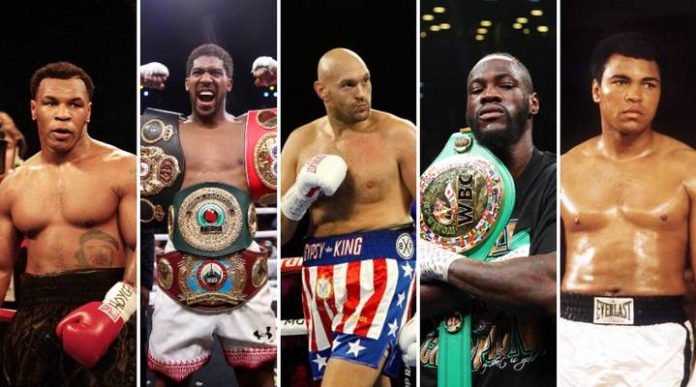
Best Heavyweight Boxers of all Time

0
Best Heavyweight Boxers of all Time

Muhammad Ali

Ali debuted in the early 1960s, when Sonny Liston, Joe Frazier, and George Foreman ruled boxing. Ali was distinguished by his physical strength, fighting technique, and personality. He danced around opponents with grace rarely seen in heavyweights with to his feet, speed, and unconventional defensive skills. Ali’s unique style and charisma made him “The Greatest.”

Ali’s early career peaked in 1964 when he faced the apparently indestructible Sonny Liston for the heavyweight belt at 22. Ali defeated all odds to win the championship and establish himself as a power. Ali became a three-time world champion and had a 30-year impact on the sport after this triumph.

His resilience and ability to overcome hardship set Ali apart from his peers and seal his place among the Best Heavyweight Boxers of All Time. Ali refused military induction in 1967 due to religious and moral beliefs. This principled action resulted in his boxing suspension and title stripping, sidelining him during his prime years. Ali persevered despite the sacrifice few sportsmen would make.

Ali returned after a three-and-a-half-year sabbatical to fight Joe Frazier and Ken Norton. The 1971 “Fight of the Century” versus Frazier was Ali’s first professional loss, but it showed his resilience. The 1975 “Thrilla in Manila” and the trilogy of fights with Frazier are considered some of the most savage and intense in boxing history.

Ali’s tenacity peaked in 1974’s “Rumble in the Jungle” against George Foreman. Ali used the “rope-a-dope,” absorbing Foreman’s heavy strikes while leaning against the ropes, then unleashing a surprising surge of energy in the later rounds to win. Ali’s tactical genius proved his adaptability and strategic flair, cementing his reputation as a clever and adaptable fighter as well as a powerful puncher.

Ali’s cultural and social effect goes beyond his boxing triumphs. He represented resistance, marginalized people, and civil rights. He was a global peace, justice, and equality advocate due to his charm and outspokenness. Ali inspired sportsmen to use their platform for social change outside athletics.

Joe Louis

Rocky Marciano

Marciano rose to fame unconventionally. Marciano started boxing late, unlike some of his contemporaries with strong amateur backgrounds. He started boxing professionally at 24 after serving in the U.S. Army during World War II. He made up for his inexperience with a strong work ethic, a strong resolve, and a deep awareness of his fighting strengths.

Marciano was a small heavyweight at 5’10” and 185 pounds during his prime. However, his unwavering commitment, unmatched conditioning, and signature right hand set him apart. His style was constant pressure, bobbing, and weaving, pursuing his opponents until they gave in.

Marciano’s perfect record cements his standing as a top heavyweight boxer. Marciano retired undefeated with 49 wins, including 43 knockouts, in a crowded sport. This feat remains unmatched in the heavyweight class and shows his skill and persistence in the ring.

Marciano’s breakthrough came against Jersey Joe Walcott on September 23, 1952. Marciano won with a stunning right-hand knockout in the 13th round. This victory gave him the heavyweight belt and started Rocky Marciano’s incredible reign.

Marciano’s triumphs were stunning and frequent. He had exceptional strength, stamina, and resilience to withstand abuse and deliver knockout strikes in the later rounds. Marciano controlled his fights, wearing down his opponents until they gave up.

Marciano’s cerebral strength helped him succeed as much as his physical strength. He had steadfast faith in his ability, a strong will to overcome hardship, and it showed in his boxing approach. He was able to persevere in difficult situations because of his mental toughness, which made his opponents dread him.

Many boxing fans were surprised by Marciano’s 1956 retirement at 32. He departed the sport on his own terms, undefeated, a feat that famous heavyweights have failed to achieve. Marciano left professional boxing at the end of an era, but his reputation lives on as one of the best heavyweight boxers ever.

Boxing has changed throughout the years, but Rocky Marciano’s legacy lives on. Beyond the arena, he inspires generations of fighters to work hard, be determined, and strive for greatness.

Mike Tyson

In the late 1980s, Tyson rose to fame rapidly. He stood out from his opponents with his explosive speed, tremendous power, and persistent aggression. His rise to the top of the heavyweight class was highlighted by quick, first-round wins. This incredible dominance gave him the nickname “Iron Mike,” which became synonymous with boxing supremacy.

Tyson’s 1986 win over Trevor Berbick to become the youngest heavyweight champion was a turning point. This unprecedented performance showed Tyson’s exceptional skills and foreshadowed his spectacular future. His strength, speed, and persistent will to win made him an intimidating opponent.

Tyson’s success was largely due to his cerebral approach to the sport. His psychological warfare before the fight was as powerful as his fists. His notorious stare-downs and press conference antics intimidated opponents and often saw them defeated before the bell. Tyson’s mental battle and physical prowess made him one of the best heavyweight boxers ever.

Tyson was at his best in the late 1980s and early 1990s. His record-setting wins included the undisputed heavyweight title and several dramatic knockouts. Tyson’s blazing quickness and bone-crushing power captivated fans worldwide. His battles were anticipated and must-sees.

One of boxing’s biggest upsets came in 1990 when Tyson met Buster Douglas. Douglas, a huge underdog, defeated Tyson in an unlikely matchup. Tyson’s career changed after this surprise setback, as he faced many personal and professional problems that tested his resilience.

Tyson’s career was strained by legal troubles, including a prison sentence, and his multi-year absence. Despite these failures, Tyson remains one of the best heavyweight boxers ever. While his comeback to the ring in the late 1990s and early 2000s did not match his prior domination, it showed his passion for the sport.

Tyson’s impact on boxing goes beyond titles and statistics. His legendary character, distinguished by triumph and suffering, has shaped the sport. Fans and aficionados relate to Tyson’s complex story of tremendous highs and terrible lows.

Tyson is linked with heavyweight boxing excellence after all these years. His career accomplishments and unbreakable spirit that powered his return make him one of the all-time greats. The slogan “Best Heavyweight Boxers of all Time” resonates with Iron Mike’s legacy, carved in boxing history with blood, sweat, and dedication.

Lennox Lewis

Lewis’s boxing career began in his teens when he relocated to Canada and discovered his skill. Lewis was 6 feet 5 inches and had the physical traits that would help him dominate the ring. Super heavyweight gold at the 1988 Seoul Olympics launched his amateur career, foreshadowing his professional glory.

Lennox Lewis had an immediate impact in the professional world. His heavyweight rise was rapid and unrelenting. Donovan “Razor” Ruddock lost to Lewis in a spectacular 1992 WBC heavyweight title fight. This victory launched Lewis’s career as a heavyweight dominator, cementing his place among the Best Heavyweight Boxers of All Time.

Lewis was known for his ring adaptability. His style combined technical skill and tremendous power. Lewis was a versatile heavyweight champion with a hard jab, superb footwork, and ring tactics knowledge. Fans and boxers respected him as a tactician because he could adapt to the opponent.

Lewis was known for his tremendous fights with other legends. Boxing history remembers his fights with Evander Holyfield. Lewis defeated Holyfield and unified the heavyweight titles in the rematch later that year after a contentious draw in 1999. Lewis’s resilience and tenacity earned him a spot among the Best Heavyweight Boxers of All Time.

The Lennox peak When Lewis fought Mike Tyson in 2001, his career began. The much-anticipated showdown defined fighters and the sport. Lewis defeated Tyson with his boxing abilities and poise. This fight showed Lewis’s resilience and dedication to perfection.

Beyond his fighting skills, Lewis influenced the sport via leadership and sportsmanship. He embodied a champion inside and out of the ring, inspiring young boxers. Lewis retired from boxing in 2004 with 41 victories, 2 losses, and 1 draw, leaving a legacy as one of the Best Heavyweight Boxers Ever.

Lewis’s status among the boxing greats depends on his opponents and the era in which he competed. Lewis stood out in the late 1990s and early 2000s heavyweight category full with talented fighters. His wins against Holyfield, Tyson, and others showed his dominance in one of the most competitive heavyweight eras.

George Foreman

Early boxing success launched Foreman’s career. He became known for his powerful punches and relentless aggression after joining the sport in a labor corps program. His amateur career peaked in 1968 when he won the Summer Olympics heavyweight gold medal in Mexico City. From this win, Foreman rose to boxing prominence.

Foreman transitioned smoothly from amateur to professional. After turning pro in 1969, he had a stellar record in two years, earning the nickname “Big George.” He was intimidating in the ring due to his aggression and size.

When Foreman challenged Joe Frazier for the heavyweight title on January 22, 1973, his rapid climb peaked. Boxing fans expected a close fight, but Foreman had other ideas. He demolished Frazier six times in two rounds with incredible power and skill. The battle was stopped, and George Foreman became world heavyweight champion.

Foreman became one of the greatest heavyweight boxers after defeating Frazier. His brutal knockouts as champion showed his unmatched punching power. Foreman’s opponents were often in awe of his might, unable to resist the persistent attack.

Foreman’s boxing career had a major setback in 1974 when Muhammad Ali defeated him in the “Rumble in the Jungle.” Ali used his “rope-a-dope” tactic to knock out Foreman in the eighth round after a stormy start. Foreman was humbled by the loss and rethought his approach to the sport.

After losing to Ali, Foreman reflected and changed. He returned to the ring more calculated and strategic after discovering spirituality. In 1976, Foreman declared his comeback, set to recapture the heavyweight belt.

Foreman became the oldest heavyweight champion in 1994 aged 45. His win versus Michael Moorer showed his resilience and adaptability. From the brash young champion who dominated opponents with force to the seasoned veteran who relied on knowledge and ring acumen, Foreman’s career had come full circle.

Besides his boxing accomplishments, George Foreman’s impact on the sport extends beyond his personality and post-fighting career. His charm and joy made him popular outside the ring, transcending athletics. His financial success, especially with the George Foreman Grill, solidified his cultural icon status.

Jack Dempsey

A tough upbringing led Dempsey to pugilism in an unusual way. The ring gave him purpose and comfort as a poor kid. Nomadic in his youth, he sought out every opportunity to improve his trade. This tenacity shaped his boxing persona.

Before entering the professional circuit in 1914, Dempsey was known as a relentless force with powerful speed and power. His rise was quick, as he knocked out opponents. Dempsey’s wild bobbing, weaving, and powerful combinations revolutionized heavyweight boxing. He was known as “Manassa Mauler” for his persistent offensive technique and ability to reduce the distance quickly.

On July 4, 1919, Dempsey challenged incumbent champion Jess Willard in Toledo, Ohio, a defining occasion. Dempsey defeated the larger and more favored Willard in three rounds, making boxing history. This victory made Dempsey a sports icon and began his heavyweight title reign.

Dempsey defeated several difficult opponents to defend his crown. His intense rivalry with Gene Tunney, another boxing legend, was notable. Dempsey-Tunney’s “Long Count” fight in 1927 captivated the world and cemented their status as the Best Heavyweight Boxers of All Time.

The “Long Count” bout at Soldier Field in Chicago showed Dempsey’s determination and sportsmanship. After knocking Tunney down in the seventh round, Dempsey failed to retire to a neutral area, prolonging the referee’s count. Despite the dispute, Dempsey gracefully accepted the result, demonstrating fair play in the tough boxing profession.

In addition to his in-ring accomplishments, Dempsey helped popularize the sport. His big crowds and larger-than-life presence helped the “Roaring Twenties” in boxing succeed. His charisma made Dempsey a cultural figure beyond sports.

Dempsey’s influence lasted after the Tunney fights ended his term as champion. His excellent knockout % shows his domination in an era with some of the strongest heavyweight boxers. His 64 victories, 6 losses, 9 draws, and 49 knockouts demonstrate his boxing skills.

Dempsey’s influence on boxing technique goes beyond numbers. His unconventional style of speed, power, and aggression inspired future fighters. His unrelenting attack approach for defeating larger opponents is still studied in boxing.

Dempsey consistently ranks high in discussions of the Best Heavyweight Boxers of All Time. Beyond championships and awards, his legacy transformed the sport. Dempsey was a boxing great because of his ferocity, persistence, and sportsmanship in both wins and losses.

Larry Holmes

Holmes, born November 3, 1949, in Cuthbert, Georgia, faced financial hardship and a poor upbringing. However, these circumstances fuelled his zeal, leading him to make boxing history. In addition to his athletic skills, his narrative is one of perseverance.

Holmes began an incredible journey in professional boxing in the early 1970s. Holmes began sparring with Muhammad Ali and swiftly progressed through the ranks with remarkable wins. However, 1978 was his breakthrough year in heavyweight. Holmes defeated Ken Norton for the WBC Heavyweight title, starting a dominating reign that would cement his status among the best heavyweight boxers.

Holmes’ record and style defined him as a fighter. Holmes stood out for his technical skill, jab, footwork, and ring knowledge. Strategic brilliance, controlled aggression, and defensive elegance characterized his battles. His combination of talents allowed him to dominate opponents and win 48 fights before losing, proving his dominance as a heavyweight champion.

Holmes’ legacy goes beyond his stats. His adaptability in adapting to boxing’s evolving landscape showed excellence. Holmes defeated a variety of opponents, including Ken Norton, Earnie Shavers, and Gerry Cooney in 1982, cementing his status as a top heavyweight boxer.

Holmes’ 1980 fight with Muhammad Ali defined his career. Holmes showed respect and ruthlessness in the ring despite Ali’s decline. Despite its melancholy tone, the fight symbolized the start of a new era under Larry Holmes. His bittersweet win over Ali showed that heavyweight boxing will change.

Larry Holmes’ awards show his impact on the sport. Holmes, a two-time WBC and IBF heavyweight champion, defended his title 20 times, making him a boxing legend. He entered the International Boxing Hall of Fame in 2008, a fitting homage to a career that transcended individual achievements and enriched boxing history.

As a mentor and sports ambassador, Holmes’ legacy goes beyond his athleticism. After retiring, he shared his knowledge with future boxers. His humanitarian work cements his legacy as a sports icon who gave back to the community that shaped him.

Evander Holyfield

Holyfield began boxing as an amateur and rapidly became a star. His 1984 Summer Olympics bronze medal in light heavyweight in Los Angeles launched his career. His Olympic success laid the groundwork for a remarkable career.

Holyfield advanced quickly and relentlessly professionally. The move to heavyweight was a turning point in his career, allowing him to face some of the sport’s toughest opponents. Holyfield’s resilience and determination made him one of the best heavyweight boxers ever.

Holyfield’s 1996 fight with Mike Tyson was defining. Holyfield won “The Sound and the Fury,” shocking the boxing world. Holyfield used his strategic brilliance and unwavering will to dethrone Tyson’s invincibility. The victory cemented Holyfield’s status as one of the greatest heavyweight boxers ever.

Holyfield’s accomplishments go beyond Tyson. Boxing history remembers his early 1990s trilogy with Riddick Bowe. These tremendous fights showed Holyfield’s adaptability and tactical prowess, garnering him admirers and colleagues’ respect. His tenacity in these tough fights made him a great warrior.

Beyond his boxing skills, Holyfield’s character makes him one of the best heavyweight boxers ever. Holyfield’s sportsmanship and humility won many fans worldwide. He was a role model for budding boxers and sports fans due to his dedication to his art and fair play.

Holyfield persevered into his forties to achieve greatness, enriching his legacy. His strategy and physical strength were shown by his capacity to adapt and overcome problems as he aged. Holyfield’s endurance in a sport known for its physicality made him a boxing icon.

Holyfield’s impact on boxing goes beyond statistics and awards. Millions watched his fights, which were more than physical competitions. Holyfield’s fights against division giants, his tenacity, and his personification of boxing’s spirit helped save the sport.

Sonny Liston

Early childhood was hard for Liston. He had a difficult life in poverty and was in and out of trouble. However, boxing gave him an escape and purpose. A Catholic priest helped Liston realize his talent and passion for sports. He impressed boxing promoters and trainers with his raw strength and imposing frame.

Liston rose to fame in the late 1950s. He rose in the heavyweight division as his career progressed. Liston’s relentless fighting style and 6’1″ height and 84-inch reach left opponents reeling.

To win the heavyweight title in 1962, Sonny Liston dominated Floyd Patterson. Liston defeated Patterson in the opening round to become the world heavyweight champion. This win established Liston as one of heavyweight boxing’s most dominant characters.

Liston’s knockout power defined his boxing skills. His left jab built up strong combinations that often stunned his opponents. Liston’s blows were powerful, and many of his battles finished with his opponents on the canvas, unable to resist.

His physical strength and psychological fear of opponents marked the Liston era in heavyweight boxing. He often had a psychological advantage before the first bell because of his stoicism and frightening presence. Liston’s opponents faced a skilled fighter and his mental warfare inside and outside the ring.

Despite his talent and accomplishments, Liston’s legacy is tarnished by controversy and problems. Speculation and conspiracy allegations surround his 1964 and 1965 battles against a young Muhammad Ali (then Cassius Clay). The truth behind Liston’s unexplained shoulder injury in the first battle and the fast termination of the second fight was debated. Despite the scandals, Liston’s impact on sports is substantial.

After facing Muhammad Ali in their first fight in 1964, Sonny Liston lost his heavyweight title. Ali outpaced Liston with his speed and unconventional approach, shocking him. Ranking Liston among the top heavyweight fighters of all time goes beyond his win-loss record. His fighting technique and psychological warfare still affect the sport decades later.

Legal and personal troubles plagued Liston’s life beyond the ring. The mystery and controversy surrounding his 1970 untimely death contribute to his complex life story. Despite his turbulent personal life, Sonny Liston’s legacy as one of the best heavyweight fighters of all time lives on.

Best Crime Movies of All Time

0
Best Crime Movies of All Time

The Godfather (1972)

The Corleone family, led by Vito Corleone (Marlon Brando), is the focus of “The Godfather” set in post-World War II America. Brando’s famous performance as the aged Don earned him an Oscar for Best Actor. The film vividly depicts the Corleones, a prominent Italian-American Mafia family, navigating organized crime.

Ultimately, “The Godfather” is a Shakespearean underworld play. Betrayal, retribution, and power struggle are weaved into the complex plot. Coppola’s direction and Mario Puzo’s screenplay, based on his novel, create a harsh, poetic universe where morality blurs and power is everything.

Careful character development is the film’s strength. Michael Corleone, played by Al Pacino, rises from a reluctant outsider to a ruthless successor to the family empire. Michael’s tragic and inevitable spiral into crime is enhanced by Pacino’s subtle performance.

Another wonderful aspect of “The Godfather” is its cinematography. Cinematographer Gordon Willis created a dark, atmospheric look with deep shadows and muted colors. Low-key lighting creates suspense and dramatic tension, making every picture a visual feast.

Deliberate pacing lets viewers enjoy the story’s complexity and characters’ depth. Modern crime dramas generally use fast pacing and short cuts, while “The Godfather” lets viewers become lost in the Corleone family tale.

The film’s Nino Rota score is a cinematic classic. The mournful tune of “The Godfather Waltz” evokes nostalgia and despair. The score adds depth and emotional resonance to important times in the story.

The film’s uncompromising depiction of the American Dream gone wrong helped “The Godfather” succeed. The Corleones are loyal and traditional despite their crimes. The film raises serious questions about the moral concessions people make to succeed and the extent they will go to protect their loved ones.

The cultural legacy of “The Godfather” goes beyond its first publication. It shaped crime cinema and inspired many directors. Power dynamics, family, and choice have resonated with fans across generations, making the picture a timeless classic.

Pulp Fiction (1994)

Tarantino’s non-linear narrative was a bold and innovative move that provided depth and interest. The film’s interlaced segments create a mosaic of storylines that keeps viewers guessing. Although not original, “Pulp Fiction.” implemented this narrative pattern with amazing elegance. Breaking the linear storytelling timeline lets the audience put together the characters’ lives and the plot.

The “Pulp Fiction” characters are legendary. Each character is distinctive, from hitmen Vincent Vega (John Travolta) and Jules Winnfield (Samuel L. Jackson) to the mysterious and cold Mia Wallace (Uma Thurman). Tarantino’s script and direction make these characters more than criminal genre clichés. The film’s richness and characters’ complexity make them memorable after the credits roll.

Additionally, “Pulp Fiction.” has witty and cutting dialogue. Tarantino’s formula of pop culture references, dark humor, and philosophical speculations is unique. The characters have engaging and thought-provoking conversations that go beyond crime movie dialogue. This unique conversation enriches the characters and elevates the film’s narrative, setting it apart from other crime films.

The “Pulp Fiction” soundtrack is crucial to its success. Tarantino often chooses music that accentuates his films’ ambiance, and “Pulp Fiction” is no exception. The film’s diverse storytelling is reflected in the soundtrack’s surf rock and soul mix. Dick Dale’s “Misirlou” and Chuck Berry’s “You Never Can Tell” are now synonymous with the film, demonstrating Tarantino’s ability to blend sound and vision.

The influence of “Pulp Fiction” on later crime films makes it one of the finest. Despite many attempts to emulate its style, tone, and narrative intricacy, few have achieved Tarantino’s enchantment. “Pulp Fiction” inspired directors to step outside the box and experiment with narrative forms, ushering in a new era of crime cinema.

The film’s influence on popular culture goes beyond its critical and financial success. Many movies, TV shows, and even daily conversations mention “Pulp Fiction” as a cultural touchstone. Film fans are familiar with Vincent and Mia’s dance scene, Jules’ “Ezekiel 25:17” monologue, and their philosophical thoughts on divine intervention.

The Shawshank Redemption (1994)

The film begins with financier Andy Dufresne (Tim Robbins) being wrongfully convicted of murdering his wife and lover. Andy experiences the harsh realities of jail life in Shawshank State Penitentiary. Morgan Freeman, as fellow convict Red, captures the severity of the surroundings with amazing appeal. Red narrates the prison’s daily challenges.

The intricate storyline in “The Shawshank Redemption” makes it stand out. A non-linear framework provides layers to the story, helping viewers understand Andy’s life and captivity. This storytelling style engages viewers and emphasizes the film’s themes.

Tim Robbins’ fantastic Andy Dufresne performance drives the film’s success. Robbins plays a wrongfully accused guy with quiet strength that resonates throughout the film. His portrayal of Andy’s growth from a vulnerable novice to Shawshank’s hope is riveting and authentic. Morgan Freeman plays Red, a lifer who befriends Andy and becomes crucial to the story, complementing Robbins’ subtle performance.

The prison is a microcosm of society, with its own hierarchy, power dynamics, and rules. In this small setting, the film explores friendship, corruption, and redemption. The plot revolves around Andy and Red’s friendship, overcoming jail life. Their companionship comforts them and conveys the film’s strong message about hope’s endurance.

“The Shawshank Redemption” is about perseverance and the human spirit. The video skillfully investigates how institutionalization affects people and how freedom can take many forms. The prison walls are both literal and figurative, and the characters’ journeys represent the universal desire for freedom from captivity, whether social or self-inflicted.

Another reason “The Shawshank Redemption” is popular is its cinematography. Cinematographer Roger Deakins portrays jail life’s harshness and surprising beauty. Warm tones and evocative lighting boost important scenes’ emotional impact, producing a narrative-complementary visual language.

The film’s universal themes and profound influence explain its longevity. “The Shawshank Redemption” is one of the best crime films ever. Its ageless tale makes it relatable across nations and generations.

The story covers the complexities of human connections, the effects of choices, and the transformational power of hope. Andy’s courageous escape and redemption in the film’s climax bring healing long after the credits roll.

Goodfellas (1990)

The film begins with financier Andy Dufresne (Tim Robbins) falsely convicted of murdering his wife and lover. Andy faces severe prison conditions at Shawshank State Penitentiary. Morgan Freeman as fellow convict Red catches the harshness with great charm. Red describes the prison’s daily struggles.

The complicated plot of “The Shawshank Redemption” makes it stand out. Layers of non-linear storytelling let viewers grasp Andy’s life and captivity. This storytelling technique accentuates the film’s topics and interests viewers.

The picture succeeds because to Tim Robbins’ Andy Dufresne. Robbins’ quiet strength as a falsely accused man resonates throughout the film. Andy’s transformation from a vulnerable novice to Shawshank’s hope is captivating and real. Robbins’ quiet portrayal is complemented by Morgan Freeman’s Red, a lifer who befriends Andy and is important to the tale.

Prisons mirror society, with its own hierarchy, power, and norms. In this intimate context, the film tackles friendship, corruption, and redemption. The story follows Andy and Red’s relationship through prison. They comfort one other and transmit the film’s profound message about hope’s durability.

“The Shawshank Redemption” represents human perseverance and spirit. The video carefully examines how institutionalization affects people and how freedom can vary. The prison walls are actual and figurative, and the characters’ journeys symbolize the universal desire for release from social or self-imposed captivity.

Cinematography also makes “The Shawshank Redemption” popular. Roger Deakins captures jail’s brutality and startling beauty. Warm tones and evocative lighting enhance emotional moments, creating a narrative-complementary visual language.

Universal themes and profound effect explain the film’s durability. One of the best crime films is “The Shawshank Redemption”. Its timeless tale is relatable across nations and generations.

It explores human relationships, decisions, and hope’s transformative potential. Andy’s daring escape and atonement in the film’s climax heal long after the credits roll.

Heat (1995)

Heat centers on the intricate relationship between Al Pacino’s Vincent Hanna and Robert De Niro’s Neil McCauley. Hanna, an LAPD detective, relentlessly pursues justice, whereas McCauley, a career criminal, follows a code that puts him on the wrong side of the law. They meet in a high-stakes game that blurs morality, adding complexity to the film.

Heat is one of the Best Crime Movies of All Time due to its stellar ensemble. In several memorable scenes, Al Pacino and Robert De Niro work together, producing intense on-screen chemistry that adds urgency to the story. The diner scene, where Hanna and McCauley argue over coffee, is a classic. They make the characters more real and allow the audience to identify with their hardships via their subtle portrayals.

Heat’s success also depends on Michael Mann’s direction. Mann’s painstaking filming offers a magnificent and dramatic backdrop for the story. Los Angeles becomes a character in the film’s rough, realistic portrayal. Mann’s noir style, high-contrast lighting, and metropolitan scenes immerse viewers in a world where morality is flexible and good and evil are muddled.

The film’s technical details, especially robbery scenes, are also thorough. Heat’s heists demonstrate McCauley’s crew’s precision. Mann, famed for his veracity, worked with real-life criminals and law enforcement professionals to guarantee the film’s crime and police representation was accurate. This realism sets Heat apart from other crime films and cements its place as one of the Best Crime Movies of All Time.

Val Kilmer, Tom Sizemore, Ashley Judd, and others shine in Heat’s supporting ensemble. Careful character development adds to the film’s complex interactions and alliances. Heat uses an ensemble cast to examine how a life of crime affects the main characters and their friends. The film shows the emotional toll of being on the wrong side of the law, taking it beyond a cat-and-mouse game.

Heat’s expansive yet carefully structured story is another highlight. Although nearly three hours long, the film keeps the viewer engaged throughout. The sophisticated narrative and thematic analysis of morality and the implications of one’s decisions elevate Heat to a level of crime drama rarely seen. The film effectively blends character-driven moments with strong action sequences, creating a thought-provoking and thrilling story.

Heat has an iconic Elliot Goldenthal tune and a strong story. The film’s tone and intensity are enhanced by the soundtrack, creating an immersive experience. Even as the credits roll, the score’s haunting melodies emphasize the film’s emotional impact.

Heat is a crime film classic that shaped cinema. Its character-driven screenplay, realistic crime depiction, and strong action sequences inspired subsequent crime films. Numerous discussions, analyses, and tributes honor the film’s cinematic legacy.

Seven (1995)

The film’s somber opening sets the tone for what follows. The grimy, rainy city becomes a character, reflecting the dismal story. Brad Pitt plays Detective David Mills and Morgan Freeman plays Detective William Somerset, creating an intriguing dynamic. Pitt’s impulsiveness and Freeman’s calmness make for a captivating and complex pairing.

“Seven” depicts horrible killings inspired by the seven deadly sins: gluttony, greed, sloth, anger, pride, desire, and envy. Thematic structure complicates the plot, making it more than a conventional criminal drama. Each murder is expertly designed, dragging detectives and viewers into a psychological maze that challenges morality and explores human depths.

The film’s suspense and dread are its merits. Fincher’s painstaking attention to detail and excellent images convey the film’s foreboding atmosphere. Rainy city becomes a figurative purgatory where characters battle their demons. The film’s dismal atmosphere is enhanced by Darius Khondji’s cinematography.

The uncompromising investigation of humanity distinguishes “Seven” from other crime films. The film explores the psychology of crime, analyzing why people commit crimes. As they investigate the murders, the detectives must face the worst sides of human nature and consider their own morals. Moral ambiguity gives “Seven” philosophical dimension beyond the crime genre.

Cinema’s famous climax is a surprising reveal. After a long build-up, a shocking twist leaves audiences speechless. The shocking and thought-provoking ending leaves a lasting impression. The ending of “Seven” redefines crime fiction and cements its place in history.

In addition to its gripping story and atmospheric suspense, “Seven” has great acting. Brad Pitt and Morgan Freeman give their characters depth and honesty in their best performances. Kevin Spacey’s performance as the serial killer John Doe is scary and captivating. The performers’ connection lifts the film, giving the characters more than crime drama stereotypes.

Later crime films reflect “Seven”‘s influence. Many directors have been inspired by its dark, psychological storyline. The film’s success sparked a new generation of crime dramas that prioritize character and theme above whodunit. Thus, “Seven” has become a benchmark for crime filmmakers exploring human nature’s darker side.

The Departed (2006)

The excellent “The Departed” explores duplicity, devotion, and the blurring lines between good and evil. The film follows Leonardo DiCaprio and Matt Damon, who are on opposite sides of the law. Billy Costigan, played by DiCaprio, infiltrates the Irish mob undercover, while Colin Sullivan, played by Damon, becomes a Massachusetts State Police mole. The drama in every scene comes from these two men’s parallel struggles to keep their covers while facing exposure.

The film’s great cast is a highlight. Martin Scorsese casts Jack Nicholson, Mark Wahlberg, and Martin Sheen, who give forceful, memorable performances. Nicholson excels as the shrewd and unpredictable crime leader Frank Costello. He gives the film depth and authenticity as a charismatic but merciless mob boss.

The screenplay by William Monahan is another highlight of “The Departed.” The crisp, witty, and gritty speech portrays Boston’s streets. The plot is complicated, keeping viewers on edge as they navigate duplicity and treachery. Monahan’s writing is a fascinating crime thriller that explores the characters’ psychological and moral complexity, making them more than just archetypes.

The film’s raw visuals and dynamic camera work mirror Scorsese’s style, immersing viewers in the characters’ brutal circumstances. The film’s intense atmosphere is enhanced by the throbbing soundtrack of rock and traditional Irish music.

Its themes of identity and morality make “The Departed” remarkable. The film challenges viewers’ morality as people navigate a world where loyalties are questioned. The characters’ moral uncertainty and decisions make the picture memorable, forcing spectators to confront the criminal underworld’s shades of gray.

Scorsese’s climax is a suspenseful rollercoaster that shows his ability to build and release suspense. The surprising twists and turns keep the audience guessing until the end, creating a lasting impression.

The crime film “The Departed” is a masterpiece. Its captivating story, excellent performances, and genre-defying appeal make it timeless. The picture effortlessly blends drama, suspense, and crime, pleasing critics and moviegoers.

“The Departed” is one of the best crime films ever due to its critical and economic success. The film won four Academy Awards, including Best Picture and Best Director for Scorsese, finally recognizing the iconic filmmaker after decades of cinematic contributions.

Beyond its awards, “The Departed” has shaped popular culture. Subsequent crime films try to match its intensity, depth, and unpredictability. The film inspires filmmakers to emulate Scorsese’s storytelling and skill, transcending the crime genre.

No Country for Old Men (2007)

“No Country for Old Men” is set on the rugged Texas-Mexico border in 1980, based on Cormac McCarthy’s novel. The story begins when Josh Brolin’s Llewelyn Moss discovers a botched heroin trade and a briefcase with $2 million. Anton Chigurh, played chillingly by Javier Bardem, pursues Moss after her impetuous decision. A cruel and enigmatic hitman with a captive bolt pistol, Chigurh represents fate, shaping the fates of all he meets.

Their attention to detail shows the Coen brothers’ directing skills, producing a dramatic and immersive environment. Roger Deakins’ wide vistas underscore the narrative’s solitude and sorrow while capturing Texas’ raw beauty. The film’s methodical pacing builds tension as the protagonists traverse the moral quagmire caused by the drug money.

The film succeeds because of its interesting characters. As Moss, a hunter turned prey, Josh Brolin shows how the ill-gotten wealth tests his morality. Tommy Lee Jones as Sheriff Ed Tom Bell is the film’s moral compass. He contemplates the shifting nature of crime and the existential issues of justice in his world-weary monologues.

Anton Chigurh’s portrayal by Javier Bardem makes “No Country for Old Men” memorable. Chigurh is a powerful and unpredictable enemy due to his amorality and randomness. Bardem’s stoicism and striking hairdo make him memorable onscreen. Chigurh’s use of a coin toss to determine his victims’ fate reminds the audience of life’s unpredictability, causing constant discomfort.

The Coen brothers’ screenplay is an adaptation masterclass. McCarthy’s gloomy and philosophical ideas are translated to film without losing their substance. The film’s tension comes from its minimal, evocative dialogue and silence, which can be more terrifying than words. The spectator can understand the protagonists’ moral dilemmas without extensive explication.

“No Country for Old Men” also breaks crime movie molds. A raw and unsettling soundtrack emphasizes ambient sounds and quiet that foreshadows violence without a traditional musical score. By forgoing a traditional ending, the Coen brothers add depth and leave certain characters’ fates open to interpretation.

In exploring crime and morality, “No Country for Old Men” explores the age-old conflict between good and evil. However, the film depicts a world where morality is ambiguous and the hunter and hunted are muddled. The film’s rich storyline makes it stand out from the criminal genre.

As the story progresses, “No Country for Old Men,” becomes significant. Sheriff Ed Tom Bell’s reflections on crime and morality reflect time’s inevitable march. The film indicates that conventional values are becoming outmoded, leaving senior residents lost and struggling with a foreign environment.

The Silence of the Lambs (1991)

“The Silence of the Lambs” is a psychological crime thriller about FBI trainee Clarice Starling (Jodie Foster). Sir Anthony Hopkins plays Dr. Hannibal Lecter, a clever and cunning psychiatrist whom Starling must interrogate. Lecter, who is doing life for his crimes, helps Starling find Buffalo Bill, a serial murderer who kills young women and leaves their skin as souvenirs.

Its fascinating plot and stellar actors make the film great. Anthony Hopkins’ Oscar-winning Hannibal Lecter performance is legendary. Hopkins gives the character a disturbing charm, intelligence, and menace that leaves a lasting impact. Jodie Foster, who won the Academy Award for Best Actress, plays Clarice Starling with tenderness and drive.

A highlight of the picture is its great attention to detail in building tension and dread. Demme builds tension with stunning cinematography and Howard Shore’s unsettling tune. Close-up images and tight framing make every Starling-Lecter interaction tense. The film’s visuals and atmosphere create an immersive, spine-chilling experience that lasts long after the credits roll.

“The Silence of the Lambs” explores the human psyche via its characters’ psychology. Hannibal Lecter is an intriguing criminal psychology study. His intelligence, charisma, and severe violence make him a complex enemy. The film’s criminal mentality explores human psychology and motivation beyond the cat-and-mouse chase.

The film also portrays Clarice Starling well. Starling’s path as a female protagonist in a male-dominated law enforcement world is central. A crime-thriller with social commentary, the film examines gender inequality and discrimination. The film succeeds due to Starling’s perseverance and intelligence, breaking prejudices and deepening its plot.

“The Silence of the Lambs” benefited from Ted Tally’s screenplay adaptation of Thomas Harris’ novel. Tally’s writing catches Harris’s tension and psychological depth, making the film authentic but cinematic. Dialogue, frequently delivered with measured passion, shapes characters and drives the story.

Among the Best Crime Movies of All Time, “The Silence of the Lambs” is a timeless classic that has shaped the genre. It inspired countless crime thrillers as filmmakers and storytellers tried to recreate its success. The film’s ability to merge psychological terror, crime investigation, and character analysis shows its longevity and cinematic talent.

Reservoir Dogs (1992)

“Reservoir Dogs” pulls viewers into a nasty world of crime and deception from the start. A bunch of color-coded thieves deal with the consequences of a failed diamond heist in the film. In his signature way, Tarantino fragments the story, blending past and present to create a suspenseful tapestry that keeps spectators on edge.

Its thorough character development distinguishes “Reservoir Dogs”. Harvey Keitel, Tim Roth, Michael Madsen, and Steve Buscemi, among others, elevate Tarantino’s complex characters with powerful performances. The film explores each character’s motivations and connections through non-chronological vignettes.

“Reservoir Dogs.” features Tarantino’s trademark snappy, funny dialogue. Character dialog is amusing and revealing, setting the film’s tone and exposing their personalities. Dialogue-driven storytelling engages audiences and leaves a lasting impression.

The film “Reservoir Dogs” exhibits Tarantino and colleague Andrzej SekuÅ‚a’s incredible cinematography. The film’s harsh, raw visuals capture the criminal underbelly. The film’s opening scene, depicting characters in black suits and sunglasses walking slowly to Stealers Wheel’s “Stuck in the Middle with You,” epitomizes Tarantino’s blend of violence and dark humor.

The film’s ambiance is shaped by “Reservoir Dogs”‘ soundtrack. Tarantino, known for his varied soundtrack, brilliantly combines songs with scenes to create unforgettable moments. Upbeat music and strong, occasionally violent scenes complicate the viewing experience.

Despite being a heist picture, “Reservoir Dogs” explores devotion, betrayal, and the consequences of crime. The film explores character psychology, asking viewers to consider moral ambiguity and correctness. This philosophical richness makes “Reservoir Dogs” one of the Best Crime Movies Ever.

Popular culture was greatly influenced by the film. Its inventive storyline, fascinating characters, and unforgettable language have shaped film. “Reservoir Dogs” established Tarantino as a visionary director with a unique storytelling voice and influenced a generation of filmmakers.

Best Lachmann sub-Loadout MW2

0
Best Lachmann sub-Loadout MW2

SCAR-H with a holographic sight, grenade launcher, and FMJ

The selective-fire fighting rifle SCAR-H is known for its versatility and stopping power. This weapon becomes lethal with a holographic sight, improving target acquisition and accuracy in close-to-mid-range confrontations. A good sight picture without obscuring the player’s perspective makes the holographic sight perfect for aggressive, fast-paced gameplay.

A grenade launcher boosts SCAR-H combat capabilities. MW2 engagements are chaotic, therefore players using explosive projectiles have an advantage. The grenade launcher makes the SCAR-H adaptable enough to wipe out entrenched foes behind cover or hinder an opposing force’s assault.

FMJ ammo adds to this powerful loadout. Full Metal Jacket bullets enabling the SCAR-H to penetrate walls, cover, and other impediments to kill adversaries. FMJ rounds give the player a tactical advantage by reducing the opponent’s refuge efforts, making them especially useful against defensive players.

The Best Lachmann sub-Loadout MW2 is a carefully developed mix that maximizes each component’s characteristics. With its holographic sight, grenade launcher, and FMJ, the SCAR-H combines precision, firepower, and versatility, making it an ideal choice for virtual battlefield dominance.

The holographic sight’s loadout importance is huge. Its open shape lets players see the target while fighting. In MW2, split-second decisions can determine victory, and the holographic sight helps players quickly acquire and accurately shoot their targets.

The SCAR-H becomes a flexible offensive and defensive tool with a grenade launcher. Players can eliminate entrenched enemies or disrupt strategic opponents by launching grenades from afar. In uncertain MW2 combat, where battles can change quickly, adaptation is essential.

FMJ ammo completes the SCAR-H’s lethality. FMJ bullets can penetrate walls and obstructions, surprising opponents and turning supposedly secure positions into susceptible places of attack in a game where cover is often used strategically. This feature gives players more tactical options and creates surprise.

The SCAR-H, holographic sight, grenade launcher, and FMJ ammunition make the Best Lachmann sub-Loadout MW2 stand out. A powerful weapon isn’t enough—you need a complete setup that covers all engagement variables. This loadout solves MW2’s issues in close-quarters combat and entrenched adversaries nicely.

Intervention with the thermal scope and FMJ

Sharpshooters love the bolt-action Intervention’s great damage output and precision. It becomes deadly when used with the thermal scope, turning battles in favor of its wielder. The thermal scope helps gamers see enemies in low light or haze by highlighting hostile heat signatures. Best Lachmann sub-Loadout MW2 is built around this firepower and visibility.

This loadout succeeds because it works across maps and game styles. The Thermal Scope Intervention excels in long-range sniper duels and strategic positioning. The Full Metal Jacket (FMJ) attachment adds the cherry on top to its adaptability.

FMJ lets sniper rifle shots penetrate surfaces and hit opponents lying behind cover. This is especially useful when opponents try to avoid fire. FMJ-equipped rounds may kill adversaries with one well-placed shot, even if they hide behind walls. The loadout’s ability to shoot through barriers makes it the Best Lachmann sub-Loadout MW2.

This loadout’s usefulness goes beyond offense. In objective-based game variants, the Intervention with thermal scope and FMJ is a defensive juggernaut that stops attackers from advancing or taking vital positions. This loadout lets snipers easily secure key regions, preventing strategic gains.

The psychological impact of approaching an opponent with the Intervention and this loadout should not be underestimated. As enemies watch colleagues fall to precise bullets from cover, fear can undermine enemy coordination and morale, benefiting those with the Best Lachmann sub-Loadout MW2.

Skill, map knowledge, and situational awareness are needed to implement this loadout. To maximize rifle performance, players must tactically position themselves using sightlines and vantage locations. Utilize the thermal scope’s thermal imaging to detect enemy movements and positions before they appear.

The Intervention, thermal scope, and FMJ create a devastating combo that demands respect on the virtual battlefield. Mastering this loadout takes time and effort. Snipers must practice their marksmanship to hit targets, especially while facing fast, evading opponents.

UMP45 with silencer and holographic sight

The tiny submachine gun UMP45 has long been valued for its performance and portability. With a silencer, it becomes a silent harbinger of destruction, letting players sneak around. The suppressed rounds sound like whispers on the battlefield, helping the wielder hide.

Holographic sights improve the UMP45’s accuracy by giving a clean sight picture for target acquisition. The holographic sight helps players stay vigilant without compromising precision in MW2’s chaotic world. Its combination of red dot sights and enlarged optics makes it a popular choice for speed and accuracy seekers.

The UMP45, silencer, and holographic sight work together to match the tactical concept of the Best Lachmann sub-Loadout in MW2. The Lachmann loadout emphasizes covert operations and strategic positioning after a mysterious and competent player. A skilled operator can use this combination to sneak up on enemies, ambush them, and win.

The suppressed UMP45 hides the player and reduces attention. Silencers are essential for flanking opponents and conducting surprise attacks in games where aural cues can make or break a strategy. Surprise, moderate damage, and reasonable recoil make the UMP45 a winning combination for discerning players.

With its discreet appearance and clear reticle, the holographic sight makes aiming easy and fast. Balanced stats make the UMP45 ideal for close-to-mid-range engagements, and the holographic sight provides a clear line of sight without blocking the player’s perspective. When fighting in narrow passageways or wide spaces, the UMP45’s holographic sight ensures accurate and fast target acquisition.

As the Best Lachmann sub-Loadout in MW2, this combination lets players dominate in stealth, terrifying outmaneuvered and outgunned opponents. It is a loadout for war strategists who value strategy over force. When handled well, the suppressed UMP45 becomes a ghost on the battlefield that strikes quickly and disappears, causing uncertainty and panic.

In the chaotic multiplayer arenas of MW2, where any corner could hide an enemy, the Best Lachmann sub-Loadout with the UMP45, silencer, and holographic sight shows precision and stealth. It haunts the battlefield with planned movements and devastating efficiency like a ghost.

ACR with heartbeat sensor and silencer

The ACR is known for its dangerous balance of accuracy, low recoil, and moderate damage. Veteran players looking for a solid weapon on MW2’s chaotic battlefield love it for its versatility. The clever addition of a heartbeat sensor and silencer makes the ACR the Best Lachmann sub-Loadout.

The heartbeat sensor changes the game by adding tactical dimension. It helps players plan ambushes and predict enemy movements by delivering real-time information about surrounding attackers. Knowing enemy positions is crucial in MW2, as split-second decisions can make or break you. The heartbeat sensor makes the ACR a scouting tool, helping players navigate the map and make informed engagement decisions.

The silencer makes the ACR a covert assassin’s weapon when combined with the heartbeat sensor. Silencers are vital in MW2 since sound detects enemies. Shooters utilizing the ACR with a silencer can kill opponents without revealing their location. In stealth and surprise game variants, this clandestine strategy lets players kill opponents discretely and keep them guessing.

The heartbeat sensor and silencer work together to match MW2’s Best Lachmann sub-Loadout. The Lachmann sub-Loadout, named after a famous player, emphasizes clandestine maneuvers, precision eliminations, and battlefield strategy. For covert map navigation, intelligence gathering, and premeditated attacks on unsuspecting opponents, the ACR with heartbeat sensor and silencer is ideal.

MW2’s multiplayer tactics must be understood to truly appreciate the ACR with heartbeat sensor and silencer. Players must adapt to the game’s urban and battlefield maps. The ACR’s configurable attachments make it a flexible companion that excels in diverse circumstances. The heartbeat sensor is handy in limited locations where adversaries can hide in corners or structures. The sensor gives Lachmann sub-Loadout gamers an edge in tight quarters and adversary movements.

Players can sneak up on distant targets on larger areas with the silencer. This sneaky technique confuses opponents and impairs their communication and cooperation. When used skillfully, the ACR with heartbeat sensor and silencer turns the player into a silent infiltrator who can change battlefields without being seen.

M1014 with grip and FMJ

The semi-automatic M1014 shotgun is known for its short-range killing prowess. It becomes a force with a grip attachment, improving control and stability during quick battles. This setup suits Lachmann fans’ aggressive playstyle of quick movements and close combat.

FMJ ammo improves the M1014’s performance in the Best Lachmann sub-Loadout MW2. Full Metal Jacket (FMJ) bullets penetrate surfaces more efficiently. The M1014 may fire its destructive payload onto opposing fighters and cover in Modern Warfare 2. FMJ rounds make no hiding location safe, whether it’s thin walls, timber barricades, or light metal constructions.

The M1014, grip, and FMJ work best with Lachmann’s fast-paced, close-quarters playstyle. The grip attachment decreases recoil and improves firearm control, helping players stay accurate while moving quickly through combat. This is vital for individuals who prefer an in-your-face strategy, hunting foes in small locations where weapons may fail.

Lachmann players may quickly dispatch many enemies without reloads because to the M1014’s semi-automatic firepower. This characteristic can determine victory in battle, where every second matters.

Best Lachmann sub-Loadout MW2, with the M1014 with grip and FMJ, excels in close-quarters combat scenarios. This loadout suits Lachmann fans’ aggressive tendencies, whether they prefer Team Deathmatch or Search and Destroy. This deadly combo turns tight terrain with intricate interiors into firefights and kill zones.

The M1014 with grip and FMJ is versatile beyond offense. It excels in defensive situations where vital positions are crucial. Shooting through cover gives players confidence to defend strategic sites, stopping opponents from breaching fortified positions. This defensive strength and Lachmann playstyle agility make the M1014 loadout versatile for various in-game situations.

As they perfect the Best Lachmann sub-Loadout MW2, players learn to forecast enemy moves, exploit confined places, and maximize the M1014’s lethality. Opponents fear the shotgun’s distinctive sound, which signals impending danger. A good Lachmann player can orchestrate the M1014 loadout into a destructive symphony.

M16A4 with red dot sight and grenade launcher

This legendary loadout centers on the M16A4, a reliable selective-fire rifle. A competent player can kill with precise shots at various range with the M16A4. The three-round burst mode is a game-changer, balancing regulated fire and quick target acquisition. Modern Warfare 2’s chaotic anarchy requires split-second judgments, but the M16A4 is a solid ally.

Red dot sights improve M16A4 performance. This optical attachment speeds up target acquisition and provides a clean sight picture, keeping players aware of their surroundings. In MW2, when every instant counts, the red dot sight helps players quickly and confidently target their opponents.

The grenade launcher makes this loadout renowned. MW2’s underbarrel attachment gives the Best Lachmann sub-Loadout MW2 tactical adaptability. The grenade launcher may quickly eliminate campers, entrenched foes, and swing the tide of battle. Its explosive force helps players manage chokepoints and dominate close-quarters and open expanses with elegance.

The M16A4, red dot sight, and grenade launcher work well together in many situations. Its versatility is unparalleled for long-range shootouts and confined passages. A red dot sight helps with precise aiming, while the grenade launcher is a trump card for overwhelming force.

The Best Lachmann sub-Loadout MW2 has become synonymous with gaming success, and rightly so. MW2 legend Lachmann popularized this loadout with his strategic play and killstreaks. Lachmann’s M16A4 with red dot sight and grenade launcher is becoming a popular choice for players seeking accuracy, mobility, and firepower.

This loadout excels in recreational and competitive scenarios. Adaptability is essential in informal matches, when unpredictability rules. MW2’s dynamic challenges are met by the M16A4’s burst fire, red dot sight, and grenade launcher. In competitive play, when every decision is scrutinized, the loadout’s reliability and strategic advantages make it a formidable pick.

AK-47 with ACOG scope and heartbeat sensor

Call of Duty’s AK-47 is known for its power and reliability. Players who like a heavier assault weapon will like its great damage output and low recoil. The ACOG sight makes the AK-47 a versatile close-quarters and mid-range weapon.

The ACOG scope gives AK-47 shooters a big advantage. With increased magnification and a clean sight image, the ACOG scope facilitates long-range targeting. This makes it excellent for players who demand accuracy while attacking enemies at varying ranges. ACOG scope visibility increases target acquisition and distance danger detection.

The heartbeat sensor distinguishes the “Best Lachmann sub-Loadout MW2”. This tactical gear has changed the Call of Duty franchise by disclosing enemy locations. With the AK-47 and ACOG scope, the heartbeat sensor produces a deadly combo that lets gamers outperform their opponents.

Information is crucial in Modern Warfare 2’s chaos. Players can make intelligent moves and engagements using real-time enemy positions using the heartbeat sensor. This improves situational awareness and lets players set the pace. Players employing the “Best Lachmann sub-Loadout MW2” may carefully explore the map, predicting enemy movements and turning dangers into planned opportunities, maximizing surprise.

Together, the AK-47, ACOG scope, and heartbeat sensor make a powerful offensive and defensive loadout. The AK-47’s stopping power and ACOG scope enable swift, accurate kills in close quarters. The scope’s vision makes the AK-47 a powerful mid-range weapon at greater ranges. The heartbeat sensor is a continuous companion, providing a tactical edge that can decide severe firefights.

The “Best Lachmann sub-Loadout MW2” succeeds due to its components and strategic mindset. This loadout requires a playstyle that maximizes each element’s strengths. As players use the loadout to outmaneuver and outsmart opponents, patience, map awareness, and smart decision-making are crucial.

FAL with holographic sight and FMJ

This loadout relies on the selective-fire battle rifle FAL. Veteran gamers who want a weapon that excels at mid and long-range confrontations love it for its power and accuracy. The tiny and effective holographic sight improves target acquisition and close-quarters mobility. The FAL and holographic sight work together to adapt to MW2’s fierce combat.

FMJ rounds boost the loadout’s lethality. FMJ ammo changes MW2’s digital battlegrounds, where cover and structures matter. FMJ bullets can penetrate surfaces, surprising opponents and converting safe locations into dangerous shelters. This gives players an edge in strategic placement and map knowledge situations.

The Best Lachmann sub-Loadout MW2 embodies tactical gaming with a versatile toolkit. The holographic sight helps find targets quickly when the combat changes in tight quarters, and the FAL’s semi-automatic fire mode allows precision hitting of distant foes. MW2 users prefer the loadout because of its versatility.

The FAL’s lethality and range make it a powerful weapon that can kill opponents swiftly. The holographic sight’s clear reticle and discreet design allow gamers to maintain situational awareness without sacrificing line of sight. FAL with holographic sight is a cornerstone of the Best Lachmann sub-Loadout MW2 due to its power and versatility.

When used with FMJ ammunition, the FAL may penetrate walls and disturb entrenched opponents. Shooting through surfaces makes battles unpredictable, pushing opponents to reposition and fostering dynamic gaming. In a virtual world where seconds matter, the FAL with holographic sight and FMJ ammo lets gamers take charge and manage the combat.

The Best Lachmann sub-Loadout is popular among MW2 players for its versatility. This loadout supports gamers’ different strategies, including long-range sniping duels, steady fire, and finesse in close-quarters combat. Its versatility and durability are shown by its popularity across maps and game modes.

Mini Uzi with silencer and holographic sight

A deep grasp of the game’s dynamics and the Mini Uzi’s specific benefits on the virtual battlefield led to its selection in a loadout. Fans call the Mini Uzi’s adaptability with a suppressor and holographic sight the Best Lachmann sub-Loadout in MW2.

This loadout requires a silencer for strategic reasons. MW2 multiplayer’s fast-paced pandemonium often requires a low profile. The silencer muffles the gun’s report, preventing enemy radars from detecting it. This crucial stealth element lets players sneak about the area, flanking enemies, and striking from the shadows. A sneaky assassin uses the Mini Uzi with a silencer in a game where information is power.

The silencer and holographic sight improve the Mini Uzi’s accuracy and target acquisition. The holographic sight provides a good picture of the target, allowing players to maintain situational awareness even in battle. This sight makes the Mini Uzi deadly for mid-range confrontations with its precision. The Uzi’s agility and holographic sight make it nimble and deadly, perfect for aggressive but strategic players.

These attachments work together to make the Best Lachmann sub-Loadout in MW2 shine. It turns the Mini Uzi into a stealthy weapon that lets players sneak about the map, killing enemies with accuracy and disappearing before they can respond. Players that master virtual warfare will use the loadout to mix firepower and subtlety, demonstrating their resourcefulness.

This loadout includes the Mini Uzi because of its unique MW2 abilities. The Uzi’s mobility and handling set it apart from other submachine guns, which may have higher damage or fire rates. Due of its fast fire rate and low recoil, the Uzi can quickly kill adversaries in close quarters. It becomes a stealth agent when paired with the silencer, surprising opponents and leaving them scrambling.

MW2 veterans recall the Best Lachmann sub-Loadout’s famous moments. The Mini Uzi with silencer and holographic sight is a sign of strategic brilliance in gaming, whether it’s entering enemy lines with stealth, securing important objectives in silence, or outmaneuvering opponents. It shows how player tactics have evolved and that virtual warfare success requires knowledge and adaptation as well as raw force.

M240 with grip and thermal scope

The M240, a strong and flexible light machine gun, powers this fearsome loadout. With a grip attachment, it becomes a highly controlled and accurate weapon that can fire continuously. The grip reduces recoil and improves weapon handling, helping gamers stay in control during fierce firefights. The Best Lachmann sub-Loadout MW2 succeeds due to its tremendous firepower and precision.

Add a thermal scope to the M240 for unmatched effectiveness. The thermal scope, a game-changer in MW2, detects heat signatures, making adversaries visible through smoke or poor light. This useful tool helps players acquire targets and predict adversary movements and positions, providing them a strategic advantage. For the Best Lachmann sub-Loadout MW2, the thermal scope turns the M240 into a deadly precision weapon, giving the tactical advantage that could win the battle.

The M240 with grip and thermal scope in the Best Lachmann sub-Loadout MW2 is important for its versatility across game modes and maps. This loadout thrives at close-quarters fighting and smart positioning. The grip allows players to boldly spray opponents in small quarters, while the thermal sight gives a long-range advantage, making it a flexible and well-rounded pick for the discerning gamer.

The Best Lachmann sub-Loadout MW2 isn’t just about the M240’s firepower and technology; it’s also about famed player Lachmann’s strategic acumen. Lachmann’s loadout balances offensive and defense for MW2’s complex dynamics. In addition to killing, this loadout controls the play and outsmarts opponents with greater positioning and awareness.

The M240 with grip and thermal scope emphasizes map control and strategic positioning by encouraging more deliberate and calculated battles. A skilled player using the Best Lachmann sub-Loadout MW2 can use the M240 to dominate the virtual battlefield with every precise shot.

Players that learn the Best Lachmann sub-Loadout MW2’s complexities enjoy its effectiveness and enjoyment. This loadout is a strategic gem in MW2, where split-second decisions can decide victory. Instead of just employing a formidable weapon, you must learn the game, analyze adversary actions, and use your tools to win.

Best NBA Rebounder of all Time

0
Best NBA Rebounder of all Time

Dennis Rodman

Rodman’s path to becoming the greatest NBA rebounder was unconventional. Born in Trenton, New Jersey, on May 13, 1961, he had a difficult childhood. Financial hardships and displacement inspired his zeal in his youth. Rodman’s uncontrolled energy and unrelenting pursuit of excellence found refuge in basketball.

Dennis Rodman was drafted 27th overall by the Chicago Bulls in 1986. Little did the basketball world realize that this seemingly commonplace selection would be a cornerstone of the Bulls’ supremacy. Rodman’s debut in Chicago in the early 1990s coincided with Michael Jordan’s career peak, forming a triumvirate that won three NBA titles from 1996 to 1998.

Rodman was the Best NBA Rebounder of All Time because he could read the ball’s trajectory and position himself. He was not the tallest player on the field at 6’7″, but his knowledge of rebounding physics and work ethic made him prominent in the paint. Rodman’s rebounding was a result of his basketball IQ and relentless desire to outwork his opponents.

Rodman’s lifetime rebounding average of 13.1 per game makes him the best NBA rebounder ever. His offensive rebounding skills gave his squad second chances and added to his game. Opposing teams felt powerless against Rodman’s board-hounding, which depressed them.

Rodman’s career capstone was the 1991-1992 NBA season. His 18.7 rebounds per game throughout this campaign are unequaled today. He terrorized opposition frontcourts with his tireless pursuit and amazing rebound anticipation. Rodman’s rebounding peaked during this time, making a lasting mark on NBA records.

Dennis Rodman’s legacy as the Best NBA Rebounder went beyond statistics to the intangibles that characterize a champion. His defensive toughness, selflessness, and willingness to sacrifice personal glory for the team made him a key player in Bulls championship campaigns. Rodman’s blue-collar work ethic won over fans and colleagues, and basketball purists who valued rebounding admired him.

Rodman’s unconventional lifestyle and flashy demeanor complicated his public image off the court. However, his peculiarity won over supporters and made him a cultural icon. Rodman’s flamboyant hairstyles and high-profile relationships were a captivating sideshow to his on-court talent. Dennis Rodman is a legend in the NBA.

New abilities and playing styles have emerged in the NBA over time. However, Dennis Rodman’s status as the Best NBA Rebounder of All Time shows the importance of a skill frequently downplayed by flamboyant scoring and highlight-reel dunks. His influence on the game extends beyond the court, inspiring young players who value grit, perseverance, and dedication.

Wilt Chamberlain

Chamberlain’s board effect was legendary. Throughout his spectacular career, from 1959 until 1973, he controlled glass with ease. While scoring was his main focus, his rebounding was equally impressive. Chamberlain was known for his board dominance in an era of strong big men.

The statistical miracle that is Chamberlain’s career rebounding average must be discussed. Wilt Chamberlain averaged 22.9 rebounds per game in 14 NBA seasons. His incredible rebounding record makes him the Best NBA Rebounder of All Time. His rebounding skills showed his athleticism, timing, and determination on the floor.

The 1960-61 season saw Chamberlain average 27.2 rebounds per game, a feat never before accomplished. This single-season record is unsurpassed, proving his board domination. Chamberlain’s stature, quickness, and game knowledge helped him outmaneuver opponents and give his side second chances.

Not only did Chamberlain excel statistically, but his rebounding also changed games. Rebounding is vital to basketball because it affects possession and scoring. His teams controlled the game’s tempo and play on both ends thanks to Chamberlain’s board dominance.

Chamberlain rebounded well outside the regular season. The postseason is where the intensity and competition peak, but he remains the Best NBA Rebounder of All Time. Chamberlain averaged 24.5 rebounds per game in the playoffs, showing his ability to perform well under pressure. His postseason rebounding helped his teams win many NBA titles.

Chamberlain’s impact on the game goes beyond statistics with his center role revolution. Centers were expected to be defensive anchors and low-post scorers, not rebounders like Chamberlain. His stature, quickness, and ability redefined the center position, inspiring a generation of players to prioritize rebounding.

Chamberlain helped teammates rebound. On the boards, his selflessness and desire to distribute the ball helped build teamwork. Chamberlain realized that rebounding was a team effort and valued team success over individual honors. His leadership fostered a competitive and tenacious culture in his teams.

Bill Russell

On February 12, 1934, in Monroe, Louisiana, Russell’s basketball career began at the University of San Francisco. He first showed his rebounding skills in college, averaging 20.7 per game. This early rebounding showing foreshadowed his NBA career.

Russell’s NBA career began in 1956 when the Celtics drafted him second overall. The Celtics didn’t realize they were getting a game-changer. Russell had a huge impact on boards from the start. He stood out for his relentless pursuit of rebounds and ability to predict ball direction.

Russell’s rebounding timing was unique. His agility, wingspan, and instinct for rebounding allowed him to grab the ball with almost gravitational force. Russell’s rebounding was game-changing, whether on the offensive or defensive end, providing or denying opponents second chances.

Statistics alone are powerful. In his legendary career, Bill Russell averaged 22.5 rebounds per game. His 1960-61 average of 24.1 rebounds per game is still an NBA record. These figures demonstrate his individual talent and help his team succeed.

Russell had a big impact on rebounds beyond the box score. His leadership on the floor and relentless pursuit of excellence shaped the Celtics. Russell rebounded to give his team the best opportunity of winning, not just for himself. His ability to secure possessions and prevent opponents’ second opportunities helped the Celtics achieve unprecedented success in the 1960s.

It’s not easy to be called “Best NBA Rebounder of all Time”. Statistical supremacy, longevity, and game influence are needed. Russell dominates in all these areas. His five MVP trophies and 11 NBA titles with the Celtics demonstrate his unmatched play.

Russell’s context and rebounding abilities set him apart. His rebounding skills were best in the NBA Finals. Russell played his best and dominated the boards under pressure. His performance in high-stakes scenarios solidifies his legacy as the best NBA rebounder.

Russell’s impact goes beyond numbers and awards to game progression. His emphasis on teamwork, defense, and board management inspired future basketball players. In the years that followed, successful franchises had a dominant paint defender to stabilize rebounding.

Moses Malone

The unorthodox path to NBA stardom for Moses Eugene Malone, born March 23, 1955, in Petersburg, Virginia. Malone skipped college and joined the Utah Stars of the ABA in 1974. In his debut season, he averaged 13.4 rebounds per game, anticipating his future stardom.

Malone joined the NBA in 1976 after the ABA-NBA merger, where he rebounded for the Portland Trail Blazers and later the Buffalo Braves. However, Malone became one of the best NBA rebounders of all time with the Houston Rockets.

Malone’s tenacious rebounding led to the 1978-79 NBA MVP and rebounding title by averaging 17.6 rebounds per game. Malone led the NBA in rebounding for five seasons, an accomplishment unmatched in the modern era. His glass dominance distinguished him and cemented his NBA legacy.

Malone, at 6’10”, outmuscled opponents under the basket with his size, strength, and positioning. His offensive rebounding was unmatched, as he could turn missed shots into second-chance points. Malone’s rebounding helped him and his teams succeed.

Moses Malone won the NBA title in 1981. Malone’s play on the glass helped the Rockets win the title. His perseverance and work ethic set a rebounding benchmark for subsequent players.

Malone played for the Philadelphia 76ers, Washington Bullets, Atlanta Hawks, and Milwaukee Bucks. His rebounding skills were consistent regardless of jersey. Malone’s 1982-83 season was another highlight as he won the NBA MVP award again and dominated rebounding.

Malone’s job changed in the 1980s, but his influence on boards remained. He became a coach and role player in his later years, yet he still rebounded. He inspired a generation of players with his work ethic and passion to the game.

Moses Malone retired from professional basketball in 1995, leaving a legacy of unmatched rebounding. He is among the NBA’s greatest with almost 16,000 career rebounds. Malone is remembered for his impact on the game and his rebounding standards, not simply his numbers.

Kareem Abdul-Jabbar

After playing for UCLA under John Wooden, Abdul-Jabbar became a rebounding legend. His huge wingspan and unrivaled athleticism made him a board power even then. Abdul-Jabbar excelled in rebounding in the NBA.

Abdul-Jabbar ranked third in rebounding with 17,440 in 20 seasons. His 11.2 rebounding average shows his consistency and supremacy on the glass. His performance, not simply his rebound count, distinguishes Abdul-Jabbar.

Abdul-Jabbar’s rebounding expertise came from his timing, positioning, and game knowledge, not just his height. He was a menace on both sides of the court because to his ball reading and positioning under the basket. Abdul-Jabbar always seems to get his team possession after a missed shot or defensive stop.

Fitness was crucial to Abdul-Jabbar’s return. He outmaneuvered opponents and established paint position despite his height due to his agility and stamina. His dedication to training extended his career and made him a league leader in rebounding.

Abdul-Jabbar excelled on both defensive and offensive rebounds. His offensive rebounding gave his team second chances, demoralizing opponents and turning the tide. Abdul-Jabbar was a powerful rebounder due to his two-way skills.

The Best NBA Rebounder of All Time award is based on influence and the capacity to change a game through domination in a key area of play. Abdul-Jabbar’s rebounding gave his teams a solid foundation for offensive possessions and demoralized opponents by restricting their chances. His contributions were important to the team’s triumph.

Abdul-Jabbar won six MVPs and six NBA titles in his record-breaking career. However, his constant rebounding makes him the Best NBA Rebounder of All Time. Not only were his rebounding figures impressive, but so were his basketball IQ, work ethic, and team contributions.

Abdul-Jabbar’s rebounding skills endure in an era of athleticism and skill development. Abdul-Jabbar’s work warrants the Best NBA Rebounder of All Time award. His impact on the game goes beyond statistics and shows the intangible attributes of a legend.

Dwight Howard

Howard’s quickness, strength, and persistence make him a great rebounder. He had a remarkable ability to control the glass from the minute he entered the league in 2004 as the Orlando Magic’s first overall choice. He rapidly became known for his rebounding, which separated him apart from other players.

Howard’s athleticism helps him rebound. Being agile and quick, he could outmaneuver opponents and position himself under the hoop to retrieve missed attempts. His vertical leap and mile-long wingspan made him a menace on both sides of the game. These athletic traits and his attention to training allowed Howard to outjump and outmuscle his opponents in the paint.

Howard’s strength helped him dominate rebounding. He easily boxed opponents at the low post due to his size. Once positioned, he used his big bulk to grab traffic rebounds, giving his side second chances. Howard’s ability to absorb contact and maintain ball control on the boards made him a paint force.

Howard was consistently among the league leaders in rebounds per game throughout his career. In 2009–2010, he led the NBA in rebounds per game with 13.2. Howard averaged over 13 rebounds per game for three seasons, establishing his dominance on the boards.

In addition to his own accomplishments, Howard helped the team succeed. His squad typically gained possessions via his glass control. Howard’s rebounding, whether defensive or offensive, determined game outcomes.

Howard has worn the Orlando Magic, Los Angeles Lakers, Houston Rockets, and other NBA jerseys. His rebounding skills stayed consistent despite scenery changes. His versatility and consistency make him one of the best NBA rebounders ever.

Howard’s game changed with the NBA. He remained a top rebounder by adapting and improving to the league’s shifting needs. Howard’s domination in the paint and on the boards remained essential for any team that had him, even as the game changed toward the perimeter.

Hakeem Olajuwon

Olajuwon’s impact on the game goes beyond his scoring and shot-blocking; his boardwork is a crucial chapter in his career. Olajuwon, at 7 feet tall, was a powerful force on both ends of the floor due to his stature, quickness, and determination. His rebounding skills made him one of the best NBA rebounders ever.

Statistics are essential to understanding Olajuwon’s rebounding ability. In his 18-season career from 1984 to 2002, Olajuwon averaged 11.1 rebounds per game and had 13,748 regular-season rebounds. These figures indicate his consistency and ability to control the boards over time.

Olajuwon’s ability to predict ball direction was a hallmark of his rebounding style. Olajuwon seemed to know where the ball would land, whether it was a missed shot or an opponent’s attempt. This anticipation, fast reflexes, and fluid footwork helped him outmaneuver opponents and grab rebounds in traffic.

Olajuwon’s physical training also helped him rebound. Maintaining peak health throughout his career allowed him to outmuscle opponents in the paint. He fought under the boards to give his side second chances, showing his strength and endurance.

In the playoffs, Olajuwon’s rebounding shined. He averaged 12.9 rebounds per game in 145 postseason games, grabbing 3,755 rebounds. His ability to perform well in high-stakes scenarios established his status as an NBA rebounding legend.

Olajuwon’s impact on boards went beyond stats. His rebounding skills helped the Houston Rockets win two NBA titles in 1994 and 1995. In both postseason runs, he controlled the paint and changed games with critical rebounds that drove the Rockets’ fast-paced offensive transitions.

His adaptability set Olajuwon apart from other outstanding rebounders. He was an excellent offensive and defensive rebounder and could start fast breaks with short outlet passes, demonstrating his basketball intuition and playmaking talents. His overall game impact made him a great asset, beyond center expectations.

Olajuwon’s rebounding garnered him many awards, but individual accolades are not the only measure of a player’s greatness. His many NBA All-Defensive Team selections reflect his dedication to both ends of the game. His two NBA Finals MVP honors demonstrate his crucial involvement in winning the championship.

Hakeem Olajuwon’s legacy as a great NBA rebounder is well-established. In a league with many iconic big men, his ability to dominate the boards, impact games, and help teams succeed puts him among the elite. Olajuwon’s legacy lives on in basketball fans and aspiring players who aspire to his greatness.

Elvin Hayes

Elvin Ernest Hayes, born in Rayville, Louisiana, on November 17, 1945, became famous at the University of Houston. Hayes, known as the “Big E,” was large, skilled, and athletic. He was 6 feet 9 inches and had the physical presence to dominate under the hoop. He led the Houston Cougars to three consecutive Final Four trips from 1967 to 1969, preparing him for his NBA career.

Hayes was drafted first overall by the San Diego Rockets in 1968. He immediately made an impact on both ends of the court, showing his flexibility and toughness. However, his rebounding skills distinguished him. Hayes was a dominant paint player for 16 seasons because he could always catch missed jumpers.

Elvin Hayes is one of the best NBA rebounders of all time because of his consistency and reliability. Hayes is one of the greatest NBA rebounders, averaging 12.5 per game with 16,279 rebounds. His rebounding skills were consistent throughout his career, demonstrating his lasting impact on the game.

Hayes’ rebounding was aided by his basketball skills. He has perfect timing and anticipation to position himself under the hoop and grab rebounds in traffic. Hayes understood rebounding mechanics and used his physique and wingspan to create space and advantage over opponents. The rigorous work ethic and competitive spirit that helped him outrebound his opponents were also crucial.

Elvin Hayes’ rebounding skills were crucial throughout games, beyond his stats. Hayes had a penchant for impacting the game beyond the box score, whether picking up an offensive rebound for a second chance or collecting a defensive board to stop an opponent’s scoring attempt. His rebounding skills helped his teams win, earning him a reputation as a game-changer.

Hayes’ extended career further cements his status as a great NBA rebounder. His longevity, training, and dedication to his trade allowed him to compete well for 16 seasons. Hayes’ year-after-year glass production illustrates the continuous greatness of all-time great players.

Elvin Hayes’ boards also shaped his teams’ defensive identities. His rebounding gave his team fast breaks and offensive possessions while denying opponents second chances. A powerful rebounder’s contributions go beyond individual triumphs, and Hayes’ were crucial to his teams’ success.

Charles Barkley

Barkley defied power forward projections at 6’6″. Despite his small frame, he had unmatched rebounding instincts and determination. He was formidable under the basket due to his power, agility, and ball-reading skills.

After playing collegiate basketball at Auburn University from 1981 to 1984, Barkley became one of the best NBA rebounders ever. Barkley showed his rebounding skills despite height doubts. His relentless pursuit of rebounds and deep grasp of the game laid the framework for a successful NBA career.

Barkley, drafted fifth overall by the Philadelphia 76ers in 1984, made an immediate impact. He averaged 8.6 rebounds per game in his debut season, showcasing his career-long rebounding ability. Barkley’s rebounding numbers increased over time, making him a dominant force.

Barkley was a legendary NBA rebounder because of his intangibles as much as his stats. He terrorized opponents with his intensity, persistence, and tireless pursuit of loose balls. Barkley’s rebounding was a testament to his unequaled work ethic and refusal to be outworked on the court.

Barkley’s Philadelphia 76ers years highlighted his rebounding abilities at their best. He led the league in rebounds per game with 14.6 in 1986-87, cementing his status as a boardmaster. He was a terror for opposing teams because he could grab rebounds in traffic, outmuscle taller players, and convert second-chance chances.

Barkley joined the Phoenix Suns in 1992, where he improved and cemented his legacy as an NBA rebounding legend. While outworking and outmaneuvering opponents in the paint, Barkley showed the Suns his rebounding skills. He contributed beyond the box score by rebounding and giving his team more possessions.

Barkley showed his rebounding prowess with the Houston Rockets from 1996 to 2000. Barkley’s rebounding numbers remained excellent in his later career. His consistency in rebounding and high basketball IQ showed that rebounding was a skill acquired through experience and game knowledge.

Beyond the numbers, Barkley’s charisma and outspokenness won many fans worldwide. He was loved in the basketball community for his outsized personality off the floor. Barkley’s influence on and off the court helped popularize basketball, making him a cultural hero.

Charles Barkley’s reputation as an NBA rebounding legend becomes clearer as we examine his career. Basketball was forever changed by his skill, tenacity, and personality. Barkley’s rebounding shows that achievement in sports is not always determined by physical size but by relentless pursuit of excellence and dedication to one’s skill.

Tim Duncan

Duncan learned to rebound at Wake Forest University under head coach Dave Odom. Duncan’s college rebounding foreshadowed his future. He was a force on the glass due to his placement and timing skills. In 1997, he joined the San Antonio Spurs, strengthening this foundation.

Duncan’s rebounding ability came from his basketball IQ and work ethic, not his athleticism. Duncan was taller than most rebounders at 6 feet 11 inches, but his ability to read the ball’s trajectory and anticipate its movement set him apart. He regularly outmaneuvered opponents to grab vital rebounds, appearing to comprehend rebounding mechanics.

Duncan’s unselfishness helped him rebound. Duncan considered rebounding as a team effort, unlike most statistics. He knew securing possession was the first step to winning games, and his persistence on the boards showed his dedication to team success. Duncan’s example motivated his teammates to improve their rebounding, creating a culture of shared responsibility in the Spurs.

Duncan was a league leader in rebounds per game throughout his career. Duncan became the greatest NBA rebounder on the defensive glass, but his offensive versatility and shot-blocking skills were also important. His dedication to ending defensive possessions with a rebound defined the Spurs’ defense.

Durable board domination distinguishes Duncan from his peers. Due to NBA season wear and strain, many players lose rebounding ability as they age. Duncan rejected the trend. His glasswork skills persisted into his 30s. This persistent excellence is due to his dedication to conditioning and body care.

Best NBA Rebounder of All Time is about affecting games with a consistent and reliable presence in the paint, not just stats. Duncan had an influence on the boards in the playoffs as well. Duncan’s rebounding became more important in the playoffs, when every possession matters. His ability to grab vital boards under pressure helped the Spurs win several titles.

To appreciate Duncan’s rebounding ability, one must also appreciate his offensive glass skills. Duncan was good at grabbing offensive rebounds in traffic and turning them into second chances, but he wasn’t known for put-back dunks. This increased his rebounds and showed his dedication to his team’s scoring.

Best Quarterbacks of all Time

0
Best Quarterbacks of all Time

Tom Brady

After playing collegiate football for Michigan, Brady’s career took off. Despite not impressing scouts, he showed leadership and poise under pressure. His distinguished career was marked by these traits.

Brady’s NFL debut was unremarkable after the Patriots drafted him in the sixth round in 2000. This unheralded quarterback would redefine NFL success standards, surprising everyone. Coach Bill Belichick provided Brady with the ideal setting to develop into a quarterback of the ages.

Brady, replacing Drew Bledsoe, guided the Patriots to a Super Bowl win in 2001. This victory began a legendary career of unmatched achievement and longevity. Today, Tom Brady is the most successful Super Bowl player ever with seven titles.

Brady’s amount of championships and how he won them make him one of the best quarterbacks ever. Brady’s clutch play, especially in Super Bowls, is legendary. He shows calmness and mental strength under duress, including leading game-winning drives in important moments.

Brady’s stats are impressive. He has many career records, including the most touchdown passes, passing yards, and completions as of January 2022. His unwavering work ethic and passion to his art have kept him performing well for almost two decades.

Brady is also one of the best quarterbacks ever because of his longevity. It’s surprising that Brady can perform well into his 40s in a sport known for its physical demands. Fitness, diet, and thorough preparation have helped him survive and prosper in an environment where younger players typically fail.

Brady’s leadership affects the game beyond numbers and victories. As a consummate professional and natural leader, he can boost others’ performance. His work ethic, attention to detail, and drive for excellence have defined Patriots and Tampa Bay Buccaneers success.

Brady’s 2020 move to the Buccaneers provided a new challenge that naysayers felt could ruin his legacy. In Super Bowl LV, he proved his greatness by leading the Buccaneers to victory. Since he did this with a new squad, his versatility and competence prove that his success was not simply due to the New England system.

Joe Montana, Peyton Manning, and Johnny Unitas are among the greatest quarterbacks. Each quarterback shaped the sport in their eras. Brady is distinguished for his long-term excellence across NFL generations.

Joe Montana

From 1975 until 1978, Montana played collegiate football at Notre Dame, where his extraordinary career began. He rapidly became known as a clutch performer due to his outstanding talent. His professional success was built on his capacity to perform in difficult situations.

San Francisco 49ers third-round pick Joe Montana entered the NFL in 1979. This unlikely pick would become a legendary quarterback, unbeknownst to the football world. Montana helped the 49ers win Super Bowl XVI in 1982 after a gradual but consistent progress. This win launched Montana’s career as a high-profile quarterback.

Montana’s calmness under pressure earned him the nickname “Joe Cool.” The playoffs illustrate this ability to stay calm under pressure. Montana became a legend as a quarterback after leading the 49ers to four Super Bowl titles in the 1980s. Football fans will never forget his legendary plays in these championship games.

Montana’s brilliance was on display in 1989’s Super Bowl XXIII versus the Cincinnati Bengals. The 49ers trailed by three points with three minutes left. Montana guided a 92-yard drive that ended with a game-winning touchdown pass with unmatched poise. Montana proved his mettle under pressure in this comeback win, cementing his spot in the quarterback hall of fame.

Montana’s statistics support his greatness. His 16-season career included 40,551 passing yards, 273 touchdowns, and a 92.3 passer rating. These figures are impressive, but they don’t show Montana’s impact on the game. His propensity to perform well at key circumstances, especially in the playoffs, makes him one of the top quarterbacks.

Joe Montana had a big impact outside of football. Excellence and professionalism were set by his leadership and sportsmanship. Montana’s ability to encourage and uplift teammates and opponents created a culture of success on his teams.

Montana’s success coincided with a quarterback position progression. Montana easily adjusted to the 1980s pass-oriented game. He was a versatile and complete quarterback due to his drop-back passing and creative playmaking skills.

On reflection, Joe Montana’s impact on the NFL spans decades. The next generation of quarterbacks strive to imitate his achievements. Montana’s story, from his childhood in Pennsylvania to his Super Bowl wins, is woven into American football.

Peyton Manning

As the son of a former NFL quarterback, Archie Manning, Peyton Manning was exposed to the game early on. This familial connection shaped his deep understanding of the sport and set the way for a career as one of the best quarterbacks ever.

Manning’s UT career showed his extraordinary abilities. The quarterback won the 1997 Heisman Trophy for his outstanding play, confirming his image as a powerhouse. He entered the NFL Draft in 1998 after this college accomplishment.

Manning redefined quarterbackship after the Indianapolis Colts selected him first overall. His arm power, accuracy, and football IQ distinguished him early on. Manning’s ability to read defenses and make split-second judgments made him a legendary quarterback with a deep understanding of the game.

Manning’s stats alone demonstrate his excellence. He racked up impressive stats in 18 seasons with the Colts and then the Broncos. Manning leads the NFL with 539 career touchdown passes and is second in passing yards, showcasing his endurance and excellence.

Manning’s statistical prowess and strategic impact make him one of the best quarterbacks ever. Manning’s “no-huddle offense” and line-of-scrimmage audibles revolutionized quarterbacking. His pre-snap rituals and thorough preparation set the standard for aspiring quarterbacks, demonstrating the significance of mental acuity in a physically demanding profession.

Beyond stats and strategic ideas, Manning’s leadership and work ethic are legendary. His dedication to studying film, knowing opponents, and improving his talents set an NFL standard for professionalism. Manning was respected by teammates, coaches, and opponents as a field general, not just a quarterback.

Manning’s career highlight was winning two Super Bowls with the Indianapolis Colts in 2007 and the Denver Broncos in 2016. These victories cemented his legacy and dispelled any questions about his huge stage performance. Manning boosted his teammates’ performance and left an indelible impression on his teams.

Manning is among the greatest quarterbacks, along with Joe Montana, Tom Brady, and Johnny Unitas. He left a legacy that changed quarterback expectations, not just individual awards and titles.

As we consider Peyton Manning’s career, his accomplishments go beyond football. Manning was a cultural hero for his wit, philanthropy, and friendliness. He shaped future quarterbacks and left a lasting legacy beyond the gridiron.

Johnny Unitas

University of Louisville was Unitas’ humble beginning to football immortality. Pittsburgh Steelers chose him in the ninth round of the 1955 NFL Draft, but he was released before playing a regular-season game. Unitas’ legacy would be painted on the Baltimore Colts, however, fate had other intentions.

The NFL changed in the late 1950s and early 1960s, and Unitas was the signal-caller who defined it. He changed offensive strategy with his football acumen, leadership, and deadly accuracy. Unitas was a field general as well as a quarterback, coordinating plays that enhanced the game.

Unitas was distinguished by his intellect as much as his strength. As the forward pass gained popularity, Unitas was a visionary. His defense-reading and split-second choices set the bar for quarterbacks. Unitas was known for his “quarterback IQ” as he outsmarted opposing defenders and created opportunities for his squad.

In 1958, “The Greatest Game Ever Played.” Unitas’ career peaked. Unitas led the Colts to a stunning overtime win over the New York Giants, proving his clutch capabilities and winning fans over. His game performance mirrored his career—skill, resilience, and a relentless will to win.

Johnny Unitas’ stats cement his spot among the top quarterbacks. He dominated the league in passing yards and touchdowns while passing records were young. His 47-game streak with a touchdown pass, a record for nearly 50 years, showed his consistency and longevity.

Outside of football, Unitas became a cultural hero and a beacon of optimism for fans across. Unitas was respected by teammates, opponents, and spectators for his quiet dignity in a period when athletes were becoming larger-than-life figures. His crew cut, black high-top cleats, and austere manner embodied the blue-collar work ethic that made him popular.

Unitas’ legacy persisted as the NFL and quarterback position altered. Future quarterbacks emulated his style and tried to mimic his success. Unitas’s legacy lives on through Joe Namath and Peyton Manning.

Legendary quarterbacks have skill, leadership, resilience, and the ability to lift their teams. These traits defined Johnny Unitas, beyond statistical comparisons. Beyond his records, his impact on the game rests in the intangibles that made him a sports legend.

Unitas defied expectations by switching from the Colts to the San Diego Chargers in his final season, demonstrating his versatility and love of the game. Though the sport took its toll on him physically, he remained strong mentally. Unitas retired after a 30-year career, leaving his impact on the sport he loved.

Brett Favre

At Southern Mississippi, Favre, born October 10, 1969, in Gulfport, Mississippi, began his NFL career. Despite height and stylistic concerns, NFL evaluators noticed Favre’s throwing strength and defense-reading skills. After being picked by the Atlanta Falcons in 1991, he had a fantastic career with the Green Bay Packers.

From 1992 to 2007, Favre was a Packers legend. He redefined quarterback, setting records and led the Packers to unprecedented success. In 16 years with the franchise, he made 11 postseason appearances, two Super Bowls, and won Super Bowl XXXI. Favre’s 1996 Super Bowl win cemented his legacy as a quarterback.

Favre was known for his durability. The quarterback’s 297 consecutive starts, an NFL record, showed his physical toughness and unshakable dedication to his teammates. Favre’s perseverance, including playing despite a torn biceps tendon, was legendary. He was admired by fans and opponents for his persistence, cementing his status as a great quarterback.

Favre’s style shaped the game beyond numbers and records. His gunslinger mentality—dangerous throws and fearlessness—made him a fan favorite. Favre became legendary for his improvisational abilities to prolong plays and clutch performance. Fans loved his personality and passion for the game, making him a cultural sensation.

Individual achievements cement Favre’s standing among the best quarterbacks ever. He was three-time NFL MVP, an accolade for a great player. At retirement, he had 508 touchdown passes and 71,838 passing yards, NFL records. Favre’s 11 Pro Bowl honors showed his career-long excellence.

Favre’s tenure with the Packers is undeniably legendary, but his time with the Jets and Vikings adds layers. Favre showed that his talent transcended team allegiances with his unorthodox transfer to the Jets and Vikings. At 40, he led the Vikings to the Super Bowl in 2009, proving his durability and competitiveness.

Brett Favre was great for his intangibles as much as his stats. His leadership, resilience, and personal connection with fans make him more than an athlete. Generations of quarterbacks have sought to mimic Favre’s precision passing and fearlessness.

Dan Marino

Marino is considered one of the best quarterbacks ever due to his groundbreaking style and tremendous stats. Marino redefined the quarterback position and influenced subsequent players with his prolific throwing game in an era of ground-and-pound systems.

He became an NFL star after the Miami Dolphins chose him in the 1983 NFL Draft’s first round. He was unmatched at reading defenses, making quick decisions, and delivering accurate passes with a lightning-quick release. He was named AFC Rookie of the Year after throwing for 20 touchdowns and 2,210 yards in his first season.

Marino made his mark on football history in the following seasons. He broke records and led the Dolphins to the Super Bowl in 1984. Marino’s 48 touchdown passes and 5,084 passing yards set records for the season and nearly three decades. Marino’s imprint on the Super Bowl was indelible, even though the Dolphins lost to the 49ers.

Marino retired with 420 touchdown passes and 61,361 passing yards, both records. These figures alone demonstrate Marino’s greatness, but his era makes him stand out. Marino thrived when the NFL favored passing attacks, when defenses could be more physical with receivers and quarterbacks had to navigate a more difficult landscape.

Marino’s ability to excel despite these challenges cements his place among the best quarterbacks. Marino had a huge impact on quarterback development beyond statistics. The NFL noticed his performance and adopted the throwing game in offensive methods.

Marino had several Pro Bowl choices and All-Pro awards, but his lack of a Super Bowl ring is generally mentioned as a flaw. Football is a team sport, therefore blaming Marino for the loss of a championship is unreasonable. Marino repeatedly led his team to the playoffs and showed resilience.

Marino continues to inspire quarterbacks today. Many modern quarterbacks who emphasize passing play are influenced by him. Marino transformed the position, setting the stage for Peyton Manning, Tom Brady, and Drew Brees to create the NFL quarterback narrative.

Drew Brees

Over two decades, Brees showed unmatched athleticism and work ethic in the NFL. Drafted by the San Diego Chargers in 2001, Brees rapidly distinguished himself with his precision and decision-making. After joining the New Orleans Saints in 2006, his career changed and he became one of the best quarterbacks ever.

Brees is known for his consistency. His record-setting efforts and milestones cemented his place in NFL history. Keeping a high level of play during a career is a rare feat that puts him among the greats.

Statistics dominate discussions of the greatest quarterbacks. Brees has many quarterback records that demonstrate his skill. Most importantly, he broke Peyton Manning’s career throwing yard record. His longevity, durability, and field excellence are shown by this feat.

Brees has a notable record in touchdown passes, completions, and completion %. These statistics show his effectiveness and accuracy as a quarterback as well as his amazing numbers. Brees’ passing precision allows him to dissect defenses with surgical precision.

Beyond his stats, Brees has had a huge impact on the Saints. He joined the Saints in 2006 as they needed a revival. Brees led a turnaround and became the franchise’s face. He led the Saints to remarkable success, including a 2009 Super Bowl win. Brees’ ability to boost team performance and instill confidence in the squad reinforces his standing as a great quarterback.

Brees’ resiliency is another strength. He persevered through injuries, disappointments, and hurdles throughout his career, fueling his greatness. He showed courage and dedication by recovering from a career-ending shoulder injury early on. Brees’ ability to overcome hurdles and produce at an exceptional level defines greatness.

Brees’ impact goes beyond football. His philanthropy, especially after Hurricane Katrina, won over New Orleans and garnered praise. Brees embodied the attributes that make athletes community leaders and symbols of hope and resilience.

Aaron Rodgers

One must recognize Rodgers’ incredible skills to appreciate his genius. His arm is a marvel, sending the ball to any area of the pitch. Rodgers can thread the needle and dissect defenses like a surgeon. His flick-of-the-wrist deep ball defies physics and finds its target with ease, leaving defenders powerless.

Rodgers is more than a gunner. Due to his extensive football education, his football IQ is high. His pre-snap reads are like chess grandmasters predicting moves. Rodgers’ intellectual approach lets him decipher defenses and exploit their flaws. Rodgers’ football aptitude makes him a quarterback master, whether he’s audibling or detecting a covering plan.

Rodgers excels under pressure. He excels in clutch times when the game is on the line. Rodgers’ “Hail Mary” throws are premeditated genius, not happenstance. His poise under pressure and ability to turn adversity into opportunity have led to several game-winning drives, cementing his legacy as a great quarterback.

Rodgers’ greatness is supported by statistics, which often measure quarterbacks’ skill. His career passer rating is among the highest in NFL history, demonstrating unmatched efficiency. Rodgers succeeds in every statistical category: touchdowns, interceptions, completions. Beyond the figures, his method of gathering them shows his intelligence. Rodgers creates masterpieces on the field, surpassing the average.

Rodgers’ impact on the Packers is unquestionable. Rodgers has smoothly continued Bart Starr and Brett Favre’s legacy in a quarterback-heavy team. He stabilized quarterback and made the Packers perennial contenders. His leadership on and off the field has helped the Packers become a powerhouse, winning him Green Bay fans’ love.

The NFL’s greatest quarterbacks are invariably compared. Such talks commonly include Tom Brady, Peyton Manning, and Joe Montana. What sets Rodgers distinct is his game art, not just his stats or championship rings. The greatest quarterbacks have an instinctive capacity to elevate the game. Rodgers embodies this spirit, adding brilliance to each play that amazes fans.

It would be irresponsible not to highlight Rodgers’ resiliency. Rodgers has endured injuries, roster moves, and NFL season ebbs and flows. His mental toughness and capacity to overcome obstacles are as important as his athletic skills. The greatest quarterbacks dominate during their prime and endure, cementing their legacy. With his ongoing greatness, Rodgers fits this elite group.

Steve Young

He played football at Brigham Young University (BYU) from 1981 to 1983, demonstrating his early talent. The Tampa Bay Buccaneers selected him in the first round of the 1984 NFL Supplemental Draft due to his remarkable play. Young finally blossomed into a league-great quarterback with the San Francisco 49ers under legendary coach Bill Walsh.

Young started his San Francisco career in the shadow of another great, Joe Montana. Young took advantage of the spotlight to improve his skills. During his understudy, he learned the West Coast offense, which would subsequently define his success.

Young’s career changed in 1991 when he replaced injured Joe Montana at quarterback. Young thrived under the strain of replacing a renowned quarterback, while others would have collapsed. He stands out for his agility, accuracy, and defense reading. Young won the NFL MVP in his first full season as a starter, leading the 49ers to a 14-2 record and proving he could replace Montana.

Young was renowned for his dual-threat skill. Unlike other quarterbacks, he was deadly with both arms and legs. His agility and quickness threatened opposing defenses, and his footwork added dynamic element to his game. Young’s dual-threat skills prefigured the NFL’s present style.

The 1994 season was Young’s best. His second MVP award and Super Bowl XXIX win came after leading the 49ers to a 13-3 record. Young’s record six touchdown throws and Super Bowl MVP performance were remarkable. This win confirmed his standing as one of the best quarterbacks ever and dispelled any questions about his big-game winning abilities.

Young’s record-setting accomplishments at quarterback extended beyond the field. He left the NFL with the greatest passer rating (96.8), demonstrating his signal-calling prowess. A true dual-threat quarterback, whose 43 career rushing touchdowns showed his ability.

Adaptability and evolution set Young apart from his peers and secure his place among the best quarterbacks of all time. Young thrived as the NFL changed, showing his versatility and football IQ. Whether dissecting defenses with his arm or making plays with his legs, he kept opponents guessing.

Young’s success wasn’t exclusively due to talent. His success depended on his great squad and coaches. Young’s success depended on his chemistry with Jerry Rice and Terrell Owens. A team effort propelled Young to the top of the sport.

After all these years, Steve Young’s influence on quarterbacks continues to inspire young players. Beyond numbers and honors, his legacy includes leadership, resilience, and a relentless pursuit of perfection.

Troy Aikman

His rise to prominence began in the late 1980s when the Dallas Cowboys drafted him first overall in 1989. He would have a remarkable career after this early recognition. The Cowboys and league were instantly affected by Aikman. With famous coach Jimmy Johnson, Aikman helped the club recover.

The Best Quarterbacks of All Time excel in clutch circumstances. Especially in the playoffs, Aikman has had many such moments. He led the Cowboys to three Super Bowls in four seasons (1992, 1993, 1995). Pressure-handling, accuracy passing, and intelligent decision-making helped Aikman win these championships. His performances in these high-stakes games made him a legendary quarterback.

Aikman’s stats support his greatness. Among the all-time leaders in throwing yards, completions, and touchdowns. Aikman’s greatness goes beyond numbers. His uncommon combination of skill, intelligence, and work ethic helped him reach these milestones.

Aikman’s impact on Cowboys and NFL culture goes beyond statistics. The quarterback was also a leader off the field. During his career, Aikman’s calmness and ability to motivate his teammates led to Cowboys success. The team’s dynasty and era dominance are generally attributed to his leadership.

Aikman’s gaming skills went beyond his athletic abilities. Every time he played, his football IQ and knowledge shone through. He was naturally good at reading defenses, making quick decisions, and executing plays precisely. His cerebral approach to the game propelled him to the ranks of the Best Quarterbacks of All Time, where mental acuity is as important as physical strength.

Any athlete suffers injuries, and Aikman was no exception. He stayed strong and committed to his team against the odds. After setbacks, Aikman returned to the field, demonstrating his physical and mental resilience, which are hallmarks of top performers in any sport.

Aikman’s legacy goes beyond football. After retiring, he smoothly became a successful broadcaster. His informative commentary and thorough comprehension of the game won over new football enthusiasts. Aikman’s NFL legacy is evident in his continuous presence.

Best Bowler of all Time

0
Best Bowler of all Time

Muttiah Muralitharan

Muralitharan, born April 17, 1972, in Kandy, Sri Lanka, began playing cricket in the early 1990s. He was known for his deceptively fluid and rapid wrist motion in bowling. His unconventional method confused batsmen and sparked controversy in cricket concerning its validity. Yet Muralitharan’s bowling prowess eventually silenced the doubters, solidifying his standing as a master.

The Sri Lankan spin wizard’s main weapon was his off-spin delivery and devastating doosra, which spins in the opposite direction of a traditional off-break. Muralitharan was a strong force in all formats because to his ability to extract incredible spin and bounce from even the most benign pitches. His bowling style was captivating, with variations, finesse, and a talent for reading batsmen.

The Test cricket wicket-taking record set by Muralitharan was a career highlight. Muralitharan concluded his Test career with 800 wickets, surpassing Shane Warne’s 2010 record of 708. This milestone confirmed his position in cricketing history and highlighted his longevity and consistency at the highest level. Muralitharan’s skill and mental resilience allow him to win matches in all conditions and against top-tier competitors.

Muralitharan inspired wannabe spinners globally, beyond his numbers. His success inspired a new generation of spin bowlers to try different styles. His successors try to emulate Muralitharan’s magic, which made him the best bowler ever.

The way Muttiah Muralitharan adapts to game dynamics makes him stand out even better. Muralitharan reminded opponents that spin bowling might be effective in a batsman-dominated age. His crafty and cunning variations outwitted even the best batsmen of his time. His longevity and passion to cricket make him an idol.

Muralitharan excelled in limited-overs and Test cricket. His ODI efforts were as impressive, and he remains the top wicket-taker in ODI cricket with 534 scalps. His ability to switch between Test and ODI cricket enhanced his status as the greatest bowler ever.

Statistics and records help prove Muralitharan’s greatness, but his attitude to the game sets him different. He was liked by fans and teammates for his modesty, sportsmanship, and teamwork. Muralitharan represent the game’s ethos of fair play and endurance beyond the boundary ropes.

Shane Warne

On September 13, 1969, Warne was born in Ferntree Gully, Victoria. His rise to cricketing greatness is amazing. He made his international debut in 1992 and went on to become one of the finest bowlers ever.

Shane Warne’s leg-spin made him the Best Bowler of All Time. Warne’s leg-breaks, googlies, and flippers astonished batters and the cricketing world. His wrist-spin, with its fast turn and deceptive flight, threatened even the best batsmen.

Warne’s record proves his skill. He retired with 708 Test wickets, a record for a leg-spinner. Australia’s go-to bowler in all formats, he was known for his consistency and ability to outthink batters.

Many consider Warne’s 2005 Ashes series a career highlight. His distinctive brilliance shined through despite losing. With 40 wickets in five Tests, he showed his talent. His 1993 ‘Ball of the Century’ dismissal of England’s Mike Gatting is cricketing legend. This delivery defined the contest and showed Warne’s ability to change the game with one delivery.

Warne’s influence under varied conditions enhances his legacy. While some bowlers perform solely in ideal conditions, Warne dominated pitches worldwide. He adapted well to the twisting tracks of the Indian subcontinent and the bouncy wickets of Australia and South Africa. His adaptability shows his cricketing intelligence and comprehension of the game.

Warne’s charisma enhanced to his greatness beyond numbers and records. His funny remarks, on-court antics, and unvarnished approach to the game made him a larger-than-life personality on and off the field. His famed fights with batters, especially England’s Daryl Cullinan, injected excitement to the sport.

The impact of Shane Warne goes beyond numbers and awards. He influenced leg-spinners to adopt his style. Warne’s efforts revived leg-spin, a fading art. Young bowlers worldwide wanted to copy his variations and studied his game to learn his secrets.

The Best Bowler of All Time in cricket is subjective and debated by fans and professionals. However, Shane Warne is always mentioned. He deserves to be considered an all-time great because he could change a game, played for a long time, and shaped cricket culture.

Anil Kumble

Kumble’s cricket skills were typified by his leg-spin bowling. He could get remarkable bounce and turn from even the most tame pitches with his unusual high-arm release bowling style. He used the leg-break, googly, and lethal flipper to confuse batsmen worldwide.

Kumble was known for his skill, determination, and work ethic. He was a silent assassin on the field, using his bowling skills to speak. Kumble was a match-winner because to his accuracy, consistency, and pressure-handling.

Anil Kumble excelled in all formats of the game. Kumble easily transitioned from Test cricket to ODIs, unlike many spinners. His crafty variations and pinpoint precision made him an invaluable weapon for India in limited-overs cricket.

Kumble’s statistics underline his status as a great bowler. With 619 wickets in 132 Tests, he is the third-highest wicket-taker ever. His continuous wicket-taking and influence on Test match outcomes made him an icon in the longest format.

Kumble’s career highlight was getting all ten wickets in an innings in the 1999 Test match against Pakistan in Delhi. This feat immortalized him and demonstrated his ability to destroy opposing batting lineups. The ‘Perfect 10,’ as it was called, shows Kumble’s skill and mental strength.

Kumble also excelled in ODIs. He helped shape India’s late 1990s and early 2000s bowling attack with 337 wickets in 271 appearances. His ability to shatter partnerships and make vital breakthroughs made him an essential limited-overs player.

Kumble’s impact on Indian cricket goes beyond numbers. His leadership skills were appreciated when he became Indian cricket captain. With Sachin Tendulkar and Rahul Dravid on his team, Kumble showed his cricketing acumen and ability to motivate.

Off the pitch, Anil Kumble’s dignity and fairness earned him recognition worldwide. He represented cricket with integrity and sportsmanship. After playing, Kumble coached and managed the game.

Glenn McGrath

On February 9, 1970, in Dubbo, New South Wales, McGrath began his cricket career as a young pacer. The cricketing world had no idea that this modest youngster from outback Australia would become one of the sport’s most feared and beloved bowlers. He rose in Australian cricket due to his unmatched work ethic and ability to find bounce on even the most tame grounds.

McGrath made his Australia debut in 1993 and showed his bowling ability immediately. At 6 feet 5 inches, his intimidating stature, perfect accuracy, and ability to seam and swing the ball both ways made him a nightmare for batsmen worldwide. McGrath’s fast bowling strategy combined line, length, and uncompromising perfection.

McGrath’s long-term consistency makes him one of the best bowlers ever. McGrath has a stellar record in Test cricket, where fast bowlers are tested. He finished his Test career with 563 wickets in 124 matches at 21.64. This statistical record is even more amazing since McGrath regularly led the Australian attack in an era with strong batting lines.

McGrath embodied ‘line and length’ quick bowling. Even the best batsmen struggled with his ability to land the ball in the unpredictable corridor outside the off-stump. McGrath’s pinpoint precision forced batsmen to make mistakes, a trait that distinguishes the finest bowlers.

McGrath was equally dominant in ODIs as in Tests. McGrath’s discipline shone out in the limited-overs game, where aggression and creativity are common. His ODI economy rate of 3.88 runs per over shows his ability to control the game and strangle opponents. He helped Australia win the World Cup in 1999, 2003, and 2007, demonstrating his capacity to perform on the biggest stage.

McGrath’s psychological impact on opposing teams was incalculable beyond numbers. Batsmen were frightened by his running in to bowl. His battles with Brian Lara, Sachin Tendulkar, and Ricky Ponting are legendary. McGrath regularly made important plays when his team needed them.

McGrath’s longevity is crucial in a sport that physically taxes fast bowlers. He excelled during his 14-year career. McGrath showed his cricketing knowledge and physical strength by adapting to his age. McGrath was one of the best bowlers ever because he changed with the game.

He was famous for his off-field antics as much as his on-field accomplishments. He was a respected game ambassador due to his friendliness and sportsmanship. His cancer awareness work, especially after his wife Jane McGrath died of breast cancer, won over cricket fans worldwide.

Wasim Akram

From 1984 to 2003, Akram could make the cricket ball dance to his music. He terrorised batsmen worldwide with his swing, seam, and pace skills. The left-arm fast bowler’s deadly speed and swing gave him a complete package that could destroy the best batting lineups.

His record and impact on the game make Akram one of the best bowlers ever. His 414 Test wickets and 502 ODI wickets demonstrate his longevity and consistency at the highest level. Akram’s 1990 Test match hat-trick against the West Indies strengthened his ability to perform under pressure.

Mastery over swing defined Wasim Akram’s bowling. He was amazing at making the ball communicate on and off the pitch. Akram may surprise batsmen and cricket fans with his outswings and reverse swings. His two important wickets in Pakistan’s 1992 Cricket World Cup final win against England are immortalized.

Akram was unique because he could adapt to numerous game types. From the bouncy tracks of Australia to the twisting wickets of India, Akram excelled. He is considered one of the best bowlers ever after excelling in Test and ODI cricket in various situations. Akram’s impact on Pakistan’s cricketing prowess during his tenure was unrivaled.

Akram’s leadership influenced the game beyond numbers and records. He led Pakistan to remarkable victories and promoted aggressive, fearless cricket. His leadership skills and on-field talent made him a match-winner and cricketing inspiration.

Akram was a versatile lower-order batsman in addition to his bowling skills. His all-round skills saved Pakistan from several dangerous circumstances with his bat. His adaptability makes him one of the greatest cricketers ever.

Wasim Akram changed fast bowling enormously. He pioneered reverse swing, a powerful quick bowling technique. Akram’s methods still influence modern fast bowlers.

Statistics and records measure Akram’s prowess, but his intangible traits make him one of the best bowlers ever. His charisma, sportsmanship, and ability to deliver when it counted have etched his legacy in cricket. Wasim Akram’s legacy is one of resilience, skill, and unrelenting passion for the game.

Curtly Ambrose

Curtly Ambrose, born September 21, 1963, was a West Indies cricketing star in the late 1980s and 1990s. Ambrose’s 6’7″ height and bowling style were scary. He terrorized hitters worldwide with his long, rhythmic run-up, smooth bowling motion, and ability to extract steep bounce from lifeless pitches.

Ambrose is one of the best bowlers of all time due to his consistency and pressure-handling. From 1988 to 2000, he took 405 wickets in 98 Tests at 20.99. These stats show supremacy, but Ambrose’s impact goes beyond numbers.

He was a persistent opponent for batsmen due to his swing and seam movement skill and accuracy. Opponents feared his lethal collaboration with Courtney Walsh, another West Indian fast bowler. Their velocity and technique made them one of the most formidable bowling duos in cricket history, causing havoc on batting lines.

Ambrose’s consistency against top-tier competition and on different surfaces defined his greatness. From the bouncy tracks of Australia to the swinging conditions in England to the slow, twisting pitches of the Indian subcontinent, Ambrose adapted fluidly and tormented batsmen with his accuracy and velocity.

A stunning performance at the Oval during Ambrose’s 1993 tour of England was a career highlight. His 8 for 45 in the second innings secured a legendary West Indies win and showed his ability to demolish batting lineups. This exhibition of skill and power cemented his place in cricketing history as one of the Best Bowlers of All Time.

Ambrose was vital in West Indies ODIs as well as Tests. In the shorter format, he didn’t take as many wickets, but he could produce vital breakthroughs and maintain a low economy rate.

Ambrose’s effect went beyond numbers and records to the mental game. Batsmen struggled to survive against a bowler who mixed pace, bounce, and accuracy with ease. His unwavering dedication to his trade and fierce manner on the field left an indelible impact on his opponents.

Ambrose’s legacy endured as cricket changed. His style and attitude inspired generations of fast bowlers. Cricket fans remember Curtly Ambrose, mane flowing and eyes concentrated, charging in to throw a thundering spell.

Richard Hadlee

Sir Richard John Hadlee, born in Christchurch, New Zealand, on July 3, 1951, changed the game from 1973 until 1990. His rapid bowling was unmatched, and he guided New Zealand’s bowling assault to greatness. Hadlee’s cricket career is a mosaic of incredible exploits and records that position him among the sport’s best bowlers.

Hadlee is one of the best bowlers ever since he constantly performs well. His career statistics show domination and expertise few bowlers can match. Hadlee took 431 wickets at 22.29 in 86 Tests for New Zealand. Hadlee’s numbers are remarkable in Test cricket, when consistency is key.

Hadlee’s bowling was characterized by precision and control. His smooth, repetitive run-up and traditional side-on movement allowed him to move the ball both ways off the pitch. Hadlee’s versatility gave him a menace to batters worldwide, whether he was swinging the new ball or extracting seam movement from a decaying pitch.

The 1980s were notable for Hadlee’s leadership of the New Zealand bowling attack. Hadlee became the first cricketer to take 400 Test wickets in 1985-86 against Australia. In a format that requires dedication and expertise, this milestone showed his longevity and excellence.

Hadlee’s influence went beyond red-ball. His flexibility as a match-winner across formats was shown by his 158 wickets at 21.56 in 115 ODIs. His ability to adapt to limited-overs cricket cements his status as one of the best bowlers of all time, transcending Test cricket.

Durability is frequently a sign of greatness in cricket, where bat and ball is a constant battle. Throughout his 17-year career, Hadlee frequently won matches. His career length shows his mental strength, physical endurance, and persistent passion for the game.

Hadlee’s impact on New Zealand cricket goes beyond numbers and records. Hadlee gave New Zealand a leader and talisman as it became a cricket powerhouse. His on-field performances and mentoring to his colleagues showed his leadership qualities as New Zealand captain.

In 1990, Hadlee was knighted for his outstanding and sportsmanlike career. His knighthood recognized his individual excellence and his service as a New Zealand cricket ambassador.

Courtney Walsh

Walsh is one of the best fast bowlers of all time due to his dedication to the sport and his remarkable statistics. At 6’6″, Walsh had a natural advantage in bounce and pace. However, his technical skill, mental toughness, and adaptability propelled him to the top of cricket.

After his 1984 West Indies debut, it was clear that cricket had found a special talent. His long run-up and smooth bowling action let him hit the proper spots, unsettling batsmen with pace and movement. The West Indian fast bowler could swing the ball both ways, making him a terror for batsmen.

Walsh was known for his longevity at the top. Walsh played international cricket until 38, demonstrating his fitness and longevity. Fast bowlers were prone to injury and burnout, but Walsh remained successful for a long time, making him one of the Best Bowlers of All Time.

Walsh’s career stats demonstrate his effect on the game. He joined the exclusive group of bowlers with 500 or more Test wickets with 519 at 24.44 in 132 matches. He was a match-winner because he could destroy the opposition’s batting line-up in vital periods.

Walsh broke Kapil Dev’s 434 Test wicket record in 2000, becoming the format’s top wicket-taker. This was a personal milestone and a monument to his consistency and perseverance in a tough sport. His achievement made him one of the greatest bowlers ever.

Walsh’s effect went beyond Tests. He took 227 wickets at 3.30 in 205 ODIs. His limited-overs adaptability showed his bowling variety. Walsh used his experience to outwit batsmen and steal key wins with the white ball.

Walsh’s legacy includes his statistical prowess and impact on teammates. His leadership skills were appreciated when he became West Indies cricket captain in 1994. Walsh’s mentoring of young talent and discipline was vital, even though his captaincy did not lead to team success.

Best Bowler of all Time is about inspiring, leading, and performing at the top level, not simply numbers. Walsh demonstrated these traits throughout his career, garnering the respect of colleagues, opponents, and cricket fans worldwide. His humility and sportsmanship made him popular in cricket.

Malcolm Marshall

Marshall’s bowling was deadly due to his pace, swing, and ability to get bounce from even the flatter wickets. Marshall, at 5 feet 11 inches, rejected the idea that fast bowlers needed to be tall. He made up for his short stature with poetry in motion. He routinely produced exceptional pace and seam movement with his clean run-up, rhythmic delivery stride, and fluid bowling motion.

Marshall’s versatility made him one of the Greatest Bowlers. Marshall thrived on Australia’s fast and bouncy tracks, England’s seaming surfaces, and India’s spin-friendly grounds. His ball-handling skills and cricketing intelligence allowed him to exploit batsmen worldwide.

Marshall’s supremacy is evident in the statistics. He took 376 wickets at 20.94 in 81 Tests. His strike rate of 46.22 shows how often he destroys opposing batting lines. Marshall’s 157 wickets in 136 ODIs at 26.96 had a similar impact. However, these figures hardly scrape his grandeur. His wicket-taking and delivery style set him apart.

For Marshall, the 1984 West Indies tour of England was defining. Marshall played a legendary spell in the third Test at Headingley. Despite a knee ailment, he bowled aggressively, taking 7 for 53 in the second innings. Marshall’s quick bowling helped West Indies win, showing his ability to step up when the team needed it.

Marshall stood out for his consistency and ability to perform in important occasions. West Indies had Joel Garner, Michael Holding, and Andy Roberts as fast bowlers, but Marshall led the attack. His fast bowling symphony with Holding and Garner terrorized batters and demoralized opponents.

Marshall helped develop fast-bowling skill beyond statistics and scorching spells. He inspired future West Indian pacers as a mentor and coach, leaving an enduring effect on cricket. Many fast bowlers, from Curtly Ambrose to Courtney Walsh, credited Marshall with shaping their careers.

Marshall’s legacy in cricket is both his own excellence and his impact on the game. The 2009 International Cricket Council Hall of Fame induction was a fitting tribute to his contributions. The term “Best Bowler of all Time” is subjective, but Marshall’s name always comes up.

Dale Steyn

Steyn’s cricket career began in the early 2000s, when he immediately showed a knack for raw pace and lethal movement. His bowling was known for its speed and precision. He was formidable to batsmen because he hit the right spots at speed.

Steyn’s Test cricket red ball prowess was exceptional. Steyn excelled in all aspects of test matches, the peak of the sport when bowlers must perform uniquely. His two-way swing and blazing pace made him a terror for top-order batsmen worldwide. With his late swing, the red cherry seemed to dance to his melodies, leaving even the best batsman helpless.

Steyn was unique in the longest format due to his longevity and consistency. The physical toll fast bowlers take often leads to injuries, but Steyn beat the odds. Despite many conditions and opponents, he stayed strong. His achievements in subcontinent conditions, when fast bowlers rarely benefit from the ball, showed his versatility and ability to maximize any surface.

Statistics demonstrate Steyn’s skill. He passed Shaun Pollock as South Africa’s all-time Test wicket-taker. One of the best fast bowlers ever, his strike rate is outstanding. Steyn was a match-winner who could destroy batting lineups with his skill.

Steyn affected shorter formats as well as Test cricket. He continued to trouble batters in ODIs with his fast pace and deadly yorkers. He was crucial to the South African limited-overs setup due to his early breakthroughs and death-over run control. Although better known for his Test performances, Steyn’s ability across forms makes him one of the greatest bowlers ever.

Steyn’s impact on the game goes beyond statistics. He exuded the dread and reverence only the best can command on the cricket pitch. His fast dash and ferocious glare made him a cricket icon. No matter their experience, batsmen knew facing Dale Steyn required talent and daring.

Although Steyn’s career was cut short by injuries, his legacy lives on. Steyn is always mentioned while discussing the Best Bowler of All Time, a subjective designation. He inspired aspiring fast bowlers worldwide, not just by taking wickets. He inspired the next generation of pacers as a craftsman who used skill, ferocity, and resilience to achieve excellence.

Best Poker Players of all Time

0
Best Poker Players of all Time

Phil Ivey

Ivey rose to poker fame at a young age. He soon loved poker after his granddad introduced it. He practiced poker against family members to develop the abilities that would set him apart professionally. Ivey played against experienced opponents at local casinos as a youngster, garnering crucial experience for his future success.

Phil Ivey’s adaptability and agility make him one of the best poker players ever. Ivey is proficient in many poker games, unlike some players who specialize in one. Ivey excels in tournament and cash games like Texas Hold’em, Omaha, and Seven Card Stud. This versatility has allowed him to adapt to the ever-changing poker field, demonstrating his skill in diverse situations and against different opponents.

Ivey’s tournament record shows his professional accomplishments. Ten World Series of Poker (WSOP) bracelets are among his many high-profile wins. His constant top-notch play over the years shows his lasting impact on poker. Ivey has won numerous important tournaments internationally, confirming his standing as one of the best poker players ever.

Ivey is famous for his high-stakes cash game supremacy beyond tournaments. His attendance at the restricted “Big Game” in Las Vegas, where stakes are sky-high, is poker legend. Ivey’s strategic acumen and fearlessness in high-stakes situations made him famous. His ability to read opponents, make strategic decisions, and pull daring bluffs has shaped poker.

Statistics and tournament wins make Ivey famous, but his playing style makes him stand out. Ivey is known for his austere behavior at the table and his ability to hide his intentions with a poker face. His calmness makes him unpredictable, making it hard for opponents to judge his hand power. Ivey’s success stems from his strategic brilliance and psychological edge.

Phil Ivey has influenced poker beyond the felt. He transcended poker to become a cultural figure. His appearances on poker TV and documentaries have popularized the game and made it fun. Ivey’s cultural relevance and card play are both influential.

When debating the top poker players of all time, Phil Ivey is always mentioned. His skill and impact have shaped the game. Ivey excelled at high-stakes tournaments and cash games against the world’s best.

Doyle Brunson

Brunson started playing poker in Texas’s smokey backrooms in the mid-20th century. Early poker was nothing like the glamorous, high-stakes events we see today. In the shadows, a group of people who knew human psychology as well as mathematics played a game of grit and wits. Brunson’s Southern charm and ability to assess opponents propelled him swiftly.

Brunson’s “Super/System.” was a career-defining work. A groundbreaking poker strategy book from 1978, it revealed the game’s secrets. The book covers several poker variations and is a bible for beginners. Brunson pioneered poker theory and set the standard for future players.

Brunson excels on the green felt. His WSOP record is astounding. Brunson won the Main Event in 1976 and 1977, demonstrating his superiority during a time of great players. Poker fans remember his back-to-back wins and the image of a stoic Texan in a Stetson navigating the WSOP’s pressure cooker.

Brunson’s longevity and tournament performance make him one of the top poker players ever. After decades in poker, he has adjusted to the changing game. Brunson has been a link between old and new, from smokey backrooms to Las Vegas casinos. His resilience in a sport that changes constantly shows his adaptability and competence.

Brunson’s style may seem outdated in a world of youthful, aggressive players with excellent game theory and statistics. However, his old-school charm makes him appealing. Psychology and intuition underpin Brunson’s play, which has endured. He has spent decades observing and playing against opponents, honing his ability to read their intents.

Brunson’s impact goes beyond statistics and awards to poker culture. The “Doyle Brunson hand” is the 10-2 combination, named after his two cards when he won the WSOP Main Event twice. This hand has become a mythological symbol of perseverance and success. It honors a man who played the game and embodied its passion.

Johnny Moss

Moss started playing poker in the early 1930s, when the game was less glamorous and high-stakes. In those days, poker was played in backrooms and smoky saloons with big stakes and strong competition. With his quiet demeanor and excellent analytical mind, Moss became a powerful player.

Moss was unique in his game knowledge and ability to read his opponents. Moss was a savvy poker player who could handle the game’s complexity. His mastery of human psychology helped him exploit his opponents’ flaws while concealing his own.

In 1949, Benny Binion invited Moss to the first World Series of Poker (WSOP), which changed his career. They had no idea that Moss would become a legend of this poker tournament. The first WSOP was a high-stakes cash game won by Moss.

This victory launched Moss’s WSOP supremacy. He won nine bracelets, a record that remained for decades and sealed his place as one of the best poker players ever. Moss’s wins showed his table skills and ability to respond to the game’s changing dynamics.

Moss won his third WSOP Main Event in 1970, making him renowned. The participants voted to award Moss the championship rather than a final confrontation. This gesture indicated his peers’ deep esteem for him. Moss was honored for his extraordinary achievements to the game and his involvement in making the WSOP a famous event.

Moss’s effect went beyond poker. He popularized the game and made it more accessible. His participation in Binion’s Horseshoe Casino’s “Texas Gamblers Reunion,” high-stakes cash games, garnered media and fan attention. Moss’s calmness and keen wit made him a charismatic poker ambassador, dispelling the idea that it was a game of chance played in poorly lit corners.

Moss’s longevity distinguishes him from other poker greats. He competed at a high level throughout his career. Moss’s adaptability to poker’s changing landscape, from 1930s smokey backrooms to 1970s glittering casinos, showed his versatility and enthusiasm for the game.

Johnny Moss died on December 16, 1995, inspiring young poker players and fans. Moss changed poker’s culture and made it a strategic and intellectual game, beyond his winnings.

Stu Ungar

Ungar’s poker skills, intuition, and game knowledge were unmatched. After debuting at the World Series of Poker in the late 1970s, he became famous. His Main Event wins in 1980, 1981, and 1997 are unmatched, demonstrating his ability to master tournament poker throughout periods.

The way Stu Ungar won set him apart, not just his wins. He was bold, brazen, and clairvoyant at reading his opponents. His strategic aptitude and instinctive understanding of poker psychology left his opponents bewildered and defenseless.

Stu Ungar’s versatility made him effective in poker, where adaptability is vital. Beyond Texas Hold’em, he was skilled in Seven Card Stud and Omaha. Ungar’s dominance throughout formats cemented his place as one of the best poker players ever, demonstrating his exceptional talent and understanding.

The demons that kept Ungar from the felt matched his brilliance. He struggled with cocaine addiction in his personal life. His personal relationships were sometimes ruined by his poker intensity. Ungar’s poker spirit showed his talent and persistence despite these obstacles.

The Best Poker Players of All Time ranking is subjective and depends on evaluation criteria. Experts and fans virtually unanimously recommend Stu Ungar. He inspired a generation of players to emulate his fearlessness and strategic brilliance, not just with medals and honors.

Ungar’s poker stories are also remembered. Legends circulated about him winning big at high-stakes gin rummy in hidden rooms. His achievements in Las Vegas, where he lived, boosted his poker savant legend. Ungar became a poker icon due to his charisma and talent.

While his three WSOP Main Event wins are his greatest accomplishments, Ungar’s effect goes beyond the trophy. Poker fans remember his style, his fear of opponents, and his championship bracelets.

Stu Ungar’s terrible death at 45 on November 22, 1998, lends poignancy to his story. Poker lost a genius who, despite personal challenges, changed the game. His history shows the intricate relationship between skill, psychology, and high-stakes poker’s merciless nature.

Phil Hellmuth

Hellmuth started playing poker young. He mastered the game’s complexities almost instinctively after being raised in a supportive environment. He won the 1989 World Series of Poker (WSOP) Main Event at 24—the youngest player ever to do so—and rose to stardom.

Hellmuth’s success is built on his unmatched ability to read opponents. His mastery of human psychology and ability to read subtle tells have made him a poker superstar. Hellmuth uses his instincts and mathematical prowess to outperform his opponents.

Hellmuth’s WSOP bracelet collection is a monument to his legacy. He has a record 15 bracelets, making him one of the most decorated players in game history as of January 2022. These bracelets represent his decades-long excellence, not just victory. His adaptability sets him unique from his peers, as he has won multiple poker disciplines.

Hellmuth popularized poker in addition to his talent and strategy. His big personality and poker table antics have made him famous even to non-poker fans. Hellmuth has created a brand, combining talent and entertainment to make poker popular.

Hellmuth’s poker TV appearances are anticipated. His brawls with other pros and daring moves have become poker legend. Drama and skill have made poker a global phenomenon by attracting more players.

Hellmuth’s success extends beyond live poker. He has also excelled in online poker, demonstrating his versatility. Hellmuth seamlessly transitioned from physical to virtual, removing any questions about his digital success.

Hellmuth is always mentioned when discussing poker’s greatest players. He is a poker legend due to his numbers and cultural impact.

Hellmuth’s greatness comes from his ability to adapt to poker’s changing terrain, not just his wins. Hellmuth has gone from the “Poker Brat” (a reference to his volatile personality) to a seasoned poker player mentoring the next generation. His capacity to adapt, learn, and reinvent himself makes him relevant in an industry where longevity is unusual.

Hellmuth’s claim to greatness is strengthened when compared to other poker greats. His longevity, success, and ability to transcend generations of poker players make him important to the game.

Daniel Negreanu

Negreanu started playing poker young. Though raised in a low-income home, he found the game in his teens and quickly realized his talent. After a casual curiosity became a passion, Negreanu dropped out of high school to play poker professionally. He had no idea that this decision would make him a poker legend.

Negreanu’s poker versatility is a hallmark. His ability to evaluate opponents and alter his strategy has helped him succeed in an unpredictable game. Negreanu excels at Texas Hold’em, Omaha, and Seven-Card Stud in high-stakes tournaments and cash games.

Negreanu’s tournament record is outstanding. He has six World Series of Poker (WSOP) bracelets, placing him among the top poker players ever. He won his first WSOP bracelet in 1998 in a $2,000 Pot-Limit Hold’em tournament, starting a streak of victories that made him a poker icon.

The Canadian pro’s success goes beyond WSOP. Negreanu also won the EPT and WPT. His ability to handle global competition solidifies his status as one of the top poker players ever.

Negreanu is noted for his psychological awareness as well as his strategic skills. His engaging table presence and amazing ability to read opponents give him an edge. His psychological edge and technical skill have helped him to outwit even the toughest opponents.

Negreanu has popularized poker beyond his poker skills. His charm and friendliness have drawn a wide audience to poker. Negreanu’s regular media appearances, whether on TV or online, have raised poker’s profile and attractiveness.

Negreanu’s influence on poker goes beyond his achievements. He has always promoted fair play and ethics in the game. His poker ethics have garnered him peer and fan admiration.

Besides his poker accomplishments, Negreanu has contributed to poker literature. His publications, “Power Hold’em Strategy” and “More Hold’em Wisdom for All Players,” reveal his strategic thinking and are required reading for budding poker players. Negreanu loves poker and wants to help others thrive in the cutthroat world of professional poker.

Daniel Negreanu’s influence endures as new poker players emerge. His legacy goes beyond his wins and titles to the culture and view of poker as a sport and entertainment.

Erik Seidel

Seidel entered poker in the 1980s, when the game was popular. Seidel’s analytical skills were honed in competitive backgammon, unlike many of his peers who switched to poker. Strategic skills and a deep understanding of psychology made him a powerful poker player.

Seidel stands out for his longevity and continuous excellence over the years. He has won many tournaments and run deep in renowned events, demonstrating his skill. Seidel’s versatility in poker variants and formats is his greatest strength.

Best poker players of all time are poised under pressure and can win. Seidel is known for staying calm in stressful times. His “poker face” is more than a mask—it shows his mental game knowledge. In an emotional sport, Seidel’s ability to evaluate opponents and make measured decisions sets him unique.

His pursuit of excellence has contributed to Seidel’s success. In a game where staying ahead is key, Seidel has shown a willingness to adapt and learn. He has survived in an industry that has changed strategy and playing style due to his versatility. His adaptability is a hallmark of his career, whether he’s playing No-Limit Hold’em or high-stakes cash games.

Best Poker Players of All Time are frequently judged on their success in major tournaments, and Seidel has left an everlasting impact. His seven World Series of Poker (WSOP) bracelets in various poker disciplines put him in rare company. Seidel’s deep Main Event campaigns, including a 1988 runner-up result, seal his poker legend status.

Seidel also excels at the World Poker Tour (WPT) and Super High Roller Bowl. His ability to battle against top poker players at large stakes solidifies his status as a legend. Due to his steady winning streak, Seidel has had a major impact on poker.

Poker titles and accolades are important, but brilliance is also measured by intangibles. Fans and teammates love Seidel’s sportsmanship, modesty, and respect for the game. In an industry where egos collide, Seidel’s reputation as a gentleman at the table enhances his legacy.

Chip Reese

Chip Reese’s poker skills were testament to his analytical intellect and thorough comprehension of the game, not luck. Reese, known for his calmness and calculating decisions, became a powerful poker player in the 1970s and 1980s, when the game was changing.

Versatility defined Reese. Reese was proficient in various poker forms, unlike many specialists. He handled Texas Hold’em, Seven Card Stud, and Omaha with elegance thanks to his strategic skills. His versatility distinguished him and reinforced his status as a well-rounded athlete.

Reese started playing poker professionally young. At Dartmouth College, he practiced poker in local rooms. By the time he graduated with a degree in economics, Reese was a poker powerhouse.

Chip Reese broke through in 1978 by winning the WSOP $1,000 Seven-Card Stud event. This triumph gave him his first gold bracelet and put him in the spotlight. It started a fantastic career that earned Reese three WSOP bracelets, each marking a milestone in his poker mastery.

However, Reese’s impact went beyond tournament wins. His high-stakes cash game skills were legendary. He frequented Bobby’s Room at the Bellagio in Las Vegas, where only the top competed for high bets. These high-stakes cash games established Reese’s reputation as a fearless competitor who could take on the world’s best.

Strategic play distinguishes Chip Reese as one of the best poker players ever. Reese was a superb tactician who calculated each hand. His ability to assess opponents, adjust to changing dynamics, and make strategic judgments based on deep game knowledge was unmatched.

With Chip Reese, “mixed games” became synonymous. Mixed games need a variety of poker skills as players switch between variations. To succeed in these formats, Reese had to adapt and comprehend each game’s subtleties. His understanding of mixed games made him one of poker’s most flexible players.

Beyond his achievements, Chip Reese was admired by his colleagues. Reese was revered by teammates for his skill, ethics, and sportsmanship. Reese was admired by opponents and supporters for his gentlemanly play in a game full of egos and hatred.

Chip Reese died at 56 on December 4, 2007. The poker community mourned the loss of a great icon. The $50,000 Chip Reese Memorial Tournament, a famous WSOP tournament, commemorates Reese’s memory and contributions to the game.

Fedor Holz

Holz became famous quickly in poker at a young age when other players are still learning. Around 2015, he began winning big tournaments and rising to fame. Holz routinely dominates high-stakes tournaments due to his skill to manage them.

In 2016, the German prodigy won the World Series of Poker’s $111,111 High Roller for One Drop event, winning $4,981,775. This win propelled him to the top of poker and announced his entrance as a powerful player. Holz won $444,893 in Montenegro’s Triton Super High Roller Series.

Holz represents the consistency of the best poker players of all time with finesse. He won nearly $16 million in tournaments in 2016, breaking a poker record. Holz’s dominance in poker was cemented by this incredible performance.

Holz’s non-poker ventures demonstrate his strategic capabilities. He co-founded Primed Mind, a mindset coaching software, in 2016 to help poker players improve their mental resilience and attention. This overall approach to the game has helped Holz become one of the top poker players ever.

Holz left professional poker in 2017, surprising many. However, his 2018 return showed his unabashed passion for the game. He won the $100,000 World Series of Poker Super High Roller, proving his skills were still keen. This comeback enhanced Holz’s poker legend and solidified his place among the elite.

Holz’s success comes from his ability to adapt to the changing poker landscape, not only his tournament wins. His skill in No-Limit Hold’em and Pot-Limit Omaha shows his adaptability, a trait of the top poker players. Holz’s desire to take on new tasks and perform at an elite level shows his skill and commitment to growth.

Holz’s online poker wins complement his tournament wins. He has always been a power in the virtual world, where competition is tough and margins for error are thin. His high-stakes online wins support his live event wins, making him one of the top poker players ever.

Fedor Holz is known as a mentor and ambassador for poker, beyond his achievements and awards. Aspiring poker players like his willingness to share his thoughts and methods on social media and in interviews. Holz’s dedication to improving the poker community and creating a healthy atmosphere for players cements his status as a player and a poker leader.

Bryn Kenney

Bryn Kenney was good at strategic thinking and risk assessment from the start. He started playing poker in his teens, first locally and then online. Kenney’s strategic skills emerged on the virtual tables, launching a career that would change professional poker.

Kenney’s versatility distinguishes his play. Adaptability is crucial in poker, since each hand is a riddle. Kenney has excelled by reading opponents, adapting methods, and staying ahead of the game’s changing dynamics. He is one of the Best Poker Players of All Time since he excels in Texas Hold’em, Omaha, and other varieties.

In the mid-2000s, Kenney broke into live poker and developed a strong tournament record. His deep runs and consistent performances showed his technical skill and poise under duress. Kenney thrived in the live arena, with its intensity and high-stakes situations, establishing his place as one of the Best Poker Players of All Time.

Bryn Kenney’s career changed after he won the 2019 Triton Million, a £1,050,000 tournament. Kenney won the majority of the enormous prize pool and immortalized himself in poker history. This triumph propelled him to the top of the all-time money list and marked a turning point in his career.

Kenney stands out for his victories and his presence at the top of the poker hierarchy. The Best Poker Players of All Time are distinguished by their endurance in a sport where success is typically fleeting. Kenney’s performance in large tournaments like the WSOP and EPT cements his legacy.

Bryn Kenney’s sportsmanship and friendliness have influenced the poker community beyond his skills. Kenney’s friendliness and respect for his teammates have won over fans and teammates in a competitive sport. His conduct on and off the tables shows a great appreciation for the game and a devotion to its integrity, which makes him one of the Best Poker Players of all Time.

In poker’s ever-changing landscape, “best” goes beyond statistics. It involves skill, adaptability, mental toughness, and game-changing influence. Bryn Kenney epitomizes these attributes, telling a success story that moves fans and pros. His rise from prodigy to veteran reflects the evolution of poker, which requires luck, strategy, and determination.

Best 2nd Baseman of all Time

0
Best 2nd Baseman of all Time

Rogers Hornsby

From 1915 to 1937, Hornsby shaped the sport. He was a phenomenal second baseman. Hornsby’s offensive skills made him one of baseball’s most feared batters.

His attacking accomplishments are remarkable. Hornsby’s lifetime hitting average of.358 is second only to Ty Cobb in MLB history. The fact that Hornsby did this while playing second base makes it even more impressive. His consistency at the plate is due to his excellent hand-eye coordination and hitting instincts.

Although Hornsby’s offensive numbers are remarkable, the Best 2nd Baseman of all Time award is not based on them. His second-base defense enhanced his greatness. Complete player Hornsby had great range, sure-handed fielding, and a strong arm. Hornsby’s reliability as a second baseman in an era without advanced defensive measures speaks loudly.

Hornsby’s field intelligence should not be disregarded despite his offensive stats. His baseball IQ was off the charts, allowing him to make split-second decisions that regularly decided games. Hornsby’s game knowledge was unmatched, whether he was turning a double play, placing himself for a ground ball, or reading a pitcher.

Hornsby’s career peaked in the 1920s, the “Live Ball Era” due to increasing offensive production. He had one of the greatest MLB seasons in 1922, hitting.401 with 42 home runs and 152 RBIs. This offensive surge and defensive prowess earned Hornsby the National League MVP.

Hornsby’s long-term success makes him one of the best 2nd basemen ever. He won seven batting titles, a second baseman record, and hit above.370 in six seasons. Baseball is unpredictable, therefore such consistency is rare.

Outside the regular season, Hornsby had an impact. He excelled in three World Series appearances. The St. Louis Cardinals defeated the strong New York Yankees in the 1926 Fall Classic thanks to his outstanding play. Hornsby’s leadership and offense made him a legend.

Off the field, Hornsby was intense and focused on baseball. His approach may have alienated some, but he had a major impact on the game. His dedication to perfection and hard work inspired future players.

Joe Morgan

Morgan’s 1963 Houston Colt.45s (now Astros) debut launched his career. He had a unique combination of speed, power, and defense from the start. While with the Cincinnati Reds, Morgan became the famous personality we know today. He was crucial to the 1970s “Big Red Machine,” which won two World Series titles in 1975 and 1976.

Morgan was known for affecting every aspect of the game. He had an eye for the ball, great bat speed, and a knack for getting on base. Morgan’s quickness and agility made him a basepath menace in addition to his power. His 689 career stolen bases show his speed and strategy, making him a problem for pitchers and catchers.

Morgan’s offense was just one part. His defense made him one of the best second basemen ever. His range, sure-handedness, and double-play ability earned him five Gold Glove Awards. Morgan’s defense and offense made him a complete player whose presence was felt throughout the game.

The Best 2nd Baseman of All Time award considers both individual accomplishments and team success. Morgan’s leadership and intangibles helped the Reds win in the 1970s. He drove the team’s offense, laying the stage for Johnny Bench and Tony Perez. Morgan was known as the Big Red Machine’s heartbeat due to his clutch play.

Beyond his physical achievements, Morgan’s game knowledge was unmatched. His baseball IQ was off the charts, allowing him to make split-second basepath, field, and plate choices. Morgan’s physical strength and mental intelligence made him an excellent player and game student. His legacy continued when he retired, as he became a successful broadcaster.

Morgan is also remembered in baseball statistics. He finished his career with 2,517 hits, 1,650 RBI, and a.271 batting average. Morgan’s greatness transcends numbers. His legacy, leadership, and respect from teammates and opponents are best appreciated by his many unforgettable moments on the diamond.

Jackie Robinson

Jackie Robinson, born in Cairo, Georgia, on January 31, 1919, struggled early on. Growing up in a racially divided America, he faced discrimination that inspired him to fight the current quo. Resilience, fortitude, and dedication to perfection helped Robinson become one of baseball’s greatest second basemen.

Robinson’s career began with the Brooklyn Dodgers in 1947, a landmark year for baseball. Before his entrance, MLB was segregated, banning African American players. Robinson took on great pressure and prejudice to break this barrier. His field performance outweighed the prejudiced taunts and jeers.

Robinson was a standout second baseman. He was invaluable to the Dodgers because to his quickness, reflexes, and double play skills. Robinson’s offensive skills were also outstanding, with high batting averages and great team success.

Robinson is known as the “Best 2nd Baseman of all Time” for his on-field accomplishments and game-changing influence. Beyond numbers, his spirit and leadership altered baseball and society’s view of African Americans. Robinson’s 1962 Baseball Hall of Fame induction recognized his athleticism and his role in changing the sport.

Robinson symbolized the civil rights movement beyond baseball. He paved the path for future African American players and professional sports diversity by breaking the color barrier. Robinson’s perseverance made MLB and American society more egalitarian and varied.

Robinson’s stats show his excellence on the field. After ten years with the Dodgers, he had a.311 lifetime batting average. He was a six-time All-Star and 1949 MVP. Robinson’s ability to steal bases made him a versatile player who could affect every part of a baseball game.

Robinson was one of the best second basemen ever because of his intangible traits as well as his numbers. The sport was forever changed by his leadership, courage, and perseverance. Robinson’s legacy transcends numbers, touching people who watched his remarkable trip.

Robinson’s dedication to social justice and equality complements his athleticism, making him a transformative figure. Robinson broke expectations and broke down barriers by facing racism and excelling in a segregated sport. He is remembered for his field records and as a symbol of anti-discrimination.

Jackie Robinson stands out as a great second baseman in baseball history. Beyond individual accomplishments, his contributions shaped baseball and American society. Robinson’s legacy reminds us of athletics’ cultural influence.

Roberto Alomar

Roberto Alomar, born in Ponce, Puerto Rico, on February 5, 1968, had a strong baseball legacy from his father, Sandy Alomar Sr., a Major Leaguer. The younger Alomar debuted in MLB in 1988 with the San Diego Padres, and it was clear he was extraordinary.

Alomar’s distinct offensive and defensive skills marked his play. At the plate, he had uncommon power, contact, and base-stealing skill. Alomar has almost 2,700 hits in 17 seasons, demonstrating his consistency and longevity. In addition to hitting for average, he blasted 210 home runs and drove in over 1,000 runs as a middle infielder.

Second base defense was where Alomar excelled. His quick reactions, fluid movements, and excellent fielding made him a defensive master. With his mobility, he easily covered ground, turning potential hits into routine outs. Alomar’s six Gold Glove Awards demonstrate his defensive prowess, cementing his reputation as a complete player who excelled in all areas of the game.

In key circumstances, Alomar’s case for being a great second baseman is strengthened. Postseason play is stressful, but Alomar always performed well. He excelled under the spotlight, winning two World Series titles with the Toronto Blue Jays in 1992 and 1993. The postseason is a key indicator of a player’s excellence, and Alomar delivered.

Beyond stats and awards, Alomar’s impact on the game extends to intangibles like legacy. Teammates and opponents praised his leadership, baseball skills, and sportsmanship. Alomar’s impact on the field exceeded box scores, creating a lasting impression on his teams and spectators.

Since the game has changed over the years, “Best Second Baseman of All Time” discussions often compare periods. Alomar’s versatility allowed him to succeed in an era of power hitters and fast pitchers. He flourished against Hall of Fame pitchers in any era of baseball.

When compared to the top second basemen in history, Alomar’s effect is even greater. As a second baseman, he leads many statistical categories, cementing his position in baseball history. His 2011 induction into the Baseball Hall of Fame with 90% of the vote is a testament to his baseball community respect.

The “Best Second Baseman of All Time” title is a coveted one in baseball history, given the notable names that have held it. The list includes legends like Rogers Hornsby, Jackie Robinson, Joe Morgan, and Ryne Sandberg. Roberto Alomar deserves this honor for his statistics accomplishments and game-changing influence.

Rod Carew

Born October 1, 1945, in Gatun, Panama, Carew’s baseball career began early. He debuted with the Minnesota Twins in 1964, starting a career that would change baseball. Carew, a first baseman, smoothly transitioned to second base when needed, demonstrating his mobility and adding value to his team.

Carew was known for his hitting. Carew, a left-handed batter with a beautiful motion, consistently hit the ball. His.328 career hitting average puts him in the top tier of MLB batters. His eight batting titles, including an incredible seven in eight seasons from 1972 to 1979, demonstrate his supremacy and consistency.

Carew’s attacking approach went beyond contact because he could drive the ball and find defense openings. His 3,053 career hits include 445 doubles and 92 triples, demonstrating his extra-base hitting ability. Carew’s power, precision, and plate discipline made him a deadly opponent for pitchers.

Carew’s defensive play at second base solidifies his status as one of the best second basemen of all time, complementing his offensive prowess. Carew, known for his quickness, quick reflexes, and glove work, moved easily from first to second base, showing his defensive skills. Turning double plays and covering territory in the infield helped his team win.

There’s more to Carew’s impact on the game than numbers. His mentorship and teamwork are remembered in baseball history. Younger players admired his leadership, sportsmanship, and on-field skills. Carew left a legacy of brilliance and dedication to the profession that will last beyond his playing career.

Rod Carew was inducted into the Baseball Hall of Fame in 1991 for his outstanding contributions. His rise from Panamanian youngster to baseball legend inspires aspiring athletes worldwide. The honors and records Carew earned barely touch the surface of his impact on the game and its history.

Carew’s offensive and defensive skills make him one of the best 2nd basemen of all time. He stands out among baseball greats due to his versatility, hitting, and defense.

Craig Biggio

Craig Alan Biggio, born in Smithtown, New York, on December 14, 1965, changed baseball forever. Biggio began his career with promise after the Houston Astros drafted him in the first round of the 1987 amateur draft. The baseball world was unaware that a player whose impact would reach beyond his position was rising.

Biggio’s second-base skills were instantly apparent. His quick reflexes, strong arm, and game knowledge made him a great defender. His versatility distinguished him from his peers. Biggio seamlessly switched from second base to the outfield and even caught for a time during his 20-year career. He was vital to the Astros because his versatility showed his dedication to team success.

Craig Biggio’s offensive contributions define his excellence. He was a powerful hitter with a great eye, discipline, and a knack for contact. These traits and his speed make him a basepath menace. Biggio could steal bases, hit for average, and power. His defensive adaptation and attacking versatility made him one of the best 2nd Basemen ever.

Biggio accumulated remarkable numbers throughout his career, demonstrating his excellence. Astros fans and baseball fans loved him as a seven-time All-Star and four-time Gold Glove winner. Biggio joined the 3,000-hit club, demonstrating his consistency and longevity. This milestone reinforces his status as one of the best 2nd basemen ever.

Craig Biggio has had an incalculable impact on Houston Astros culture. As team captain, he was its heart and soul. His leadership on and off the field helped the Astros through playoff contention and rebuilding seasons. Biggio’s dedication to the game and his squad earned him respect from teammates, opponents, and fans.

No discussion of Craig Biggio would be complete without mentioning the Astros’ 2005 season. Biggio helped the Astros reach their first World Series in his penultimate season. Despite losing the championship, his legacy and tenacious spirit lived on.

In addition to their on-field accomplishments, the Best 2nd Basemen of All Time inspire future generations. Players he coached, spectators he charmed, and the image of a rugged, determined athlete giving his best for the game are Craig Biggio’s legacy.

Nap Lajoie

His rise to stardom began in the budding Major Leagues. Starting with the Philadelphia Phillies in 1896, he quickly became a force with his uncommon blend of offensive and defensive skills. A career that redefined second baseman standards began with the Phillies.

Lajoie’s versatility distinguishes him as a baseball star. The Best 2nd Baseman of All Time is based on a player’s overall contribution, not just hitting or fielding. Lajoie exemplified this total perfection with his capabilities.

At the plate, Lajoie excelled. He made unmatched contact and had sky-high hitting averages. His 3,242 hits in 21 seasons showed his consistency and reliability as a hitter. Lajoie’s offensive performance was exceptional in an era before inflated offensive numbers.

His batting power was outstanding too. Lajoie hit home runs with authority at an era when they were rare. His 82 career home runs showed his finesse and power. He constantly troubled pitchers and fielders with his offensive repertoire.

Offense alone may make Lajoie one of the best 2nd basemen ever, but defense makes him famous. Second base, the foundation of a defense, requires agility, quick reflexes, and a high baseball IQ. Lajoie was full with them.

Perfect glove work, intelligent positioning, and double play turning were his defensive strengths. By anchoring the defense up the middle, Lajoie’s fielding % was routinely above league average and helped his teams succeed. Being defensively reliable made him exceptional and set him apart from his peers.

Lajoie’s impact went beyond awards. He made each team he played for successful, leaving an unforgettable impression. Lajoie pulled teams together from his early Phillies days to his time with the Cleveland Naps (eventually nicknamed in his honor). His leadership on and off the field inspired teammates and frustrated opponents.

Leadership, consistency, and a dogged quest of excellence defined Lajoie’s career, solidifying his status as one of the best 2nd Basemen ever. His legacy transcends numbers and resonates throughout baseball history.

Lajoie’s legacy grew as baseball’s story unfolded. His many batting crowns and All-Star selections showed his peer, fan, and pundit appreciation. His name remains synonymous with second base greatness more than a century after his departure.

Ryne Sandberg

The 1978 MLB Draft brought Sandberg to the Philadelphia Phillies in the 20th round. After his 1981 Phillies debut, he was moved to the Chicago Cubs in 1982 and found his niche and began his rise to prominence.

Sandberg’s defense defined his career. His quick reflexes, quickness, and strong arm made him a second base defender. Sandberg’s precision in turning double plays was his trademark. He was a dependable infielder and an artist at work, turning ordinary plays into defensive mastery.

Sandberg also excelled offensively. He was a right-handed batter with power and contact. His career had 2,386 hits, 282 home runs, and 403 stolen bases. He won 10 Gold Gloves and nine Silver Sluggers for his offense.

On June 23, 1984, Sandberg played the St. Louis Cardinals in a career-defining game. Starting the eighth, the Cubs trailed 9-3. Legendary events followed. Sandberg hit a game-tying home run off Cardinals reliever Bruce Sutter. Cubs triumphed in extra innings. That day cemented Sandberg’s clutch heroics and is one of baseball’s most memorable moments.

Sandberg’s influence went beyond himself. He was instrumental in making the Cubs contenders in the 1980s. He led the Cubs to the 1984 National League Eastern Division title and following postseason appearances. Sandberg inspired a new age of baseball passion in Chicago by creating hope for Cubs fans.

The Best 2nd Baseman of All Time award is based on Sandberg’s statistics. His.285 career batting average and.344 on-base percentage demonstrate his offensive steadiness. Power hitting as a second baseman distinguishes him. Sandberg is one of MLB’s best second basemen with 282 home runs.

Second baseman Sandberg’s eleven Gold Glove Awards demonstrate his defensive brilliance. Anders Sandberg’s Gold Gloves are a testament to his defensive prowess. Few second basemen have equaled his range, agility, and ability to make difficult plays routine.

A player’s narrative influence is also considered for the Best 2nd Baseman of All Time award. Sandberg’s career coincided with the Cubs’ and league’s transition. His leadership and play elevated second basemen from defensive specialists to offensive powerhouses who could change a game.

Sandberg left a legacy off the field. His community service and charity work are remembered. Sandberg’s philanthropy has won over baseball fans and people who value giving back.

Charlie Gehringer

Gehringer’s career unfolded during the Great Depression, which tested individuals and organizations. Gehringer’s baseball skills gave fans throughout hope and motivation during economic hardship. In 1924, he debuted for the Detroit Tigers, starting a career that would change baseball.

Gehringer is one of the best 2nd basemen ever due to his skill, consistency, and quiet determination. Gehringer’s achievements were largely overlooked in an era of Babe Ruth and Lou Gehrig. However, those who knew the game saw him as a key to the Tigers’ success.

Gehringer was known for his offensive skills. His clean, compact swing created strong contact, making him a great hitter. Gehringer kept opposition pitchers on edge in the batter’s box by spraying the ball to all fields. His.320 career batting average shows his consistency and ability to perform when it counted.

Gehringer’s offense was remarkable during a time when power-hitting sluggers dominated. He had over 2,800 hits and set the table for his colleagues. Gehringer’s game knowledge and tactical awareness made him a complete player beyond his numbers.

Gehringer’s defense solidifies his status as a great 2nd baseman. He gracefully patrolled the infield while known for his accuracy and instincts. His smooth double plays garnered him admiration from teammates and opponents. Gehringer’s defensive skills showed his game knowledge and not only his stats.

Gehringer’s intangibles were also key to his success. A true professional, he led by example and played each game with quiet resolve. Gehringer’s work ethic and dedication inspired his teammates, fostering a culture of accountability and ambition in the Tigers.

Gehringer’s influence was greatest during the Tigers’ 1935 championship season. He helped win the World Series, cementing his position in baseball history. Gehringer showed his ability to execute well under pressure with his postseason heroics and regular-season performance.

Gehringer’s legacy as one of the Best 2nd Basemen of All Time shows his impact on future generations. The game was forever changed by his elegance and humility. Gehringer’s impact goes beyond the box score, affecting baseball’s ethos and second base’s perception.

Eddie Collins

Eddie Collins was born in Millerton, New York, on May 2, 1887, into a quickly changing baseball world. Collins became a powerhouse after joining the Philadelphia Athletics at 19 in 1906. He was a second base stalwart due to his unequaled defensive range, reflexes, and arm. His six Gold Glove Awards show his defensive prowess.

Collins’ offensive play stood out too. He concluded his career with a.333 batting average, demonstrating his ability to hit and get on base. He led the American League in stolen bases four times and concluded his career with 741, a record that remained for over 50 years until Lou Brock broke it.

Collins’ versatility was a hallmark of his game. His ability to hit for average and power showed his versatility. Despite not hitting home runs, he was a master of situational hitting and could drive in runs when needed. Collins had 3,315 hits in his career, demonstrating his offensive longevity.

Collins’ impact on winning distinguishes him as a second baseman. Collins helped the Philadelphia Athletics and Chicago White Sox succeed. He and the Athletics’ “$100,000 infield,” Collins, Frank Baker, Jack Barry, and Stuffy McInnis, helped win four American League pennants and three World Series titles between 1910 and 1914. He contributed to the team’s victory with his leadership and play.

Collins left the Athletics for the Chicago White Sox in 1914, a controversial move. Despite the backlash, he helped the White Sox win the 1917 World Series. Collins’ versatility and ability to help teams win make him a terrific second baseman.

Eddie Collins’ intangibles strengthen his standing as a great second baseman. Collins, known for his high baseball IQ, regularly coached younger players, using his physical skills and strategic insights. His captaincy with the White Sox helped shape the team’s culture and winning mindset.

Collins was recognized for his ethics and sportsmanship beyond his athleticism. Collins was a model of ethics in a scandal-ridden time. His fairness and appreciation for the game won over fans and teammates.

Best Sci-fi Books of All Time

0
Best Sci-fi Books of All Time

“Dune” by Frank Herbert

In “Dune”‘s center, political intrigue takes place on Arrakis, a faraway, dry desert world. The noble House Atreides, led by Duke Leto Atreides, produces spice melange, the universe’s most valuable material, in the novel. This enigmatic spice boosts awareness and psychic powers, making it a prized resource that drives faction warfare. The complex power struggles, alliances, and betrayals in “Dune” make it a captivating political drama.

The complex and engrossing universe Herbert created for “Dune” is one of its merits. Arrakis, with its immense deserts and massive sandworms, is a character in its own right. The author’s painstaking attention to detail and cultural nuances produces a lived-in universe. The desert-dwelling Fremen of Arrakis give another depth to the story, demonstrating Herbert’s ability to create complex societies in his fiction.

Every character in “Dune” is interesting, with their own goals, weaknesses, and complexity. As he struggles with his destiny and his family’s dominance on Arrakis, young protagonist Paul Atreides changes drastically. Paul’s identity, prophecy, and leadership challenges are explored throughout the story. Herbert’s examination of the human psyche gives “Dune” depth and philosophical thought.

Herbert’s examination of ecological problems distinguishes “Dune” from other science fiction. The desert planet Arrakis, whose fragile ecosystem depends on huge sandworms, warns of humanity’s environmental impact. Herbert’s ecological vision is a story element, enriching the novel’s intellectuality.

Mysticism and the Bene Gesserit sisterhood, a secretive group with psychic skills and a long-term breeding operation to create the Kwisatz Haderach, make “Dune” stand out. Mysterious components offer interest and wonder, merging science fiction and fantasy. Herbert’s ability to blend mysticism and technology into a compelling story is evident.

The influence of “Dune” on science fiction is immeasurable. It shapes science fiction in film, television, and other media outside literature. The novel was adapted by David Lynch in 1984 and Denis Villeneuve in 2015. Themes like political intrigue, environmentalism, and the human condition keep “Dune” fresh and appealing.

“1984” by George Orwell

Airstrip One, a province of Oceania, is where the Party, led by the mysterious Big Brother, controls all aspects of life in the novel. Winston Smith alters historical records at the Ministry of Truth to fit the Party’s changing narrative. Telescreens, thought police, and Newspeak, a language designed to eradicate unorthodox concepts, create an unpleasant atmosphere. Modern concerns about technology, government spying, and personal freedoms echo Orwell’s surveillance state.

“1984” examines the psychological effects of a conformist society. Winston’s internal struggle against the Party’s control over his thoughts and emotions shows how totalitarianism dehumanizes. “1984” goes beyond political commentary with its psychological investigation of the human psyche. The novel’s examination of mind control and reality manipulation follows science fiction themes of futuristic technology and its misuse.

Orwell’s warning narrative of a world ruled by propaganda and deception is more pertinent than ever. In this day of fake news, alternative facts, and social media manipulation, the novel’s setting is eerily similar. The Party’s manipulation of reality and information resembles modern society’s issues, making “1984” a riveting and timeless masterpiece.

Perpetual war in “1984” also suggests a society where fighting is a means to an end and a tool to rule. Today’s discussions concerning the military-industrial complex and global wars reflect Orwell’s insight in analyzing everlasting warfare as a tool of political control.

The novel’s depiction of technology as an oppressive tool foreshadows surveillance technology’s privacy ramifications. The Party’s telescreens, which track citizens’ every move, foreshadow modern society’s surveillance state. Orwell’s ability to predict technology’s impact on society placed “1984” in science fiction, where the speculative illuminates our reality.

As one of the Best Sci-fi Books of All Time, “1984” is notable for its social commentary and longevity. Exploring universal issues like power, authority, and truth fragility makes the novel relevant. Orwell’s nightmarish future warns against uncontrolled government and the significance of individual liberty.

“Neuromancer” by William Gibson

Gibson’s gloomy future blends the actual and virtual worlds. Case, a washed-up computer hacker, cannot hack the Matrix due to a broken neurological system. Case’s risky job to recover his powers leads readers on a mind-bending journey through artificial intelligence, corporate power, and humanity in the digital era.

Gibson’s cyberspace vision makes “Neuromancer” one of the Best Sci-fi Books of All Time. Gibson created a virtual world where hackers cruise a sea of data, dodging ice (intrusion countermeasures electronics) and fighting with code before the internet became part of our daily life. Gibson’s colorful and immersive Matrix depicted the changing connection between people and machines, foreseeing our modern landscape.

Molly Millions, a street-savvy enhanced mercenary with mirrored spectacles and retractable razor blades under her fingernails, is also introduced in the story. Molly brings roughness and intricacy to the story with her cyberpunk style. Case, Molly, and Wintermute create a narrative that transcends the genre.

Gibson’s cybernetic poetry creates a distinct language landscape that embodies cyberpunk’s frenzied intensity. His ability to create mood and tension propels “Neuromancer” to the top of the Best Sci-fi Books list. The language becomes a character, altering the reader’s experience and immersing them in the novel’s grimy, neon-lit streets.

In addition, “Neuromancer” explores significant philosophical themes about consciousness, identity, and the effects of unbridled technological growth. As the protagonists manage corporate greed and artificial intelligence, the novel pushes readers to face ethical concerns that extend beyond the book. Gibson’s study of these ideas gives “Neuromancer” intellectual depth that makes it more than a fascinating sci-fi adventure.

It’s clear that “Neuromancer” influenced science fiction. Gibson’s vision of a cyberpunk future has inspired many authors, filmmakers, and artists, ensuring its legacy. The book’s influence extends beyond literary to popular culture and how we view humans and technology.

“Foundation” by Isaac Asimov

Psychohistory—a fictional discipline of mathematics that uses history, sociology, and statistical mathematics to forecast the future of vast populations—is at the heart of “Foundation”. Mathematician Hari Seldon predicts the Galactic Empire’s demise. Seldon creates the Foundation, a remote outpost near the galaxy’s edge, to preserve knowledge and shorten the dark period in reaction to this approaching collapse.

Readers see the Foundation’s struggles and successes as it guides humanity through stormy periods across generations. Asimov skillfully combines individual stories with broad historical arcs to create a complex and captivating narrative tapestry.

Asimov’s ability to imagine the future on a large scale while focusing on the human element makes “Foundation” one of the best science fiction books ever. Despite intergalactic empires and historical shifts, the characters are approachable and multi-dimensional. Each character has goals, difficulties, and moral dilemmas, providing dimension to the story.

“Foundation”‘s rich theme adds to its popularity. Asimov examines history’s cyclical character, the conflict between individual agency and societal forces, and human endurance in the face of hardship. The novel’s themes resonate with the fictitious Galactic Empire and the human experience, making it a timeless investigation of civilizations’ growth and collapse.

Readers may easily traverse Asimov’s complex tale due to his clear and precise writing. Psychohistory as a literary device adds a compelling element, merging hard science fiction with speculative social science. Due to his painstaking attention to detail and logical story development, Asimov excelled in the genre.

In addition, “Foundation” has inspired generations of science fiction writers and thinkers. Later studies on history and large-scale social changes show its effect. Psychohistory has become a key idea in forecasting and comprehending human societies.

The acclaim and recognition of “Foundation” as a science fiction classic show its durability. It has won several honors, including the Hugo for Best All-Time Series. Its place in the top science fiction works of all time shows its continued influence.

“Snow Crash” by Neal Stephenson

In “Snow Crash” Stephenson ingeniously envisioned a virtual reality metaverse, a word that acquired popularity subsequently. Hiro Protagonist, the novel’s protagonist, is a hacker and pizza delivery man in chaotic, corporate-dominated America. As Hiro moves between the actual and virtual worlds, the lines blur, illustrating the prescient themes that resonate even now.

Stephenson’s ability to build an eerily familiar and horribly strange world is the novel’s strength. Powerful businesses rule law enforcement and information distribution in his severe privatization future. This fictional picture of mega-corporations’ growing power in the actual world makes “Snow Crash” a mirror of contemporary society.

Stephenson’s plot pacing shows his storytelling skills. “Snow Crash” is a nonstop rollercoaster of action, tension, and humor. The “Snow Crash,” a drug that can enter both the virtual and physical worlds, threatens humanity’s entire existence. Readers are captivated by Hiro and Y.T.’s pursuit across this exhilarating setting, making “Snow Crash” a timeless page-turner.

The characters in “Snow Crash” are as unforgettable as the world. Hiro is a complicated cyberpunk hero, a loner with a sharp mind and reflexes. Y.T., a skateboard courier, defies genre gender conventions. The novel also features a memorable cast of supporting characters who enrich the story. The best science fiction is engrossing, thanks to Stephenson’s snappy dialogue and engaging characters.

Beyond its captivating plot and well-developed characters, “Snow Crash” explores deep philosophical and technological ideas. Language, information, and corporate power are examined in the novel. Stephenson introduced and elaborated on the metaverse, a mainstay of technological futures talks. His creative depiction of a virtual realm that transcends traditional borders foresaw virtual reality and online communities, making “Snow Crash” a gripping story and a thought-provoking investigation of mankind and technology.

Beyond its publication date, “Snow Crash” resonates with current issues on technology and society. Stephenson’s depiction of the virtual world as a parallel society with its own rules and hierarchies foresaw online communities and their challenges to power systems. A world increasingly molded by the internet and digital connections, “Snow Crash” remains a devastating statement on the risks of unbridled technological growth.

As one of the “Best Sci-fi Books of All Time,” “Snow Crash” captures the genre while stretching its limits. This work stands out because Stephenson blends cutting-edge technology with timeless human issues. It captures the spirit of its day and explores the human condition in the face of technology. The novel’s longevity and influence on later science fiction works cement its place in the genre’s pantheon.

“The Hitchhiker’s Guide to the Galaxy” by Douglas Adams

Arthur Dent, an unknowing Earthling, is thrown into an interstellar journey after his planet is unexpectedly obliterated for an intergalactic highway. Ford Prefect, a researcher for the “Hitchhiker’s Guide to the Galaxy,” Arthur’s odd travel companion, offers “Don’t Panic.”

Adams’ witty, satirical writing style helps keep the book popular. The story is full with witty wordplay, strange events, and observational humor that mocks human and extraterrestrial flaws. The novel’s comedic talent makes it funnier than other science fiction.

The core of “The Hitchhiker’s Guide to the Galaxy” is satire of human nature and cosmic folly. Adams expertly blends science fiction, philosophy, and comedy to create a genre-defying story. Humor makes the book’s existential themes of humanity’s insignificance in the universe appealing.

The novel’s colorful characters provide each their own flavor to the interplanetary adventure. Adams’ odd and charming characters include Arthur Dent, Zaphod Beeblebrox, the two-headed ex-President of the Galaxy, and Marvin, the unhappy robot. Their interactions and talks make the cosmic adventures funny and human.

Adams also creates fascinating environments. Adams’ satirical fantastical worlds, from the improbability drive-powered spacecraft Heart of Gold to Vogon bureaucracy, are on display throughout the novel. With its satire and faulty information, the Hitchhiker’s Guide becomes a character in its own right, adding to the story.

The cultural effect of “The Hitchhiker’s Guide to the Galaxy” shows its success. The work has inspired radio dramas, television shows, stage adaptations, and a film, proving its popularity across mediums. The slogan “Don’t Panic” has become a life motto, transcending its innovative origins.

Readers also connect with the book’s investigation of bureaucracy, technology, and meaning’s absurdities. “The Hitchhiker’s Guide to the Galaxy” stays current and thought-provoking throughout generations due to its satire of modern society and existential problems.

“Ender’s Game” by Orson Scott Card

After two catastrophic battles with the insectoid alien Formics, humanity is on the brink of annihilation in a future Earth. In search of a great military strategist to lead humanity’s forces, the government grooms youthful prodigies. Six-year-old Andrew “Ender” Wiggin is naturally tactical and strategic.

Card’s intricate plotlines examine warfare’s psychological, moral, and strategic aspects, making the story brilliant. Ender’s journey is more than a story of space warfare and alien encounters; it explores the cost of victory and the sacrifices people make for the greater good. The story explores the psychological effects of battle training on youngsters, raising questions about the ethics of wartime preparation.

Card’s story also uses a virtual reality Battle School where Ender and his peers simulate interplanetary battle. This futuristic environment holds readers’ attention with its technical advances and moral dilemmas. The strategic choices made in the simulated battles have real-world effects, making “Ender’s Game” more sophisticated than other science fiction.

Card expertly develops Ender’s character, giving him a complex protagonist whose transformation from a defenseless youngster to a powerful military commander is fascinating and thought-provoking. Ender’s internal and external conflicts generate an emotionally and intellectually compelling character journey. Its investigation of leadership, empathy, and battle makes it a timeless addition to the Best Sci-fi Books of All Time.

The cultural significance of “Ender’s Game” goes beyond literature. The novel was turned into several films, including a 2013 hit, cementing its place in science fiction. The book’s themes—war’s effects, military training’s ethics, and humanity’s nature—remain pertinent across generations.

Accessibility is a major reason “Ender’s Game” is so popular. The story is fascinating and approachable despite its complicated science fiction roots. Card simplifies jargon and scientific explanations to let diverse audiences relate to the story. The novel’s accessibility and universal themes have made it one of the Best Sci-fi Books of All Time.

“The War of the Worlds” by H.G. Wells

Wells’ masterful blend of scientific speculation and captivating storytelling in “The War of the Worlds.” A supernatural invasion occurs in London’s suburbs in the story. Martians with powerful weapons and technology descend on Earth in massive tripod-shaped vehicles, causing havoc and destruction. Wells’ careful description of Martian technology and the resulting catastrophe creates a sense of horror and awe that still captivates readers.

The foundation of “The War of the Worlds” is humanity’s susceptibility to extraterrestrial assault. Wells brilliantly depicts the Martians as a force beyond human comprehension, tapping into our fear of the unknown. The novel warns readers about the risks of unrestrained scientific advancement and dabbling with forces beyond our understanding. This depth makes “The War of the Worlds” a thought-provoking analysis of human nature and our deeds, not just an extraterrestrial invasion story.

The first-person perspective of an unidentified protagonist adds immediacy and intimacy. Readers feel the protagonists’ dread and desperation as they face the Martians’ unthinkable threat. Wells’ vibrant and evocative style immerses readers in the drama. Great science fiction writing allows readers to suspend disbelief and bond with the plot.

A hallmark of the book is its ability to transcend its time. “The War of the Worlds” resonates with modern audiences despite being written almost a century ago. Fear of the unknown, ethical consequences of technological growth, and human civilization’s fragility continue to fascinate readers in an ever-changing world. Wells’ insightful treatment of these subjects makes the work a classic.

The science fiction genre was greatly influenced by “The War of the Worlds”. Wells’ pioneering work has inspired other authors, filmmakers, and artists, defining speculative fiction. Beyond literature, the novel has influenced popular culture and radio dramas and Hollywood blockbusters. Wells’ visionary storytelling inspired alien invasion stories with superior extraterrestrial forces and the struggle for survival.

The Best Sci-fi Books of All Time include “The War of the Worlds” as a pioneer in speculative fiction. Arthur C. Clarke, Isaac Asimov, and Philip K. Dick expanded the genre on Wells’ legacy. The novel’s broad themes and enduring storytelling make it relevant beyond its historical context.

“Brave New World” by Aldous Huxley

In “Brave New World”‘s World State, a highly regimented and technologically advanced society, people are conditioned from birth to accept their preset roles and live without personal choices. Stability requires suppressing emotions, intellectual curiosity, and disruptive components that could undermine the status quo.

The novel’s ability to predict and comment on rapid technological innovation and its effects on social standards is extraordinary. Technology dominates Huxley’s dystopian world, where science has created a tiered and regimented society. World State residents are taught to value consumerism, rapid gratification, and pleasure above all else.

Humans are now artificially manufactured and conditioned for social positions in the World State. The novel introduces Bokanovsky’s Process, which mass-produces identical human embryos for each caste or class. This disturbing depiction of human procreation shows how modern manipulation dehumanizes existence.

“Brave New World” also discusses soma, a narcotic used by citizens to escape reality and stay happy. Soma symbolizes the perils of using drugs or distractions to evade life’s complexity. Huxley’s condemnation of a society that values pleasure and comfort over uniqueness and intellectual advancement is heartbreaking and prescient.

Bernard Marx, the novel’s protagonist, shows readers the World State’s defects and paradoxes. A error in Bokanovsky’s Process makes Bernard, an Alpha caste, physically and mentally inferior. He struggles with alienation and despair. Trying to fit in in a homogenized society that promotes uniformity over uniqueness shows how awful it is.

Huxley’s Controllers, the World State’s leaders, underline the perils of concentrated power and information manipulation. The Controllers control every aspect of residents’ life, selecting what knowledge is allowed and altering history to maintain societal stability. Information control is a terrifying reminder of the dangers of unfettered power and freedom loss.

“Brave New World” concerns humanity, scientific progress, and the ethics of abandoning uniqueness for social stability. Huxley’s story warns readers about the effects of technology on human life and the importance of individual agency in the face of social forces.

“Starship Troopers” by Robert A. Heinlein

In a future where humanity has colonized other planets, “Starship Troopers” is more than a space opera. It raises questions about citizenship, duty, and society. Johnny Rico, a young guy, joins Earth’s elite Mobile Infantry to fight the Arachnids, an insectoid alien civilization. Rico trains hard and fights persistent enemies while the story explores the political and philosophical foundations of a civic-minded society.

The investigation of citizenship makes “Starship Troopers” one of the best sci-fi works ever. Heinlein’s future requires military duty to vote and engage in politics. This contentious proposal asks readers to contemplate civic responsibility and democratic duties. Heinlein’s unapologetic depiction of a society that requires citizens to actively defend it before granting them full citizenship privileges sparks heated debates and makes readers question their own views on rights and responsibilities.

The story depicts military life and war’s psychological toll well. World War II veteran Heinlein authentically depicts combat in a brutal and realistic manner. The Mobile Infantry’s powered armor, which boosts strength and agility, gives the military a futuristic feel, making the novel legendary. The bigger social issues emerge against the backdrop of hard training, strategic fights, and troop brotherhood.

“Starship Troopers” also warns against war’s dehumanizing effects and blind obedience. The Arachnids are a powerful enemy, but Heinlein also questions the ethics of war and the dehumanization of the “other.” This subtle examination deepens the story, prompting readers to ponder the morality of combat beyond space wars.

Crisp, clear wording by Heinlein makes the work accessible and ageless. Johnny Rico’s first-person narration fosters a strong connection with the protagonist. This close look shows Rico’s progress as a soldier and a person battling with his decisions.

Despite its long history, “Starship Troopers” continues to resonate with readers and influence future science fiction writers. Its 1950s themes of citizenship, obligation, and war’s effects remain relevant today. The novel has inspired many media adaptations, including a famous Paul Verhoeven film.

Recent Posts