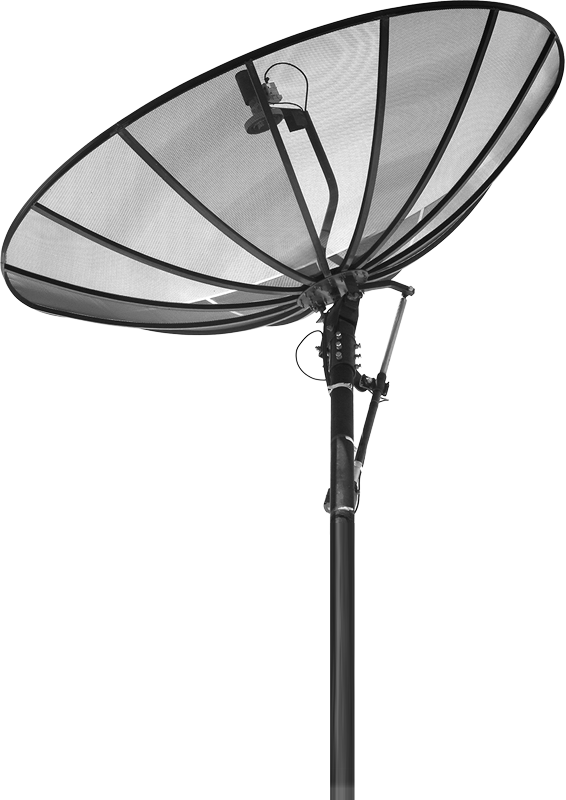
Most households only start thinking about Antenna Repairs at the worst possible moment: the picture pixelates during the last ten minutes of a match, or the screen drops to a black “No Signal” message right as the news starts. The instinct is almost always to blame the television. People unplug it, reset it, retune it, and sometimes go as far as buying a new set — only to find the same stuttering picture on a brand-new screen.
The problem is usually sitting on the roof, or in the wall cavity between the roof and the TV. Digital signals are unforgiving in a way analogue never was. An old analogue picture would degrade gracefully, getting grainier and fuzzier as the signal weakened, so you had months of warning that something was deteriorating. Digital gives you almost nothing. The picture is perfect right up until the point it isn’t, then it freezes, blocks up, or disappears completely. That cliff edge is why so many antenna faults feel like they appeared overnight when in reality they have been developing for years.
The Symptoms People Usually Misread
Before assuming a fault, it helps to know what different failures actually look like on screen.
Pixelation on some channels but not others is one of the most common complaints, and it points almost exclusively to a signal strength or quality problem rather than a TV problem. Different broadcasters transmit on different frequencies, and a marginal antenna will lose the weaker multiplexes first while the stronger ones keep working. If SBS breaks up but Channel 9 is fine, the television is doing its job perfectly — it simply isn’t being fed enough clean signal.
Problems that come and go with the weather are a strong indicator of a physical fault. Water ingress into a cracked coaxial cable, a corroded connector, or a loose fitting on the mast will behave completely differently wet than dry. If your reception is flawless in summer and unwatchable every time it rains, nobody needs to guess — that is moisture getting somewhere it shouldn’t.
One room worse than the others rules the antenna itself out almost entirely and points at the distribution: the splitter, the wall plates, or the internal cabling. Every time a signal is split between outlets it loses strength, and a cheap unamplified splitter feeding four rooms can easily push marginal outlets below the threshold where the tuner can lock on.
Sudden total loss after a storm usually means physical damage. Masts shift, brackets fail, guy wires snap, and elements bend. Sometimes the antenna is still standing but has rotated a few degrees off the transmitter — and a few degrees is enough.
What Actually Fails
Rooftop antennas live a brutal life. They sit exposed to UV, salt air, rain, hail, thermal expansion, and bird traffic for decades, and almost nothing about them is designed to last forever.
Coaxial cable is usually the first casualty. The outer sheath goes brittle under years of sun exposure, cracks, and lets water wick down inside the cable toward the connectors. Once moisture is in the dielectric, signal loss climbs steeply and no amount of retuning will fix it. Older installations often still run 75-ohm cable that predates current standards, or worse, use cable never rated for outdoor use in the first place.
Connectors corrode. The junction between cable and antenna is a dissimilar-metal joint sitting outdoors, and in coastal suburbs salt accelerates that corrosion dramatically. A green, powdery connector can look intact while passing almost nothing through.
Masts and brackets rust at the fixing points. This one matters beyond picture quality, because a corroded mast bracket is a genuine safety issue — a mast that lets go in high wind lands on a roof, a car, or a person.
Amplifiers and baluns fail electronically, often after a nearby lightning strike induces a surge down the cable. An amplifier that has failed can be worse than no amplifier at all, because it introduces noise while providing no gain.
And sometimes the antenna is simply the wrong one. Plenty of homes still have wideband antennas installed decades ago for a transmitter that has since changed, or an old analogue-era design that was never optimised for the digital band plan.
Why This Isn’t a Sensible DIY Job
There is a version of this where a confident homeowner climbs up with a spanner, and it occasionally works out. More often it doesn’t, for three reasons.
The first is diagnostic. Correctly identifying an antenna fault requires a signal meter that reads strength, quality, and error rate across each individual multiplex. Without one, you are guessing — and the classic outcome is replacing a perfectly good antenna when the actual fault was twelve metres of degraded cable, or bolting on an amplifier that makes a noise problem worse.
The second is alignment. Aiming an antenna is not a matter of pointing it in roughly the right direction. It needs to be aligned to the correct transmitter, with the correct polarity, at the correct height to clear obstructions, and fine-tuned against live readings. Getting the polarity wrong alone costs you around 20 dB.
The third is simply the roof. Working at height on tiles, often in wind, while handling a long metal mast near overhead wiring, is how people end up in hospital. Engaging a licensed technician for professional antenna installation and repair work means the job is done with proper anchoring, insured, and to standard — and it means someone else is on the roof instead of you.
Repair or Replace?
A good technician should be willing to tell you when a repair is not worth doing. As a rough guide: if the antenna itself is structurally sound and correctly specified for your area, and the fault is in cabling, connectors, splitters, or alignment, repair is almost always the sensible option. Replacing cable and reterminating connectors costs a fraction of a full installation and typically restores full performance.
Replacement makes more sense when the antenna is more than fifteen to twenty years old, when the mast or brackets are structurally compromised, when the antenna type is genuinely wrong for the local transmitter, or when the elements themselves are corroded or bent. Spending money to repair cabling that feeds a failing antenna just moves the next callout a few months down the road.
Getting Ahead of the Next Failure
Antennas are easy to ignore because they work invisibly until they don’t. A few habits reduce the odds of an emergency callout.
Have the installation inspected every few years, particularly if you’re near the coast where corrosion runs faster. Ask for outdoor-rated, UV-stable coaxial cable and properly weatherproofed connectors rather than the cheapest option — the price difference is small and the lifespan difference is enormous. If you’re adding rooms or outlets, get the distribution assessed rather than daisy-chaining another splitter onto the existing run. And after any significant storm, it’s worth a quick look from the ground to check the mast is still vertical and the cable hasn’t come loose.
The underlying point is that reception problems are a systems problem, not a television problem. Antenna, mast, cable, connectors, splitters, and outlets all have to work together, and a weakness anywhere in that chain shows up as the same frustrating frozen picture. Diagnosing which link has failed is what actually fixes it — everything else is guesswork with a ladder.