
Kava—known in Hawaii as ʻawa—has a long and meaningful history rooted in tradition, spirituality, and social connection. Introduced by early Polynesian settlers, ʻawa became an important part of Hawaiian life, shaping ceremonies, leadership practices, and healing traditions for generations.
Origins of ʻAwa in Hawaii
The plant Kava was brought to the Hawaiian Islands by Polynesian voyagers who navigated vast ocean distances carrying essential plants for survival and culture. Alongside staples like taro and breadfruit, ʻawa was cultivated not just for consumption, but for its ceremonial and medicinal value.
Once established in Hawaii, ʻawa adapted well to the environment and became a respected and widely used plant.
ʻAwa in Ancient Hawaiian Society
In traditional Hawaiian culture, ʻawa held a respected and often sacred role. It was not consumed casually, but rather used in structured and meaningful contexts.
Common uses included:
- Religious ceremonies: ʻAwa was offered to deities by priests during rituals to seek guidance, healing, or favor
- Political gatherings: Chiefs used ʻawa in formal settings to mark decisions, establish authority, or reinforce alliances
- Medicinal applications: It was used to promote relaxation, relieve discomfort, and support overall well-being
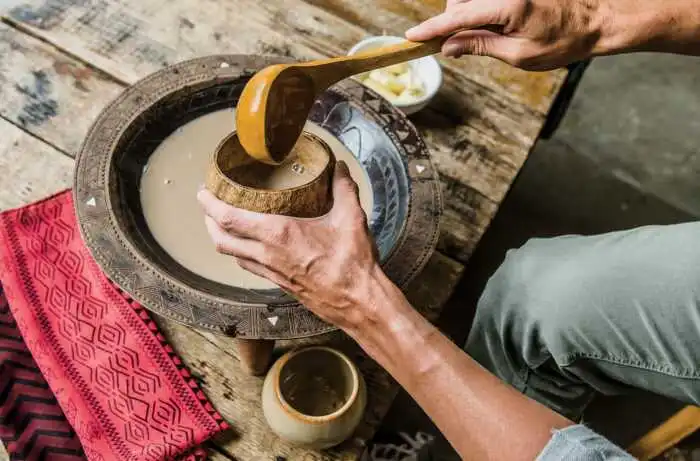
The preparation process itself was ceremonial. The root was pounded, mixed with water, and strained into a communal bowl, often accompanied by chants and strict protocols that reflected the importance of the occasion.
Cultural and Spiritual Significance
ʻAwa symbolized more than its physical effects. It represented:
- Connection to the spiritual world
- Respect for hierarchy and tradition
- Unity within a group or community
Sharing ʻawa was a deliberate act, often reinforcing bonds between individuals and acknowledging social structure.
Decline After Western Influence
The arrival of Western missionaries in the late 18th and early 19th centuries marked a turning point for ʻawa in Hawaii. Many traditional practices were discouraged or replaced, including ceremonial use of ʻawa.
As a result:
- Cultural rituals involving ʻawa diminished
- Knowledge of traditional preparation and meaning declined
- Alcohol became more common in social settings
Although ʻawa remained present, its role in everyday and ceremonial life was significantly reduced.
Revival in Modern Hawaii
In recent decades, there has been a growing movement to reclaim and preserve Hawaiian cultural traditions. ʻAwa has been part of this resurgence.
Efforts to revive ʻawa include:
- Cultural education programs
- Traditional ceremonies and community gatherings
- Increased awareness of its historical significance
This revival emphasizes not only the use of ʻawa, but also the respect and understanding of its origins.
ʻAwa Today
Today, ʻawa exists in both traditional and modern contexts in Hawaii. It may be used in:
- Cultural ceremonies that follow traditional protocols
- Social environments where people gather and connect
- Wellness practices focused on relaxation and balance
While its use has evolved, many continue to honor its cultural roots and the role it played in shaping Hawaiian society.
Final Thoughts
The history of ʻawa in Hawaii reflects a broader story of cultural resilience. From its introduction by Polynesian voyagers to its central role in ancient society, followed by decline and eventual revival, ʻawa remains a powerful symbol of tradition and identity.
Today, it serves as a bridge between past and present—carrying forward the values, practices, and cultural significance that have defined it for centuries.

